


It happens fast: you read the ERQ, feel a surge of confidence, and start writing. Ten minutes later, you look down and realise you’ve produced two pages of psychology facts that don’t quite answer the question. In IB Psychology, that’s the quiet way marks slip away.
The good news is that the ERQ is less mysterious than it feels. If you understand the IB Psychology ERQ rubric, you can build an answer that looks like what examiners are trained to reward.
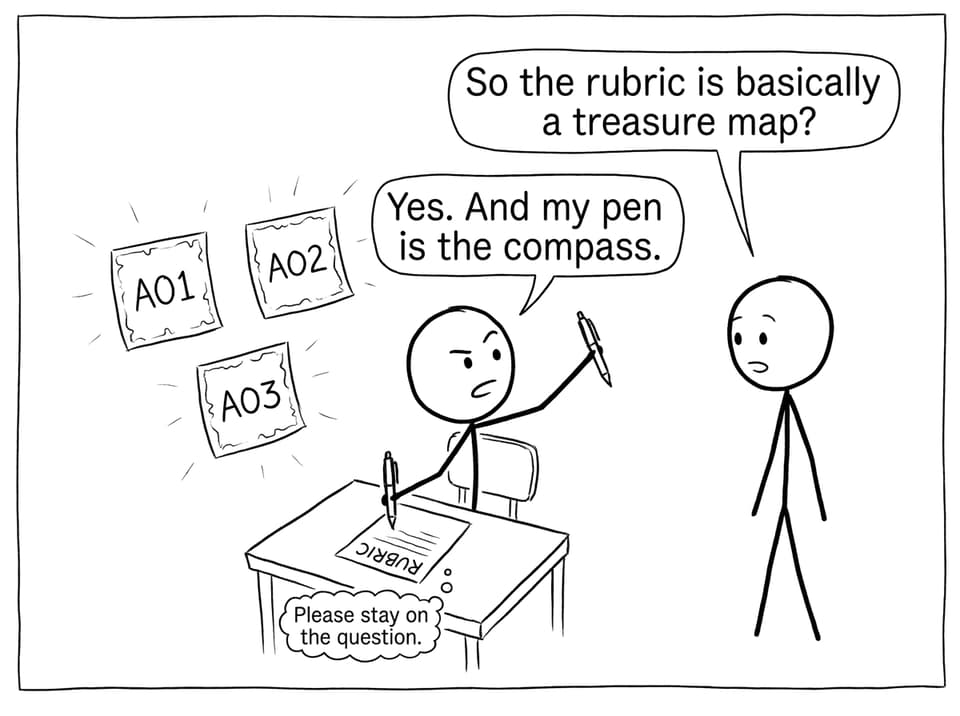
IB Psychology ERQ rubric: the fast checklist
Before you write, keep this on your scrap paper:
-
Stay on the question (focus and relevance)
-
Explain the psychology clearly (accurate knowledge and terminology)
-
Use research as evidence (at least two relevant studies, explained)
-
Evaluate thoughtfully (strengths, limitations, alternative angles)
-
Write in a clean structure (easy to follow under pressure)
If you want a syllabus-aligned home base while you revise IB Psychology, start here: IB Psychology Resources.
The five ERQ criteria (what examiners actually look for)
Focus on the question (2 marks)
This sounds obvious, but it’s where many strong students leak marks. Every paragraph should earn its place by linking back to the exact command term (for example, discuss vs evaluate). A simple trick in IB Psychology: end each paragraph with one sentence that directly answers the question again, using the wording of the prompt.
Knowledge and understanding (6 marks)
This is your AO1 foundation: accurate concepts, correct terminology, and clear explanations (not vague summaries). If you’re shaky on content, use Study Notes to rebuild explanations in a clean, linear way.
Use of research to support your answer (6 marks)
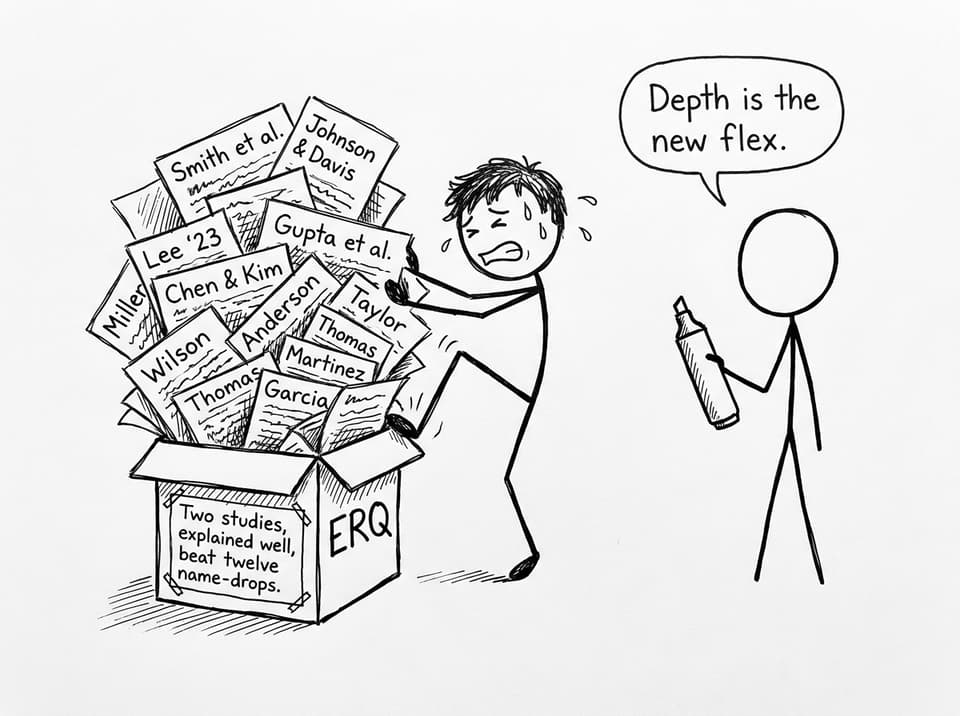
Your studies should function like proof, not decoration. Aim for two well-chosen studies you can explain with: aim, method/procedure, findings, and the specific link to your argument.
To practise selecting studies quickly, drill prompts using the IB Psychology Questionbank and build small “study sets” per topic.
Critical thinking (6 marks)
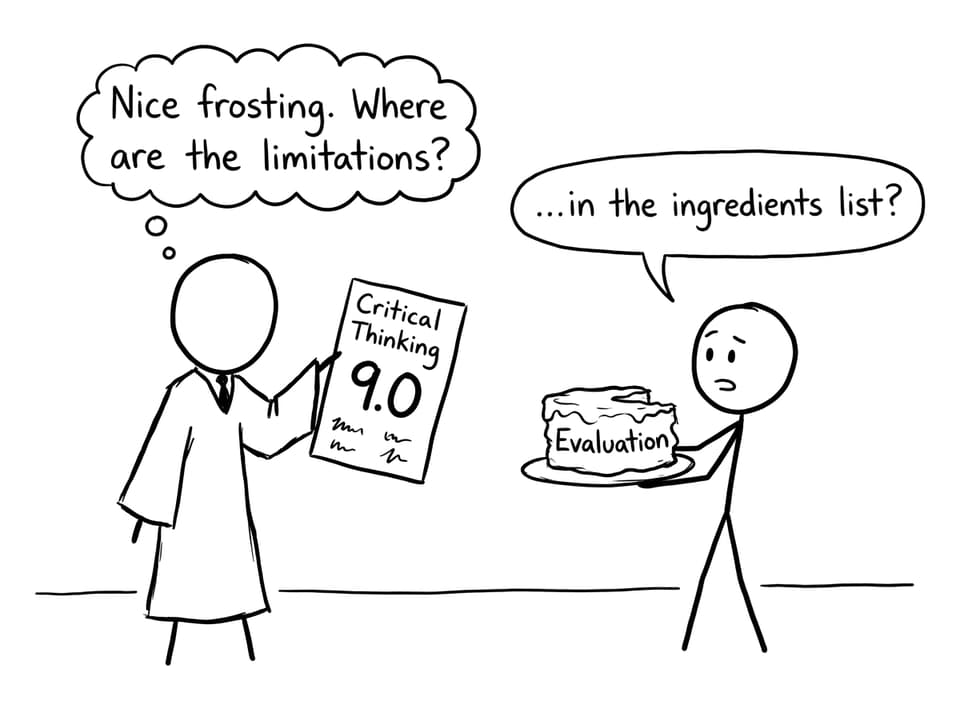
This is where top responses separate themselves. Evaluation is not just listing limitations: it’s explaining why they matter for interpretation. In IB Psychology, strong critical thinking usually includes:
-
methodology strengths/limits (validity, reliability, bias)
-
ethics (where relevant)
-
generalisability (sample, culture, setting)
-
alternative explanations or conflicting evidence
-
a reasoned mini-judgment (so what?)
If you’re unsure how to structure evaluation under time pressure, borrow the repeatable framework in IB Psychology LAQ Structure: A Complete Strategy.
Clarity and organisation (marks vary)
Examiners are human. Help them give you marks. Use:
-
a short intro (define + thesis + roadmap)
-
2 main body paragraphs (each: point, then study, then link, then evaluation)
-
a conclusion that answers the question directly
For exam stamina, build timed practice with Psychology Predicted Papers and review using RevisionDojo’s Grading tools.
Markbands: what changes from mid to high marks
In practice, the jump to the top markband in IB Psychology is usually three upgrades:
-
Precision: fewer ideas, explained better
-
Integration: studies woven into the argument, not pasted in
-
Evaluation with purpose: limitations linked to what they mean for the question
For a bigger strategy view, see How to Nail a 7 On Your Psychology Exam and the broader IB Psychology: Structure, Skills & Assessment (SL/HL).
How RevisionDojo helps you score higher on IB Psychology ERQs
A strong ERQ is built in layers, and RevisionDojo supports each layer:
-
Study Notes to tighten explanations fast
-
Flashcards to lock in definitions, studies, and evaluation cues
-
Questionbank for exam-style repetition (with feedback)
-
AI Chat to clarify command terms and fix recurring mistakes
-
Grading tools to check rubric alignment
-
Predicted Papers and Mock Exams to train timing and structure
-
Coursework Library and Tutors when you need deeper support
You can read about that full workflow here: RevisionDojo App: The Smarter Way to Prep for IB Exams.
FAQ: IB Psychology ERQ rubric questions
How many studies should I use in an IB Psychology ERQ?
Aim for at least two relevant studies, and treat them like evidence rather than a list. In IB Psychology, you score higher when you explain one study clearly than when you name-drop four without detail. A strong study paragraph includes the aim, procedure, findings, and a sharp link back to the question. Then add evaluation that connects to what the findings can (and can’t) prove. If a third study genuinely strengthens comparison or balance, you can add it briefly, but only if it stays focused.
What does “critical thinking” actually mean for IB Psychology ERQs?
Critical thinking means showing you understand how knowledge is produced, not just what the results were. In IB Psychology, this usually involves evaluating methodology (validity, reliability, bias), considering ethics, and judging generalisability. The key is to explain why a limitation matters for interpreting the conclusion, not simply to label it. Strong answers also consider alternative explanations or conflicting research where appropriate. Finally, you should offer a reasoned judgment that returns to the question instead of ending with an evaluation list.
How do I stop going off-topic in an ERQ?
First, translate the question into a one-sentence task using the command term. Then plan your two studies before writing any full sentences, because drifting often begins when you improvise mid-paragraph. Use topic sentences that repeat the language of the question, so every paragraph has a visible anchor. During practice, mark your own work and highlight any sentence that doesn’t directly contribute to answering the prompt. RevisionDojo’s Questionbank helps here because repeated exam-style prompts train focus like a reflex. If you want a simple method for confusing prompts, read IB Exam Panic: What to Do If You Don't Understand.
Conclusion: treat the IB Psychology rubric like a blueprint
The IB Psychology ERQ isn’t a test of how much you can remember in 60 minutes. It’s a test of how well you can select, use, and evaluate psychology to answer one specific question. Learn the rubric, practise with feedback, and your writing starts to feel calmer because you always know what to do next.
Build your next ERQ practice loop inside RevisionDojo: revise with IB Psychology Resources, drill with the IB Psychology Questionbank, then rehearse timing with Psychology Predicted Papers.