

The choice that quietly changes your whole week
In most IB Sciences classrooms, the decision between IB Biology HL and SL looks simple on paper: one is “higher,” one is “standard.” But students rarely feel the difference on paper. They feel it on Tuesday night, when the HL class is still unpacking the mechanism behind a process and the SL class has moved on to review questions.
That’s the real secret of IB Sciences: difficulty isn’t just “harder questions.” It’s what the course asks you to carry--more content, more depth, more stamina, and more precision under time pressure.
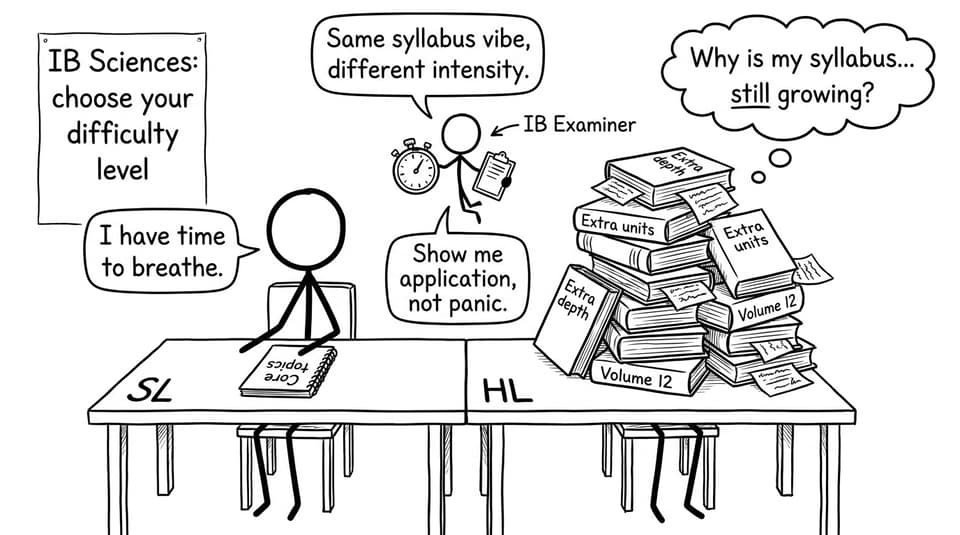
Quick checklist: HL vs SL in one glance
Use this fast filter before you commit (or before you panic):
-
Content: HL = core + extra units and extensions
-
Depth: HL answers must explain “why” and “how,” not just “what”
-
Exam demand: HL = longer papers, more multi-step application
-
Time cost: HL usually requires a bigger weekly revision budget
-
IA pressure: same structure, but HL often aims for more complexity
-
Skills: HL rewards linking topics and interpreting unfamiliar data
-
Future plans: HL is often preferred for bio-heavy university routes
If you want the most structured path through Biology in IB Sciences, bookmark the IB Biology hub so you can see the whole course ecosystem in one place.
7 key differences in IB Biology HL vs SL difficulty
Content volume is the obvious difference (and it matters)
HL simply has more to learn. Not just “more pages,” but more places you can have small gaps that cost marks later.
A practical way to feel this: open a single SL/HL topic like Cell Biology notes and questions and notice how quickly basic definitions become interpretation tasks. In IB Sciences, a small missing definition becomes a big missing explanation.
Depth of understanding is the hidden difference
SL can be mastered with clean core understanding and consistent practice. HL expects you to connect ideas.
For example, HL students may need to move fluently from structure to function to data interpretation--and explain mechanisms with correct biological language. A topic like Transcription and gene expression notes shows what “depth” looks like: regulation, context, and reasoning, not just the steps.
Exam length and multi-step questions raise the stamina requirement
HL exams are longer, and the questions more often demand chained reasoning: read, interpret, apply, justify.
If you’re training for the exam style (not just the syllabus), keep the Comprehensive guide to IB Biology Paper 1 and Paper 2 open while you revise. It’s the kind of map IB Sciences students wish they had earlier.
The weekly workload is different, even when you study “the same way”
Many students try to use one study routine for both levels. That’s where HL hurts.
HL needs a loop: learn a subtopic, test it immediately, fix mistakes, then retest under time conditions. A good starting point is targeted practice from the Cell Biology questionbank so your revision stays honest.
Internal Assessment expectations feel higher at HL
The IA criteria are the same, but HL students often feel pressure to design investigations with more sophistication: tighter control of variables, stronger analysis, and more thoughtful evaluation.
If you want a clear way to raise quality without making the project huge, use the IB Biology IA tips to score a 7 as a planning checklist. In IB Sciences, clarity beats complexity that you can’t defend.
Skills: HL rewards “exam thinking,” not just biology knowledge
SL success can come from strong coverage and consistent practice. HL success comes from coverage plus exam technique.
This is where RevisionDojo’s workflow shines: Study Notes to learn quickly, Questionbank to practice, AI Chat when you’re stuck, and Grading tools to see what the markscheme is actually rewarding. Add Flashcards for definitions and processes, then train timing with Mock Exams and Predicted Papers.
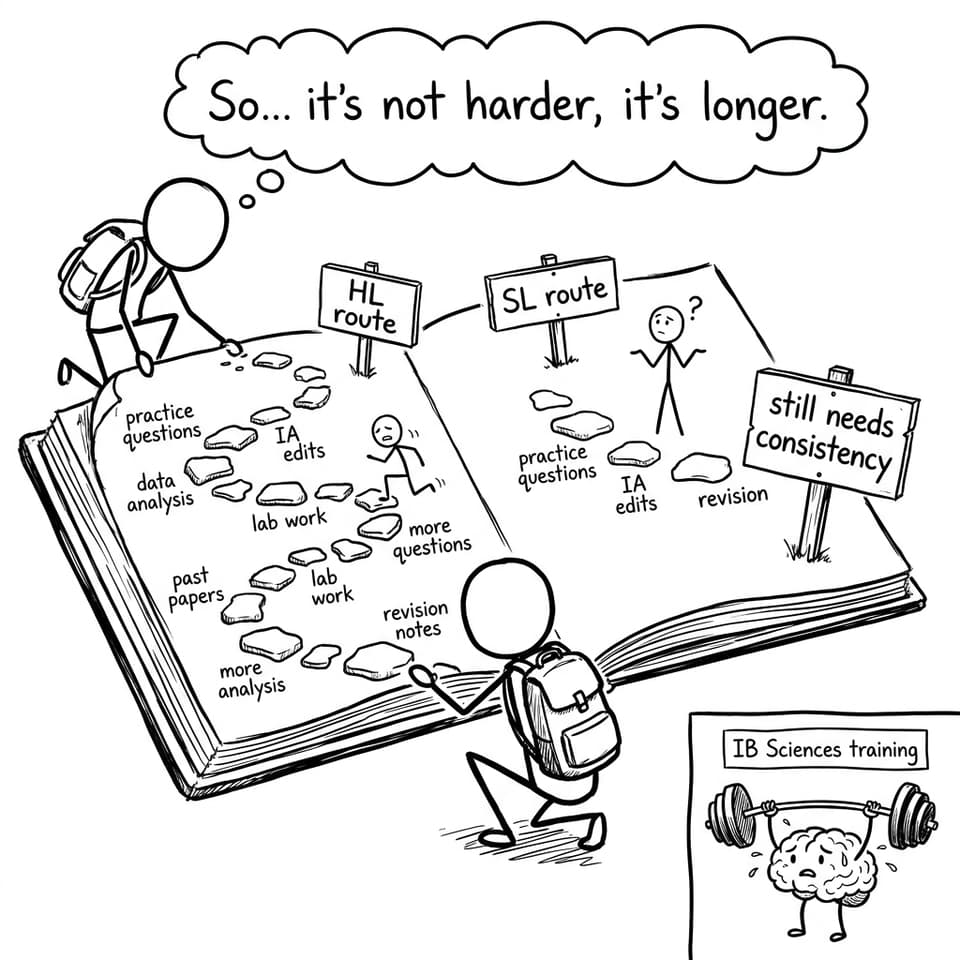
University and career implications can tilt the decision
If you’re aiming for medicine, biological sciences, biochemistry, or related pathways, HL is commonly the safer signal. It shows you can handle intensity across IB Sciences.
If biology is not central to your future plans, SL can be a smarter choice--especially if you already have multiple demanding HLs. You can still perform exceptionally well, and you’ll often have more time to build consistent exam practice habits.
A simple study plan that works for both HL and SL
-
Pick one topic (start with something fundamental like Topic A1.1 Water)
-
Read the notes once, then close them
-
Do a short set of questions and mark brutally
-
Turn your top mistakes into Flashcards
-
Repeat weekly with timed practice and review
For HL-only stretch, add one focused HL extension session per week (for example, virus-related content via A2.3 Viruses (HL) Flashcards). That’s how IB Sciences students build depth without burning out.
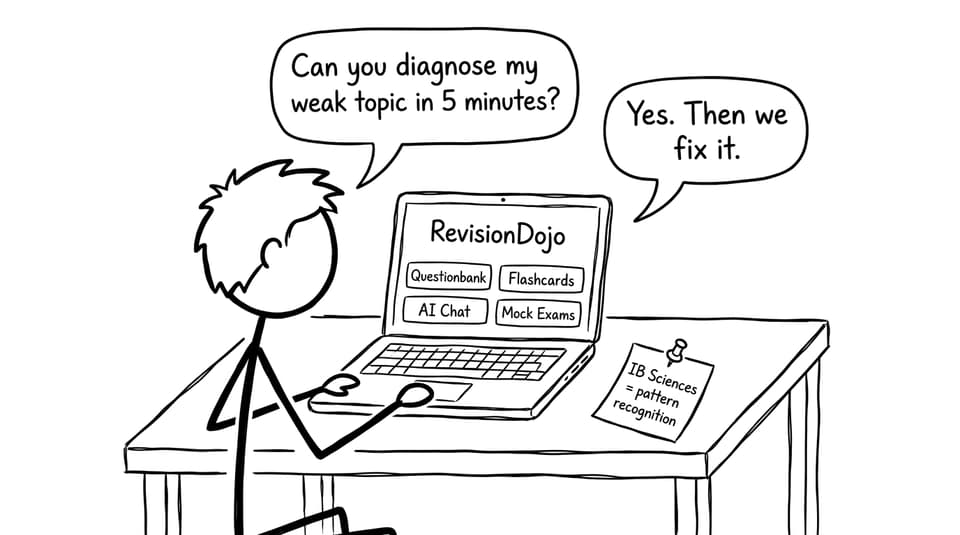
Closing: choose the level, then choose the system
HL or SL, the students who do best in IB Sciences aren’t the ones who “study more.” They’re the ones who study in a loop: learn, test, diagnose, fix, retest.
If you want that loop in one place, use RevisionDojo’s Study Notes, Questionbank, Flashcards, AI Chat, Grading tools, Predicted Papers, Mock Exams, Coursework Library, and Tutors to build a plan you can repeat weekly. Pick your level--and then let your system do the heavy lifting.