
How to Find a Strong IB Business Management IA Topic
A good IA topic feels like a door you can actually open.
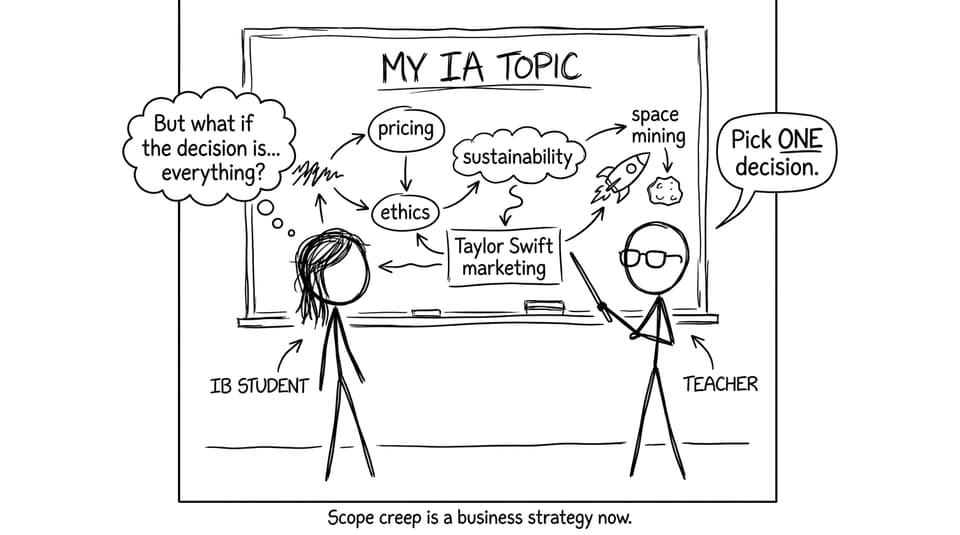
Not a hallway with twenty doors, all half-labeled: “marketing,” “ethics,” “finance,” “operations,” “something about sustainability,” and one that just says “panic.” Most students don’t struggle because they lack ideas. They struggle because they have too many, and none of them have a handle.
The best IA topic does one quiet thing: it turns a messy real-world business situation into a single decision you can investigate, analyze, and evaluate. When you get that right, the writing becomes easier, your tools fit naturally, and your evidence stops feeling like decoration.
The quick checklist for a strong IA topic
Before you commit to an IA topic, pressure-test it with this shortlist:
-
A real organization you can research (with accessible data)
-
One decision (not a general theme)
-
A clear research question you can answer within the word limit
-
At least 2 business tools that genuinely help you decide
-
A key concept lens (change, creativity, ethics, or sustainability)
-
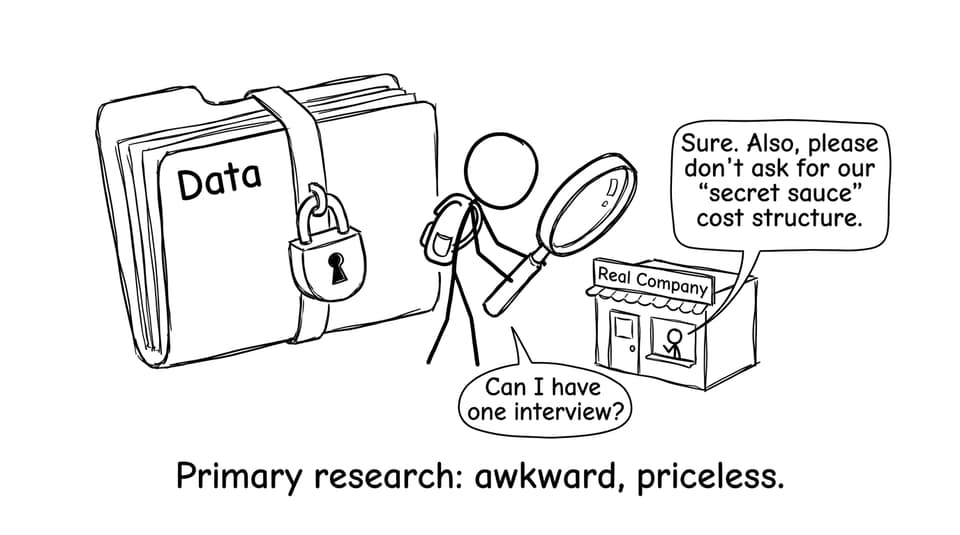
Evidence you can collect (primary and/or solid secondary sources)
If you want a full overview of expectations and structure, keep How to Write a Winning IB Business IA: Structure, Samples, and Smart Tools open while you brainstorm.
Start with a real business you can actually access
A strong IA topic begins with the most practical question: can you get evidence?
Many students pick a famous company because it feels “serious.” But a smaller business you can interview often gives you better analysis because you can explain the context, justify assumptions, and show personal engagement through specific, relevant data.
Consider three realistic routes:
-
Local business access: a cafe, gym, tutoring center, salon, small retailer, or family business
-
School-connected organizations: canteen supplier, school shop, sports club sponsor
-
Public company with rich reporting: annual reports, investor presentations, credible news coverage
If you’re unsure what “good access” looks like, the calm reality check in What Is the Easiest IA? A Calm, Smart Way to Choose helps you choose a topic that doesn’t collapse halfway.
Turn a theme into one decision (this is where most IAs win or lose)
“Marketing at Company X” isn’t an IA topic. It’s a folder.
A high-scoring IA focuses on a decision the business could plausibly make, such as:
-
Should the business change pricing to improve profit margins?
-
Should it launch a new product/service?
-
Should it expand into a new location or segment?
-
Should it outsource an activity to reduce costs?
-
Should it change operations to improve efficiency or quality?
A helpful trick: write your research question starting with “Should” or “To what extent”. If your question doesn’t force a recommendation, it’s probably too vague.
For exemplar-style phrasing, browse IB Business Management IA Exemplars and notice how the strongest questions stay narrow while still allowing deep evaluation.
Anchor your IA in an IB key concept
A strong IA doesn’t just analyze; it frames.
IB Business Management wants you to interpret the decision through at least one key concept:
-
Change: restructuring, new tech, new market entry
-
Creativity: differentiation, innovation, new promotion strategy
-
Ethics: labor practices, transparency, responsible marketing
-
Sustainability: long-term viability, supply chain, environmental impact
This matters because your analysis becomes more than “what happened.” It becomes “what matters, and to whom.” When you draft, RevisionDojo’s IB Business Management Internal Assessment Guide is the clearest place to align your choices with what examiners reward.
Choose tools that fit the question (not tools you memorized)
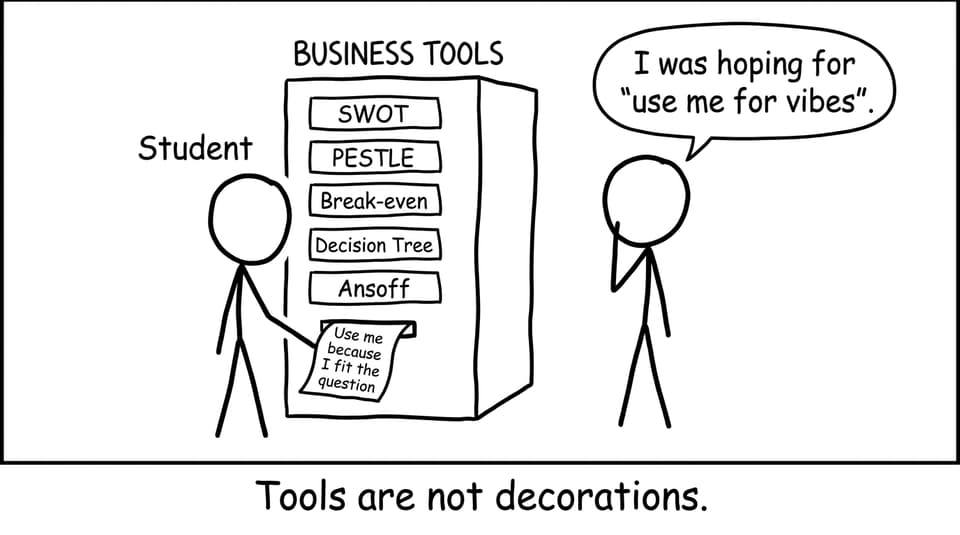
The strongest IA topics naturally invite certain tools.
If your decision is pricing, break-even and contribution make sense. If it’s market entry, Ansoff and PESTLE often help. If it’s competitive position, Porter’s Five Forces can sharpen your evaluation.
Common tool matches:
-
Pricing decision: break-even analysis, contribution, decision trees
-
Expansion decision: Ansoff Matrix, investment appraisal basics, PESTLE
-
Operations improvement: fishbone diagram, lean thinking, cost-benefit framing
-
Strategy shift: SWOT (used carefully), Porter’s Five Forces
To keep your theory accurate while you write, RevisionDojo’s Business Management resources hub is useful for quick refreshers, and the Questionbank helps you practise explaining tools in a way that earns marks under time pressure.
Make your IA topic SMART without making it boring
SMART is not a creativity killer. It’s how you prevent scope creep.
-
Specific: one decision, one organization, one target outcome
-
Measurable: revenue, costs, margin, market share proxy, staff turnover, customer satisfaction
-
Achievable: realistic data collection and analysis in the time you have
-
Relevant: meaningful to the business, tied to the syllabus
-
Time-bound: anchored to a defined period (eg “next 6 months” or “next financial year”)
If you want feedback on whether your plan is “tight enough,” run your draft through the IB Business Management IA Grader before you sink hours into writing.
Conclusion: Pick the IA topic that future-you will thank you for
A strong IA topic is not the most impressive-sounding idea. It’s the one with a real decision, real evidence, and a clean line from tools to recommendation.
If you want the fastest path from “messy idea” to “ready-to-write,” use RevisionDojo as your workflow: browse the Coursework Library for exemplars, refine your question with AI Chat, test your understanding with the Questionbank, and run drafts through the Grading tools before submission. Your IA will feel less like guessing and more like building a case you can defend.