

If you have ever tried to squeeze a real year of service into a 150-character box, you know the strange feeling: your effort was huge, but your space is tiny. That tension is the entire Common App Activities section. And for IB students, it lands right when you are already balancing revision, CAS reflections, and exam prep, plus the quiet pressure of the next step: University.
National Honor Society (NHS) can help you stand out in a University application, but only if you describe it with precision. Admissions readers see “NHS Member” all the time. What they do not see all the time is clear impact, measurable contribution, and a line that sounds like a real person instead of a résumé template.

What the Common App Activities section really asks for
The Activities section gives you room for up to 10 activities. For each one, you report your role, time commitment, and a description with a strict character limit. Think of it like IB exams: not a place for everything you know, but a place for what you can prove quickly.
For University admissions, the hidden prompt is: “Did you create value, and can you communicate it clearly?”
If you want a broader strategy for activities beyond NHS, read How to Showcase Extracurriculars in Applications.
Quick checklist: a strong NHS description in 150 characters
Before writing, check that your line includes most of these:
-
Your role (member, officer, founder of an initiative)
-
A high-impact action verb (led, organized, launched, coached)
-
Specific service (tutoring, drives, workshops, community partnerships)
-
A metric (hours, students, funds, items collected, volunteers managed)
-
A hint of why it mattered (access, consistency, outcomes)
This is the same logic that drives top IB revision: focus, feedback, measurable progress. If your schedule is already tight, Balancing Extracurriculars and IB Studies Effectively is a useful reset.
Why NHS descriptions matter for a University application
NHS signals scholarship, service, leadership, and character. That is the brand. Your job is to make it believable in one line.
A University reader is scanning quickly. They are not asking, “Is NHS impressive?” They are asking:
-
Did you do something or just join something?
-
Did you show initiative or just attendance?
-
Can you quantify outcomes the way a student with real responsibility usually can?
When you describe NHS well, it becomes a compact proof of who you are under pressure, which is exactly what the IB trains you to be.
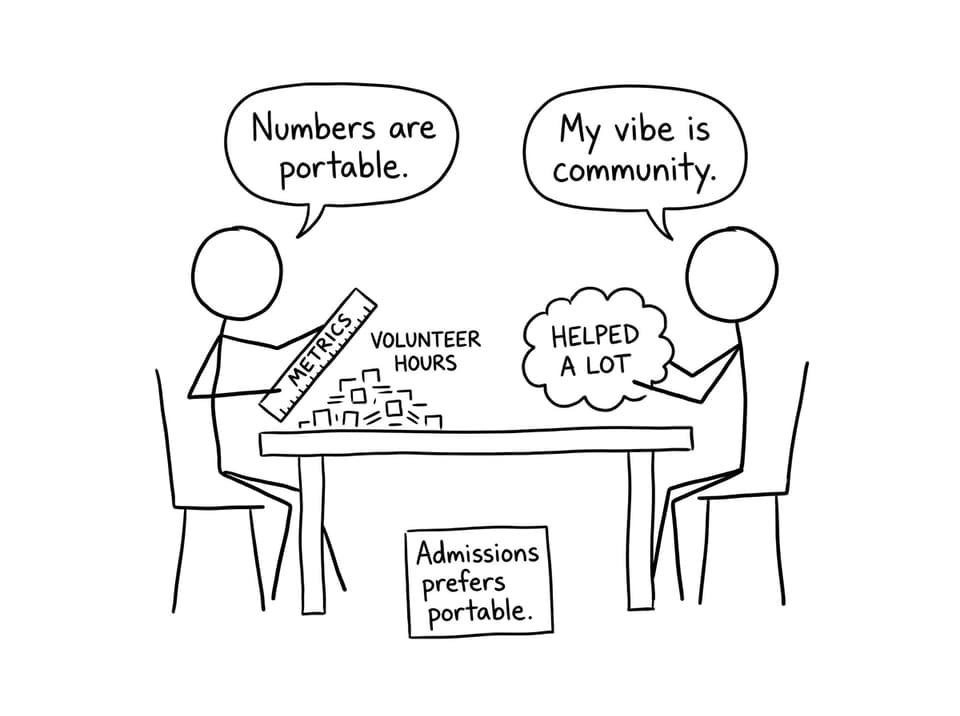
9 smart tips to describe NHS on the Common App (with IB-friendly framing)
Lead with impact, not the title
“National Honor Society Member” wastes space. Start with what you did.
Try: “Coordinated peer tutoring 2x/week; supported 25 students; logged 90+ hrs.”
Use a leadership verb even if you were not an officer
Leadership is not only a position. It is ownership.
Better verbs: launched, coordinated, coached, trained, designed, facilitated.
Quantify like a scientist
IB teaches you to show your working. University readers like the same.
Good metrics:
-
Hours served
-
Students tutored
-
Volunteers managed
-
Items collected
-
Funds raised
Show the “why” in a single word
You do not have room for reflection, but you have room for intent.
Add one word that implies purpose: access, consistency, equity, outreach, retention.
Mention your specific service lane
NHS is broad. Your lane makes it personal.
Examples: “food drive,” “peer tutoring,” “elder care visits,” “library literacy nights,” “STEM workshops.”
Compress your growth across years
If you did NHS across multiple grades, show progression without listing every detail.
Pattern: “Member (Gr10) -> Secretary (Gr11) -> VP (Gr12); led 3 drives; 120+ hrs.”
Avoid filler words that cost characters
Cut phrases like “responsible for” and “helped with.” Replace with a verb.
Instead of: “Helped with organizing a drive”
Use: “Organized drive; recruited 12 volunteers”
Do not repeat what is elsewhere in your application
If your essay is about tutoring, keep the NHS line focused on scope and leadership. Redundancy reads like padding in a University application.
If you need help shaping a coherent application narrative from IB work, How to Tailor Your EE for University Applications is a strong companion.
Get ruthless feedback, the way you would for an IB response
In the IB, you do not “feel” an answer is good. You test it.
Use the same method:
-
Write 2-3 variants
-
Pick the one with the clearest impact + numbers
-
Ask a teacher to judge clarity in 10 seconds
For feedback loops, RevisionDojo’s AI Chat can help you rephrase tightly, while Grading tools (built for IB work) reinforce the habit of writing for criteria, not vibes.
Strong vs weak NHS descriptions (examples you can adapt)
Here are patterns that typically read well for a University reviewer.
Strong examples
-
“Led weekly NHS meetings; coordinated 4 service drives; 120+ hrs; launched peer tutoring for underclassmen.”
-
“Organized food drive (3,000+ items); managed 15 volunteers; partnered with local shelter; tracked delivery outcomes.”
-
“Tutored math 2x/week; supported 20 students; created revision sheets; improved consistency of attendance.”
Weak examples
-
“Participated in NHS and volunteered.”
-
“Attended meetings and did community service.”
The difference is not effort. The difference is evidence.
Common mistakes that quietly weaken a University application
-
Only listing the label: “NHS Member” tells nothing about you.
-
Using generic claims: “passionate about service” without proof reads like a template.
-
No metrics: numbers are not bragging; they are clarity.
-
Overstuffing the line: too many projects makes everything feel small.
If you are already running on fumes from revision, remember: time is a resource. Best Time Management Techniques for IB Students in 2025 can help you protect study time while still presenting activities well.
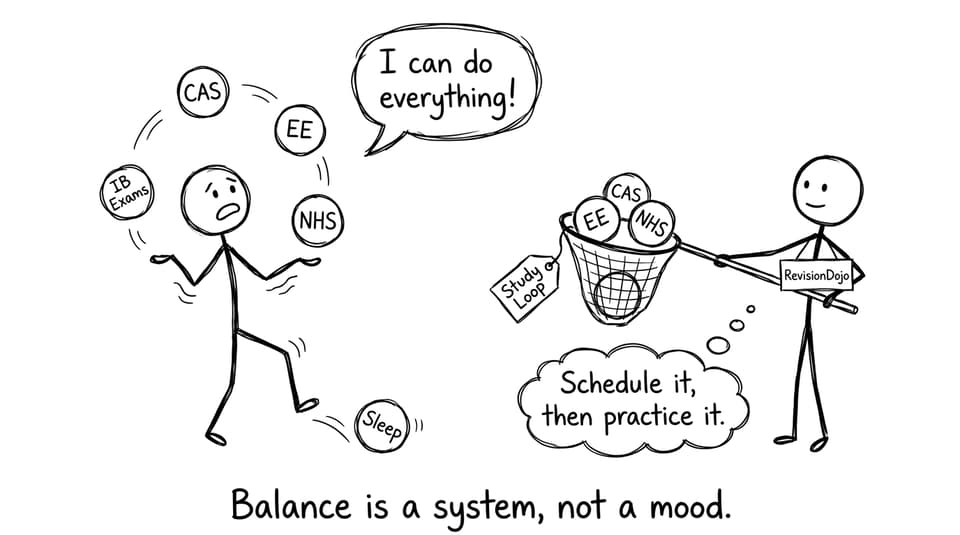
How IB students can turn NHS into a clearer story
Many IB students undersell NHS because they are trained to think the “real work” is academic. But University admissions often uses activities to answer a different question: Who are you when no one is grading you?
A simple way to connect NHS to your IB identity:
-
If you tutor, connect it to your subject strength and consistency.
-
If you led a drive, connect it to planning, systems, and follow-through.
-
If you trained volunteers, connect it to communication and leadership under time constraints.
And if NHS overlaps with CAS, strengthen the reflection muscle. 10 Powerful Tips to Write a CAS Reflection That Stands Out in 2025 helps you articulate growth without sounding generic.
Closing: make the small box tell a true story
The Activities section is small on purpose. It rewards students who can choose what matters, explain it cleanly, and back it with evidence. That is also how IB success compounds: fewer tools, used consistently, tracked honestly.
If you want the same clarity in exam prep, RevisionDojo is built around a simple loop that reduces overwhelm: Study Notes for fast understanding, Flashcards for daily recall, a Questionbank for exam-style practice, Mock Exams and Predicted Papers for timing, plus AI Chat, Grading tools, the Coursework Library, and Tutors when you need feedback that actually changes your next attempt.
Treat your NHS description the way you treat a high-mark IB response: purposeful, specific, and testable. Your University application will feel more real because it is more real.