
The moment your calendar starts arguing with you
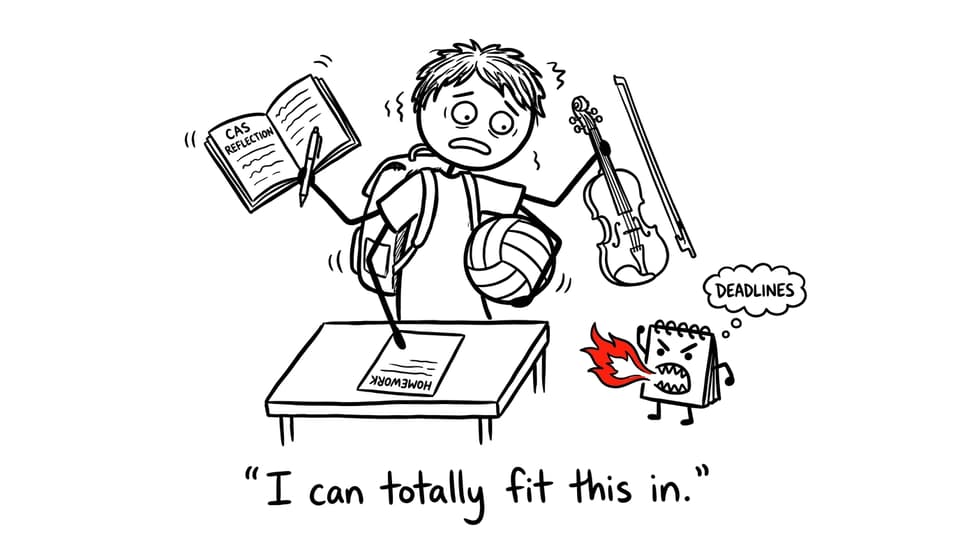
Somewhere in the middle of the IB semester, your week becomes a negotiation.
A coach wants “just one more session.” A club needs a leader. A lab report quietly expands into an evening. And the IB doesn’t care that you’re also trying to be a whole person.
The good news: balancing IB and extracurricular activities is not about having more motivation. It’s about building a small system you can repeat when life gets loud.
A quick balance checklist (use this weekly)
If you’re an IB student preparing for exams, start here:
-
Pick two academic priorities for the week (not twelve).
-
Cap extracurricular time with a clear “enough” rule.
-
Time-block study in small chunks you can defend.
-
Use active recall (Flashcards) and exam-style practice (Questionbank).
-
Protect sleep like it’s a subject.
-
Review and adjust every Sunday.
For the tools side of the system, keep RevisionDojo open as your home base: RevisionDojo for IB.
Decide what “winning” looks like (and what it doesn’t)
The IB rewards consistency, not heroics. The students who look calm near exams usually made one quiet decision early: they stopped trying to do everything at the same intensity.
Try this framing:
-
IB priority: the subjects or components that move your grade most this month.
-
Extracurricular priority: the activities that are meaningful, skill-building, or required (like CAS), not just “nice to have.”
If you need a reality check on workload, this guide helps you set sane expectations: How Much Time Should You Spend Studying Each Week in IB?
The goal isn’t to quit everything. It’s to choose a few things you can do well while still respecting the IB timeline.
Build a weekly schedule that can survive real life
Most schedules fail because they’re built for perfect days.
A better IB schedule has three features:
Fixed blocks first
Put immovable commitments in first: classes, training, rehearsals, club meetings, tutoring, CAS.
Study blocks that are short but specific
Instead of “revise Biology,” write “Cell respiration: 20 Questionbank items + error log.”
Use RevisionDojo’s loop to make those blocks efficient:
-
Learn quickly with Study Notes
-
Lock memory with IB Flashcards (SRS)
-
Convert understanding into marks with the Questionbank
Buffers for spillover
Leave at least 3 small buffers per week. The IB will fill them for you anyway.
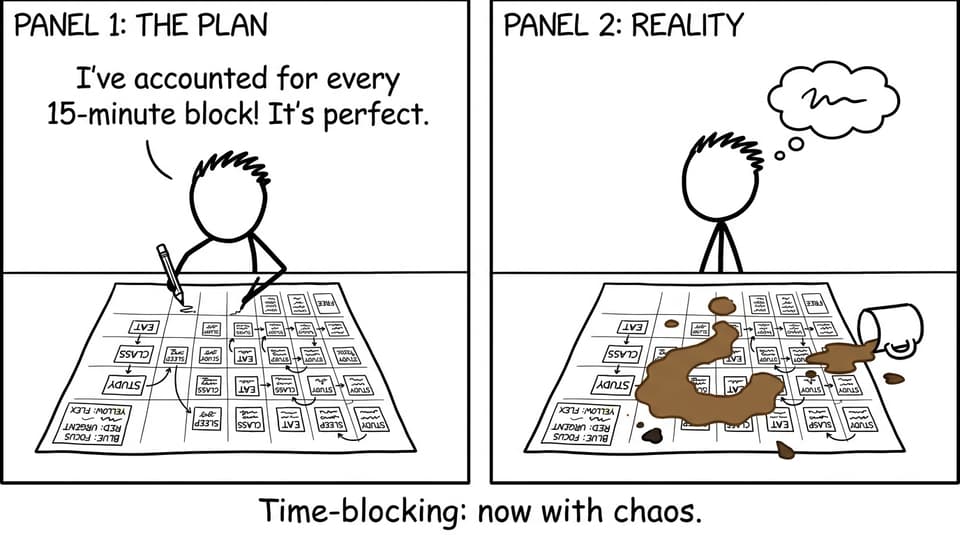
Use time-blocking that matches how your brain actually works
Time-blocking isn’t rigid. It’s protective.
For IB exam prep, use “sprints”:
-
30-45 minutes focused work
-
5-10 minutes break
-
Repeat 2-3 times
In sprint one, do something active: a short Flashcards session or a small Questionbank set. In sprint two, review mistakes and patch only what’s missing with notes. In sprint three, retest.
If you want the deeper playbook, keep this open: Best Time Management Hacks for IB Students
Create synergy between IB and extracurriculars (without pretending you can multitask)
“Multitasking” usually means doing two things badly.
But IB students can still create synergy:
-
Commutes become Flashcards time (short, repeatable, low setup).
-
Waiting time becomes “one concept fix” with AI Chat.
-
Teammates become a study group for one shared subject.
When you get stuck, don’t burn an hour spiraling. Use RevisionDojo’s AI Chat to ask one precise question, then return to practice: RevisionDojo App: The Smarter Way to Prep for IB Exams
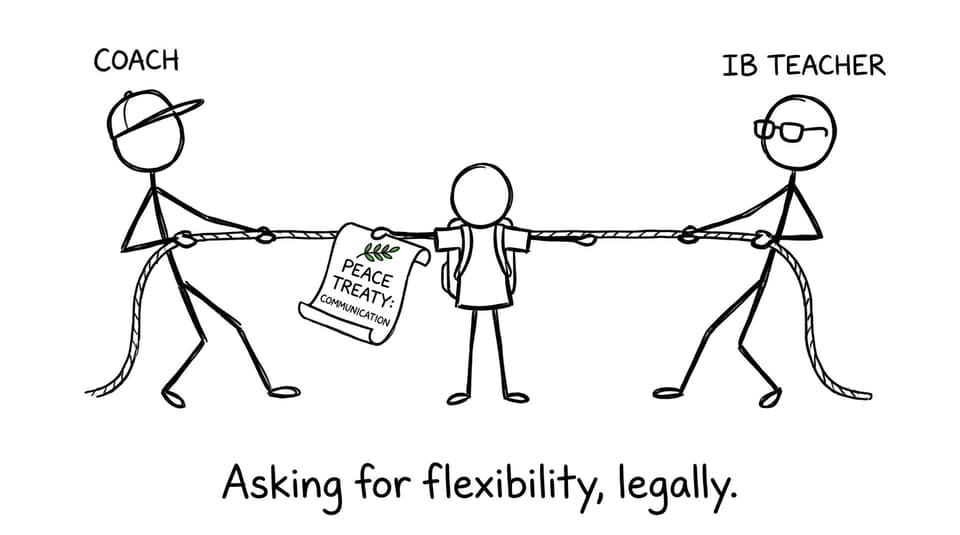
Plan around peak IB periods (and communicate early)
There are predictable crunch points in the IB: IA drafts, major school deadlines, and the final exam run-up.
Your best move is not working harder. It’s reducing decisions.
-
Two to four weeks before heavy deadlines, scale extracurriculars down to maintenance.
-
Tell coaches/advisors early: “These two weeks I can do X, not Y.”
-
After the peak, return fully, guilt-free.
If you’re approaching the final stretch, this is the calm guide worth following: IB: The Last 2 Weeks Before Exams (What Matters)
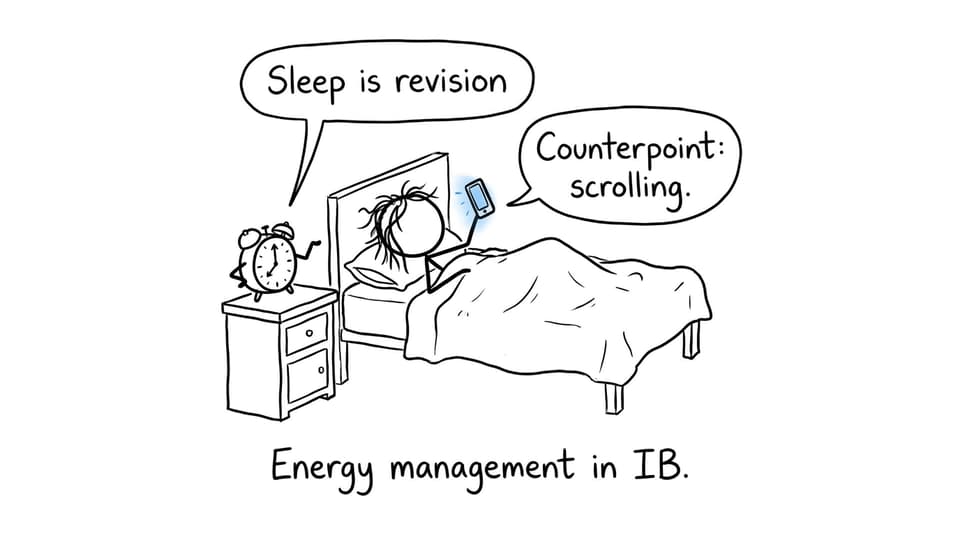
Protect energy, not just time
In the IB, burnout often looks like “studying longer” with worse results.
Energy basics that actually change outcomes:
-
Sleep is a grade strategy.
-
Food and movement are focus tools.
-
One real day off per week beats seven half-days of guilt.
If your schedule is collapsing, zoom out and fix the bottleneck: Time Management in IB: Tools and Techniques That Actually Work
Build your “RevisionDojo balance stack”
Balancing IB with extracurricular activities gets easier when your study tools reduce friction.
Here’s a simple stack many students use:
-
Study Notes to stop rewriting and start understanding fast
-
Flashcards for daily recall in 5-10 minutes
-
Questionbank for targeted exam-style practice
-
Mock Exams and Predicted Papers to rehearse timing and stamina
-
Grading tools to learn what marks want, not what feels impressive
-
Coursework Library to reduce background stress around requirements
-
Tutors when you need a human to diagnose what’s holding you back
If you want an overview of the full workflow, this is the anchor: RevisionDojo App: The Smarter Way to Prep for IB Exams
Closing: balance is a strategy, not a personality trait
Balancing IB and extracurricular activities isn’t about being naturally disciplined. It’s about building a repeatable week, then adjusting without drama when the week fights back.
If you want the calmest path forward, keep your system simple: Notes for clarity, Flashcards for recall, Questionbank for marks, and timed practice with Predicted Papers and Mock Exams. That’s what RevisionDojo is built to do: turn your IB workload into a loop you can sustain.
Start your balance stack here: RevisionDojo.