
The first time you realize the IB isn’t just “a lot of homework” is strangely quiet. It happens when a single question asks for three ideas at once: a method, a justification, and a reflection on your result. You don’t feel overwhelmed because you’re behind. You feel overwhelmed because you’re being trained to think like a small, tired academic.
That’s why asking what are the 5 hardest IB subjects is really asking something deeper: Which courses demand the most from my time, my attention, and my ability to stay calm under pressure?
This guide breaks down five notoriously difficult IB subjects (especially at HL), why they’re hard, and what to do now so exam season feels more like a plan than a storm.
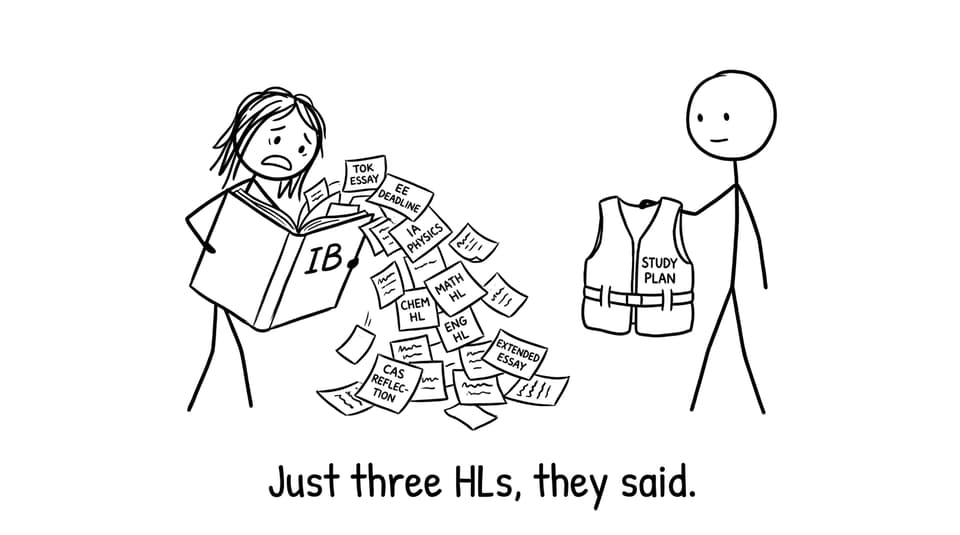
Quick checklist: what makes an IB subject “hard”?
Before we name names, here’s the simple pattern behind most “hardest IB subject” conversations:
-
Dense content: lots of concepts, lots of interconnections.
-
High precision: marks depend on exact method, wording, and structure.
-
Application over memory: you’re punished (gently, repeatedly) for rote learning.
-
Time pressure: even prepared students can run out of minutes.
-
Coursework load: IAs and written tasks compete with revision time.
A practical move: build your study around the loop learn → recall → apply → review. RevisionDojo is built around that loop using Study Notes, Flashcards, the Questionbank, AI Chat, and Grading tools.
If you want a one-page starting point for the platform workflow, see: RevisionDojo App: The Smarter Way to Prep for IB Exams.
The 5 hardest IB subjects (and why students struggle)
These aren’t “objectively impossible.” They’re just the ones that most often combine depth, pace, and unforgiving assessment.
IB Math AA HL
Math AA HL tends to earn its reputation because it’s not only hard -- it’s hard in layers. A topic like calculus isn’t just “do derivatives.” It becomes modeling, proof-style reasoning, and multi-step problems where one small algebra error can sink the rest.
Why it’s hard in IB
-
Abstract thinking shows up early and stays.
-
The pace can feel like you’re always “catching up.”
-
You need fluency, not familiarity.
What to do (that actually helps)
-
Practice daily, but keep it small: 20–30 minutes beats a weekly marathon.
-
Track your error patterns (sign mistakes, wrong method choice, weak algebra).
-
Do timed sets so you learn pacing, not just content.
Use: IB Mathematics Analysis and Approaches Resources for topic-aligned support, then add exam stamina with IB Mathematics Analysis and Approaches (AA) Predicted Papers. For a routine built for busy weeks, this helps: The Ultimate IB Math Study Routine for Busy Students.
IB Physics HL
Physics HL is where many students discover that knowing the formula is the smallest part of the job. The hard part is deciding which model applies, then explaining it cleanly under time pressure.
Why it’s hard in IB
-
Concepts stack: mechanics → fields → quantum ideas, and gaps compound.
-
Questions often test interpretation, not calculation.
-
Lab expectations can be time-consuming (and mentally draining).
What to do (that actually helps)
-
Learn each topic through diagrams first: forces, fields, energy flows.
-
After each practice set, write one “rule”: When I see X, I should consider Y.
-
Use targeted practice: don’t do “random” questions until you’ve fixed core weaknesses.
Revision support: IB Physics Resources and a focused starter topic like IB Physics Topic A.1 Kinematics Notes & Questions (SL/HL). When you get stuck mid-problem, RevisionDojo’s AI Chat can unblock you quickly, and the Questionbank keeps the practice aligned to how IB asks.
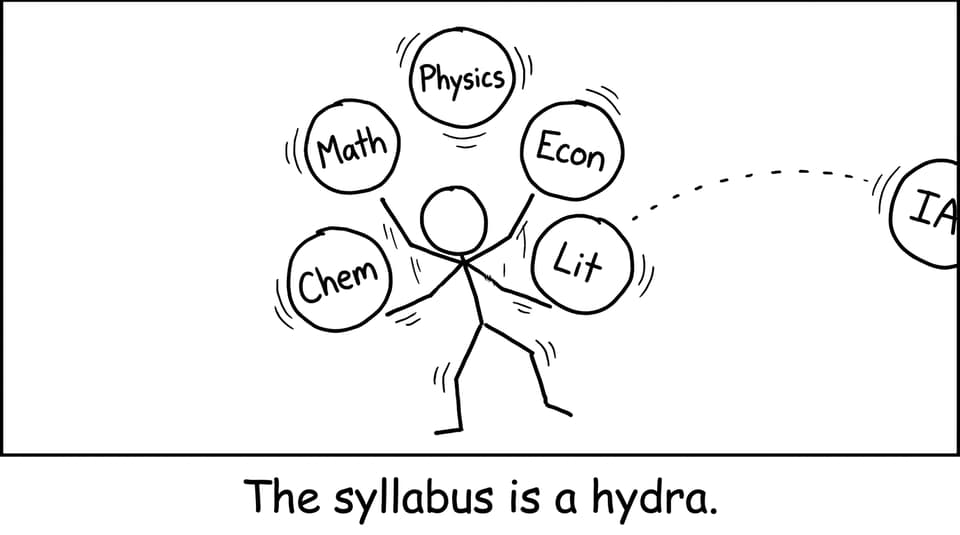
IB Chemistry HL
Chemistry HL is demanding because it asks for both breadth and detail. You need to move between microscopic models, symbolic equations, and real-world lab logic -- often in the same lesson.
Why it’s hard in IB
-
The syllabus is wide: structure, energetics, kinetics, organic mechanisms.
-
Precision matters: terms, conditions, trends, and explanations.
-
Lab skills and write-ups compete with revision time.
What to do (that actually helps)
-
Build a “core map” of recurring ideas (bonding, energy, equilibrium) and attach new topics to it.
-
Use spaced repetition for definitions, conditions, and trends.
-
Practice explaining why, not just what happens.
Strong starting points: IB Chemistry Resources and condensed review help like IB Chemistry Cheatsheets: Simplify Complex Concepts in Minutes. For tricky bonding, try: IB Chemistry Structure 2. Models of Bonding and Structure.
IB Economics HL
Economics HL surprises students because the content is readable, then the assessment arrives and asks for disciplined thinking. Your diagram must be correct, your analysis must follow, and your evaluation must sound like a calm judge -- not a panicked narrator.
Why it’s hard in IB
-
You must apply theory to unfamiliar contexts.
-
Essays reward structure, precision, and balance.
-
Diagrams are necessary, but never sufficient.
What to do (that actually helps)
-
Practice building answers from command terms: explain vs analyze vs evaluate.
-
Write short, timed paragraphs, not only full essays.
-
Use a consistent diagram routine: label, shift, describe, analyze, evaluate.
On RevisionDojo: start with IB Economics Resources and sharpen fundamentals with IB Economics 2. Microeconomics. For feedback that mimics examiner logic, the Grading tools help -- especially the IB Economics 10 marker Grader.
IB English Literature HL
English Lit HL is difficult in a different way. There’s no single “correct” answer, but there are absolutely correct standards: clarity, thesis control, evidence selection, and analysis that moves beyond summary.
Why it’s hard in IB
-
Reading load is heavy, and time disappears fast.
-
Writing must be both creative and controlled.
-
You’re graded on how you think on the page.
What to do (that actually helps)
-
Annotate for patterns: motifs, contrasts, power dynamics, narrative voice.
-
Build comparison pairs early for Paper 2 style thinking.
-
Practice introductions and topic sentences under time pressure.
Revision options: IB English A Lit Resources and targeted exam practice such as English Paper 1 - IB English Lit. If you’re taking Lang & Lit, exam simulation support can be found at IB English Lang & Lit Predicted Papers.
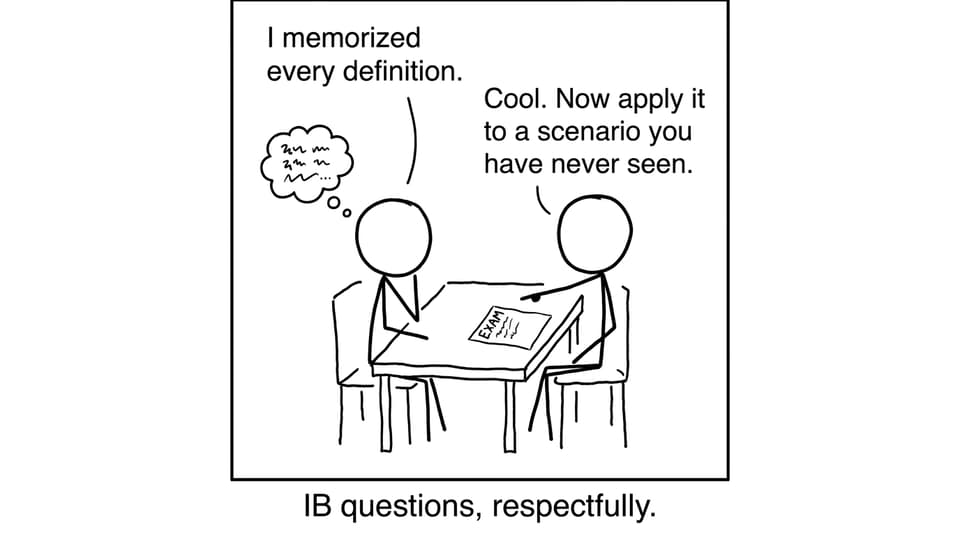
How to make hard IB subjects feel manageable
Hard subjects don’t become easy. They become familiar. And familiarity is built from small, repeated contact.
A simple weekly rhythm many IB students can sustain:
-
2 sessions: Learn with RevisionDojo Study Notes (clarity first).
-
4 sessions: Apply with the Questionbank (tight topic filters).
-
Daily 8–12 minutes: Flashcards (spaced repetition does the heavy lifting).
-
1 timed block: Mock Exams or Predicted Papers for pacing.
-
1 feedback loop: Use AI Chat for confusion + Grading tools for written accuracy.
If you’re unsure how to use prediction-style practice correctly, read: IB Predicted vs Specimen Papers: What They Mean.
Closing: hard IB subjects reward calm repetition
The hardest IB subjects aren’t trying to break you. They’re trying to shape you into someone who can think clearly when the question is unfamiliar and the clock is loud.
Pick your challenge with open eyes. Then build a system you can repeat.
When you’re ready, RevisionDojo brings the full toolkit into one place: Questionbank, Study Notes, Flashcards, AI Chat, Grading tools, Predicted Papers, Mock Exams, a Coursework Library, and Tutors when you need a human voice. Start with one topic today, and let consistency do what motivation can’t.
