


If you have ever walked out of an IB Psychology class feeling like you understand humans less than before, you are not alone. One day you are tracing behaviour to neurotransmitters; the next you are debating whether a lab experiment can ever be ethical, or whether culture quietly rewrites what you thought was “normal.” That tension is exactly why IB Psychology is powerful, and why it can feel overwhelming right before exams.
This guide breaks down IB Psychology for SL and HL: what you study, what you are assessed on, and the skills that quietly separate high scores from “I knew the content but ran out of time.”
What is IB Psychology, really?
IB Psychology sits in Group 3 (Individuals and Societies), but it behaves like a hybrid subject. It asks you to think like a scientist, write like a philosopher, and revise like a strategist.
You will integrate four big lenses:
-
Biological approach: brain, hormones, genetics, and how physiology shapes behaviour.
-
Cognitive approach: memory, perception, biases, decision-making.
-
Sociocultural approach: identity, stereotypes, conformity, cultural influence.
-
Research methods: how studies are built, evaluated, and kept ethical.
For a syllabus-aligned starting point, bookmark IB Psychology Resources and treat it like your home base.
IB Psychology structure (SL vs HL) in one checklist
When exam stress rises, clarity helps. Here is the structure you are signing up for in IB Psychology:
-
Teaching hours
-
SL: 150 hours
-
HL: 240 hours
-
-
Core content (SL and HL): biological, cognitive, sociocultural, and research methods.
-
Options
-
SL studies one option
-
HL studies two options
-
Common options include Abnormal, Developmental, Health, and Human Relationships.
-
-
Internal Assessment (IA): an experiment write-up of about 1,800 to 2,200 words, worth 20%.
If you want a quick way to turn structure into daily revision, build practice sets from Questionbank and then tighten memory with Study Notes.
IB Psychology assessment: what the examiners reward
You can know every study and still miss marks if you write “what you remember” instead of “what the command term asks.” In IB Psychology, assessment is a skill.
Paper 1 (SL and HL)
Paper 1 assesses the core approaches using a mix of short-answer and essay-style responses. You are rewarded for accurate concepts, sharp use of research, and clear evaluation.
Paper 2 (SL and HL)
Paper 2 focuses on your option(s).
-
SL writes one essay (1 hour).
-
HL writes two essays (2 hours).
If you are revising sociocultural topics, practicing with The Individual and the Group helps you learn how exam questions are actually phrased.
Paper 3 (HL only)
Paper 3 is where HL students often feel the “extra depth.” It focuses on qualitative research methods and responds to an unseen stimulus.
Start your targeted prep with Paper 3 Guidance and drill exam-style prompts via Paper 3 Questionbank.
Internal Assessment (SL and HL)
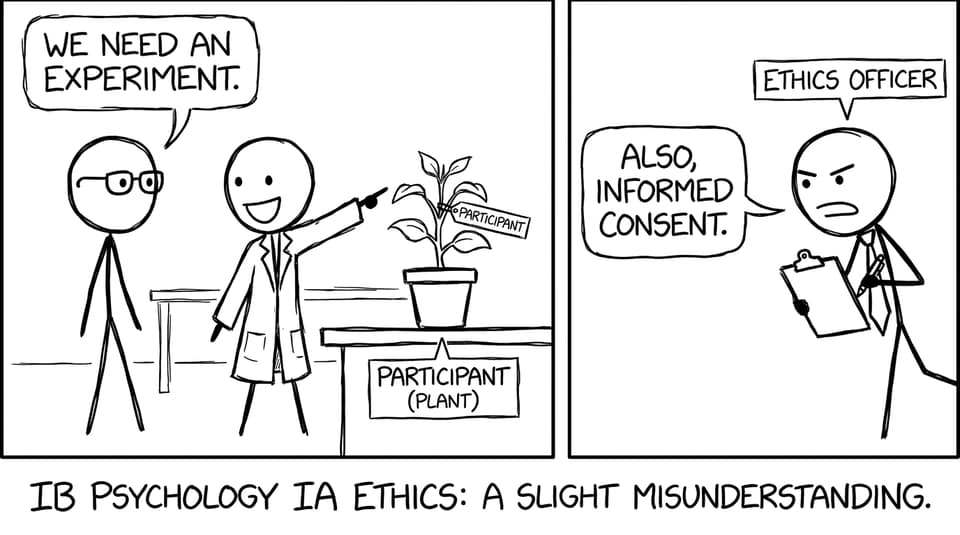
The IA is your chance to be the researcher: design, run, analyse, reflect. Examiners look for method clarity, ethical awareness, accurate analysis, and thoughtful evaluation of limitations.
For HL students on the newer course, IB Psychology Coursework Guides can save you from the classic trap: writing a “cool” experiment that does not match the criteria.
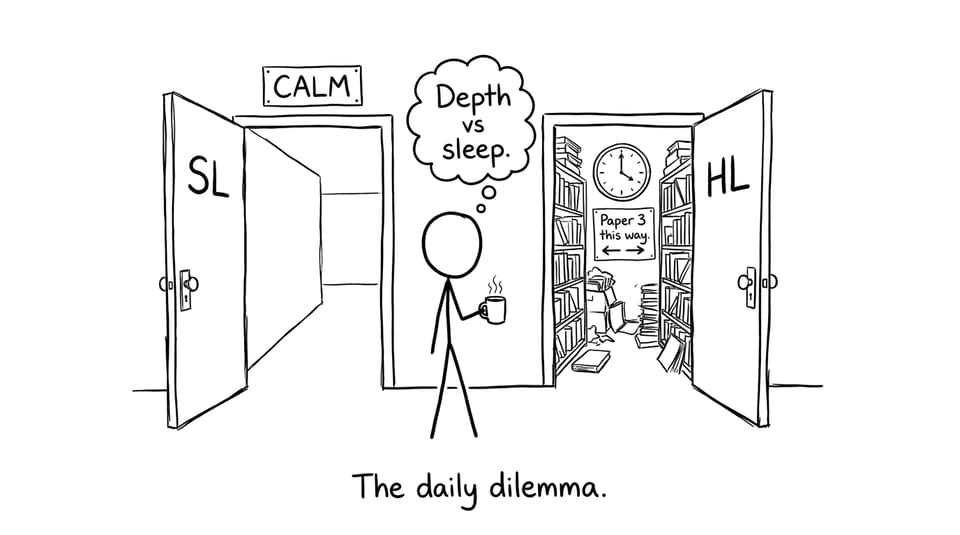
Skills that lift your IB Psychology score
Content is necessary, but it is not the full game. Strong IB Psychology students practice these exam-facing skills:
-
Study-to-question matching: knowing which approach or option a question is really targeting.
-
Research evaluation: not just stating limitations, but linking them to validity, reliability, or generalisability.
-
Ethics and cultural sensitivity: showing you understand why methods matter, not just what happened.
-
Essay structure under time pressure: argument, evidence, evaluation, conclusion.
A simple loop works well: learn from IB Psychology Resources, test yourself with the Questionbank, refine with Flashcards, then use AI Chat and grading tools to tighten your responses before you repeat.
Final thoughts: turn IB Psychology into a system
IB Psychology rewards students who build calm routines: learn the approaches, practise questions, refine evaluation, and repeat until the exam format feels familiar. If you want that system in one place, RevisionDojo brings together Questionbank practice, Study Notes, Flashcards, AI Chat, grading tools, Predicted Papers, Mock Exams, a Coursework Library, and Tutors, all designed around how IB students actually prepare.
Start with IB Psychology Resources, choose one topic, and do the next small step today. Momentum is a study strategy too.