
Can IB Detect ChatGPT? Start With the Real Fear
The night before a deadline has a special kind of gravity. Your screen is bright, your brain is dim, and the temptation is simple: “Just make it sound better.”
That’s where the modern IB student meets ChatGPT.
Not because you want to cheat. Often because you’re tired, stuck, and trying to keep up with six subjects, CAS, and a calendar that never forgives. But the question still lands the same way in your stomach: Can IB detect ChatGPT?
The honest answer is that the IB does not publish a single magic “AI detector” that makes everything obvious. But it does have systems, people, and patterns that make risky use of AI easier to spot than most students think.
Quick Checklist: Safe vs Risky AI Use in IB
If you want a fast filter before we go deeper, use this:
-
Safe (usually): asking AI to explain a concept, quiz you, or help you plan a study schedule.
-
Safer: using curriculum-aligned tools like Jojo AI for explanations and practice, then writing everything yourself.
-
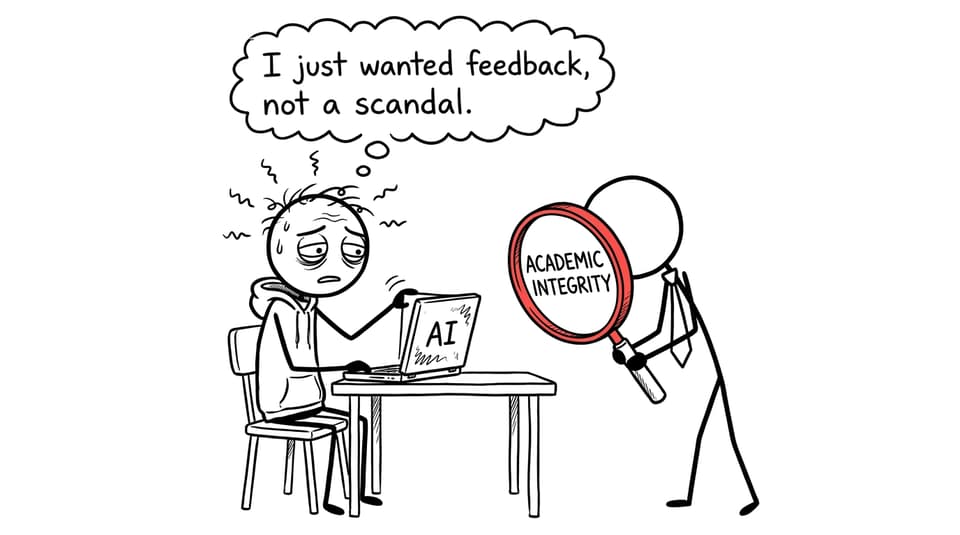
Risky: submitting AI-generated paragraphs in an IA, EE, TOK essay, or any assessed writing as if you authored it.
-
Very risky: copying an AI response, lightly editing it, and hoping nobody notices.
-
Always smart: asking your teacher what your school expects for AI disclosure and drafting.
For a bigger view of what counts as misconduct, see IB Academic Misconduct Explained: How to Avoid Plagiarism and Collusion.
How IB Detection Works (Even Without a “Perfect” AI Detector)
When students ask whether the IB can detect ChatGPT, they’re usually imagining a scanner that flashes red: AI CONTENT FOUND. Real life is messier. Detection is often probabilistic and human.
Text similarity checks still matter
Classic plagiarism tools look for overlap with existing sources. AI text may be “new,” but it often repeats common phrasing and structure. If you also fed the AI class notes or sources you didn’t cite well, the risk climbs. The IB process is designed to surface anything that looks unoriginal, over-polished, or mismatched.
If you’re worried about originality in coursework, read IB Coursework Plagiarism Check: Ensure Academic Integrity.
Your teacher is a detection system
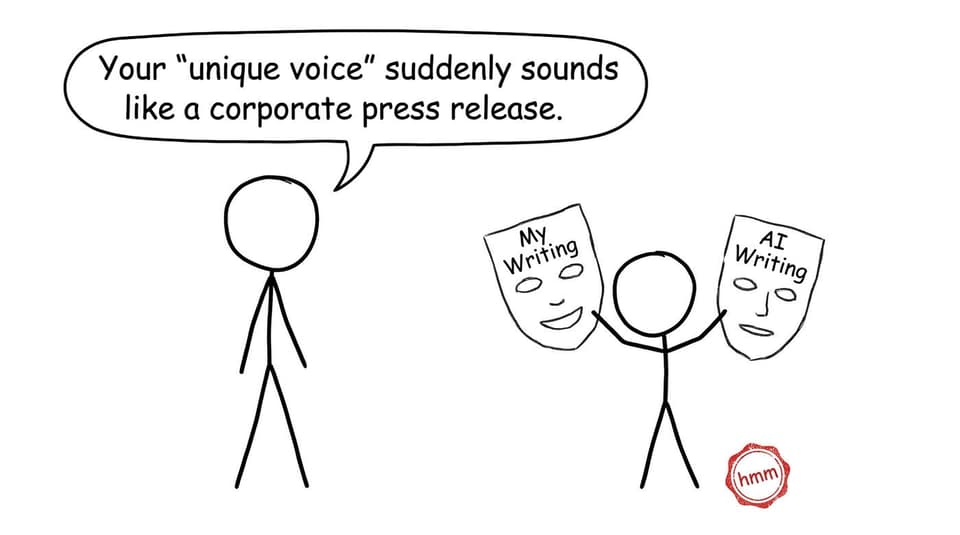
In the IB, your teacher often knows your voice, your typical errors, and your level of clarity under pressure. When a draft suddenly reads like a press release, it stands out.
That’s why students who rely on ChatGPT for “final wording” feel safe until the simplest question arrives: “Can you explain what you meant by this sentence?”
Internal consistency is what breaks first
AI misuse is often detected through inconsistency, not a tool.
Common red flags include:
-
sophisticated vocabulary but shallow reasoning
-
perfect flow but missing the subject-specific method
-
citations that don’t match claims
-
a jump in quality that doesn’t match prior work
In other words: the IB doesn’t need to “prove” you used ChatGPT with 100% certainty to see that something is off and ask questions.
IB Academic Integrity: The Point Is Bigger Than Punishment
Academic integrity in the IB isn’t meant to be a trap. It’s meant to protect the value of your learning.
If you want the long-term framing, Why Academic Integrity Matters in the IB: Lessons for Life and University explains it well.
Here’s the quieter truth students discover late: the work you struggle through becomes the work you can reproduce under exam conditions.
And that’s the exam bargain. The IB rewards transfer: can you apply ideas when the prompt changes? Can you write under time? Can you defend your choices?
AI can support that bargain, or sabotage it.
The Responsible Way to Use AI for IB Exam Prep
Used well, AI becomes a coach. Used poorly, it becomes a crutch that snaps when you need it most.
Use AI to build understanding, not finished answers
A strong IB use case is: “Explain this like I’m new, then test me.”
Inside RevisionDojo, Jojo AI is designed around that kind of learning loop: explanation, follow-up questions, interactive practice, and feedback.
If you want a deeper comparison, see Jojo AI vs ChatGPT.
Convert confusion into practice
The fastest way to turn AI into real marks is to convert help into repetition:
-
Clarify the topic with Study Notes
-
Drill it in a Questionbank set
-
Turn your mistakes into Flashcards
-
Re-test under time pressure using Mock Exams or Predicted Papers
RevisionDojo is built to connect that whole chain: Questionbank, Study Notes, Flashcards, AI Chat, Grading tools, Predicted Papers, Mock Exams, Coursework Library, and Tutors.
Start with Questionbank when you need volume, structure, and markscheme-style feedback.
And when you want to simulate pressure, How to Study for IB Mocks (Without Burning Out) offers a realistic routine.
Use grading and rubric tools to stay honest and improve faster
One of the safest uses of AI in the IB is feedback.
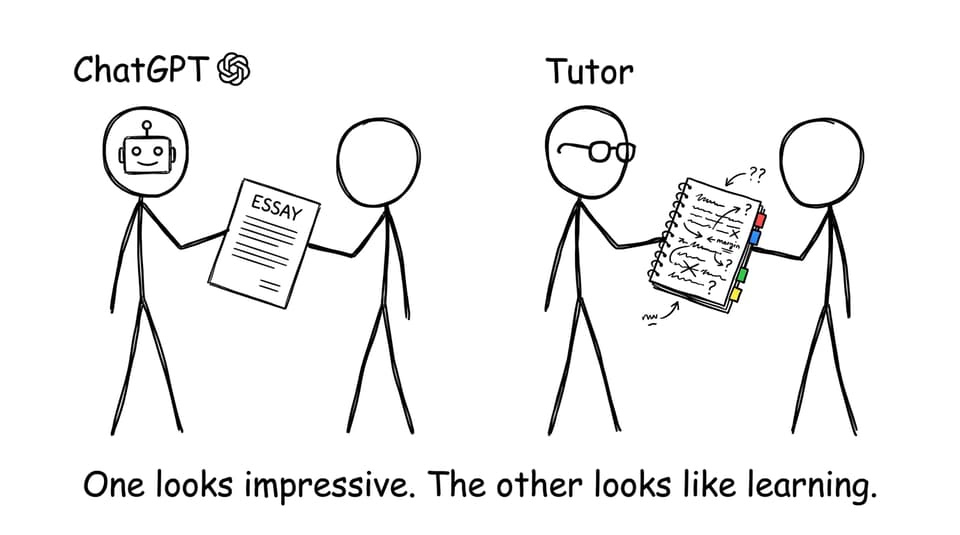
RevisionDojo’s Grading tools are built to show you what a criterion is asking for, where your draft is weak, and what to fix next. That supports authorship instead of replacing it.
For broader guidance on building integrity habits (not just avoiding trouble), read Teaching Academic Integrity as a Habit of Mind.
Conclusion: IB Can Detect Patterns, But You Can Choose Better Ones
So, can IB detect ChatGPT? Often, yes, not always through a single tool, but through the trail of signals that show when writing isn’t truly yours.
The better question for an IB student preparing for exams is: Will AI make me more capable under pressure? If the answer is yes, you’re using it well.
RevisionDojo is built for that kind of honest advantage: use Study Notes to get clear, Questionbank to apply, Flashcards to retain, AI Chat to unblock confusion, Mock Exams and Predicted Papers to rehearse, Grading tools and the Coursework Library to strengthen your writing, and Tutors when you need a human strategy shift.
If you want your next study session to feel both ethical and effective, start at RevisionDojo and build a revision loop you can trust on exam day.