The graph of is shown below. The points and lie on the graph, with a minimum at .
(a) the graph of on the diagram below.
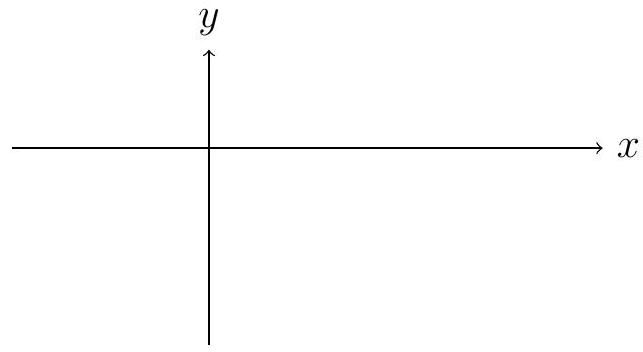
(b) The point is on the graph of . Find the coordinates of the corresponding point on the graph of .

Practice IB Mathematics Analysis and Approaches (AA) Topic SL 2.11—transformation of Functions with authentic exam-style questions for both SL and HL students. This question bank focuses on the exact syllabus content for SL 2.11—transformation of Functions and mirrors Paper 1, 2, 3 style where relevant.
Get instant solutions, detailed explanations, and build confidence with questions aligned to IB examiner expectations.
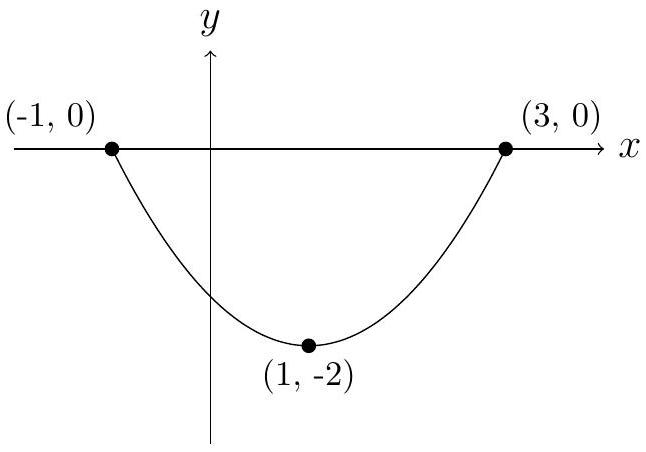
The graph of is shown below. The points and lie on the graph, with a minimum at .
(a) the graph of on the diagram below.

(b) The point is on the graph of . Find the coordinates of the corresponding point on the graph of .

The function is defined by , where .
(e) The graph of can be generated through a sequence of a vertical stretch and a vertical translation of the graph of . these two transformations, clearly stating the order in which they should be performed.
The basic function is for . Define the transformed function
(c) Solve for , giving your answers correct to 3 d.p.
The graph of is transformed by the following sequence of four transformations.
A horizontal stretch with scale factor , then a translation of units in the positive -direction.
A vertical stretch with scale factor , then a translation of units in the positive -direction.
(a) Find the equation of the resulting graph in the form .
(b) Write down the period of this graph and the range of the corresponding function.
(c) Find the two smallest positive values of for which .
(d) Find the smallest positive value of at which this graph meets the line .
The basic function is for . Define
(c) Solve for . Give exact values and values correct to 3 decimal places.
(a) the exact value of .
(b) the exact value of .
(c) an expression for the inverse function .
(d) Using your result from part 3, or otherwise, the value of .
(a) the transformations that map to .
(b) the domain and range of .
(d) . Using technology, solve for . Give all solutions correct to 3 d.p.
(a) the transformations mapping to .
(b) the domain and range of .