Question
View answerSLPaper 1A
The graph shows equal-sized particles crossing a protein-free phospholipid bilayer. Which result conflicts with the expected effect of its hydrophobic core?
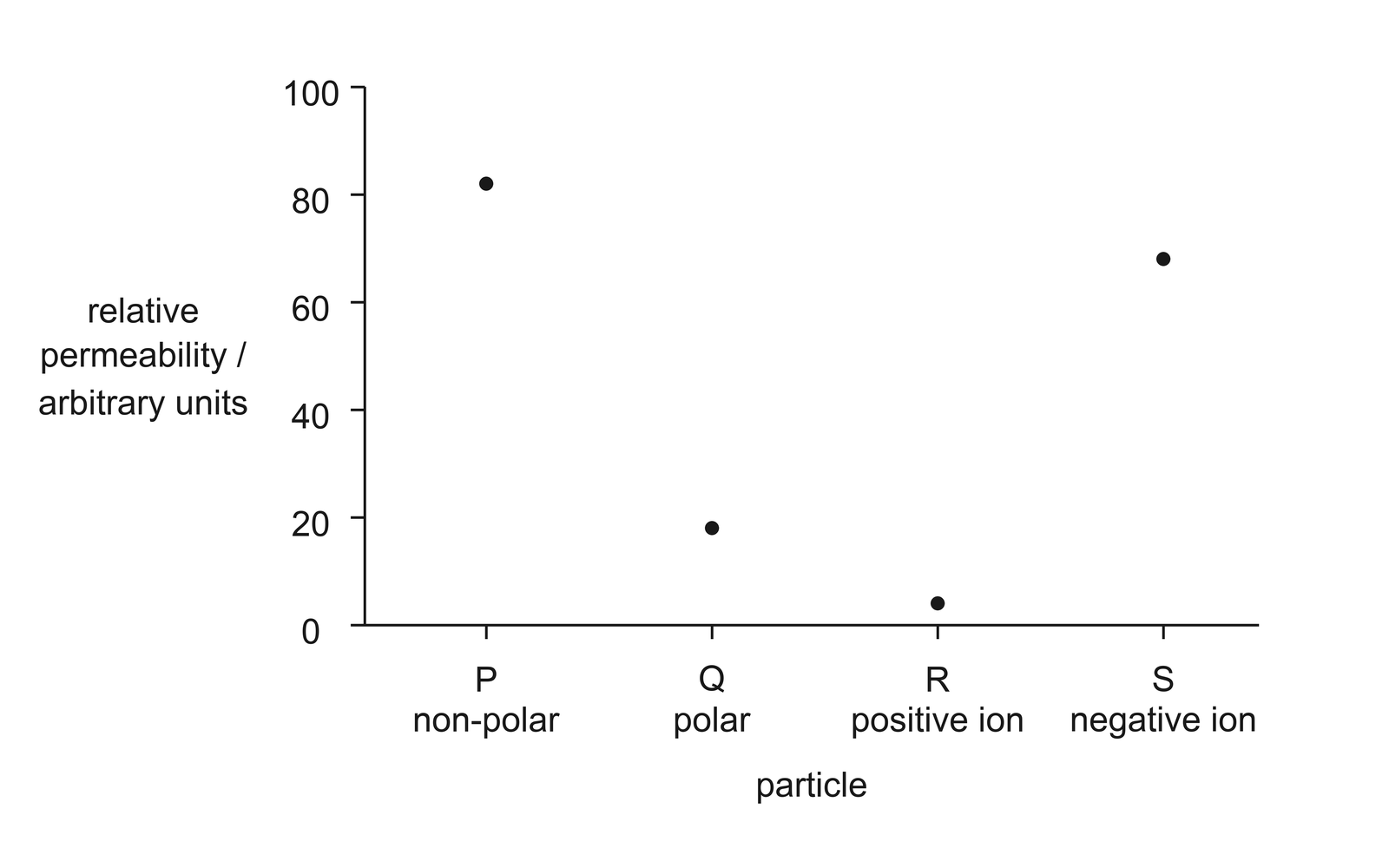
The graph shows equal-sized particles crossing a protein-free phospholipid bilayer. Which result conflicts with the expected effect of its hydrophobic core?
Which of the following best explains why phospholipids spontaneously form bilayers in aqueous environments?
What structural feature of channel proteins makes them highly selective for certain ions or molecules?
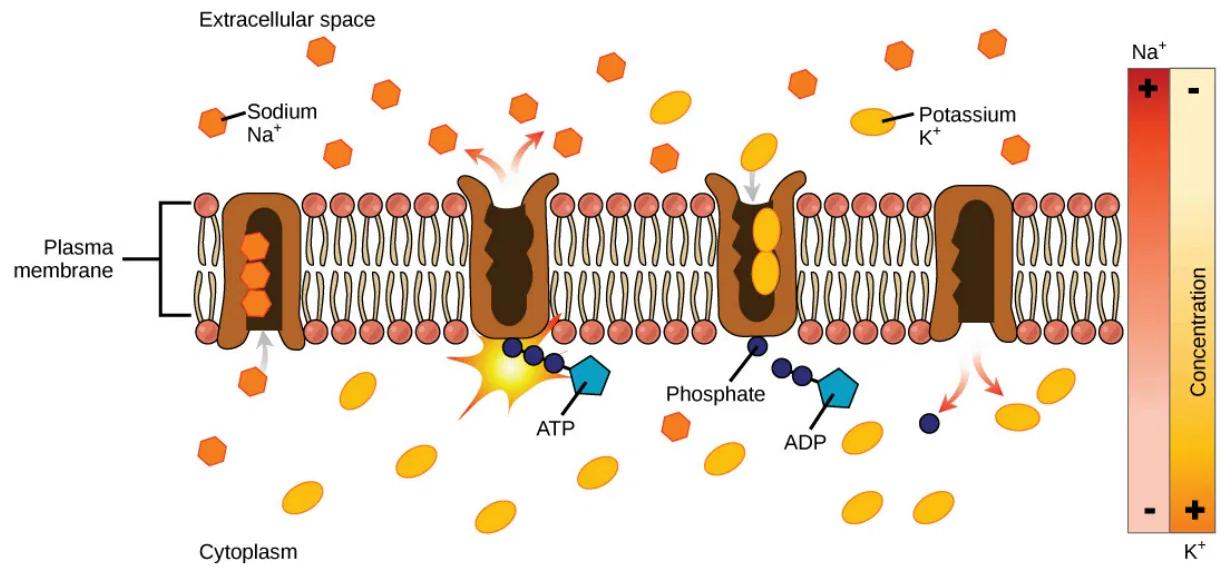
Which of the following best describes how the process shown in the image contributes to maintaining the resting membrane potential of a neuron?
Phospholipids form bilayers in water. Replacing each polar phosphate group with a non-polar group would most likely have which effect?
Practice IB Biology Topic B2.1 Membranes and Membrane Transport with authentic exam-style questions for both SL and HL students. This question bank focuses on the exact syllabus content for B2.1 Membranes and Membrane Transport and mirrors Paper 1A, 1B, 2 style where relevant.
Get instant solutions, detailed explanations, and build confidence with questions aligned to IB examiner expectations.