The extended essay (EE) is a compulsory component of the DP core.
The EE is an opportunity for DP students to explore a topic of interest in their chosen subject.
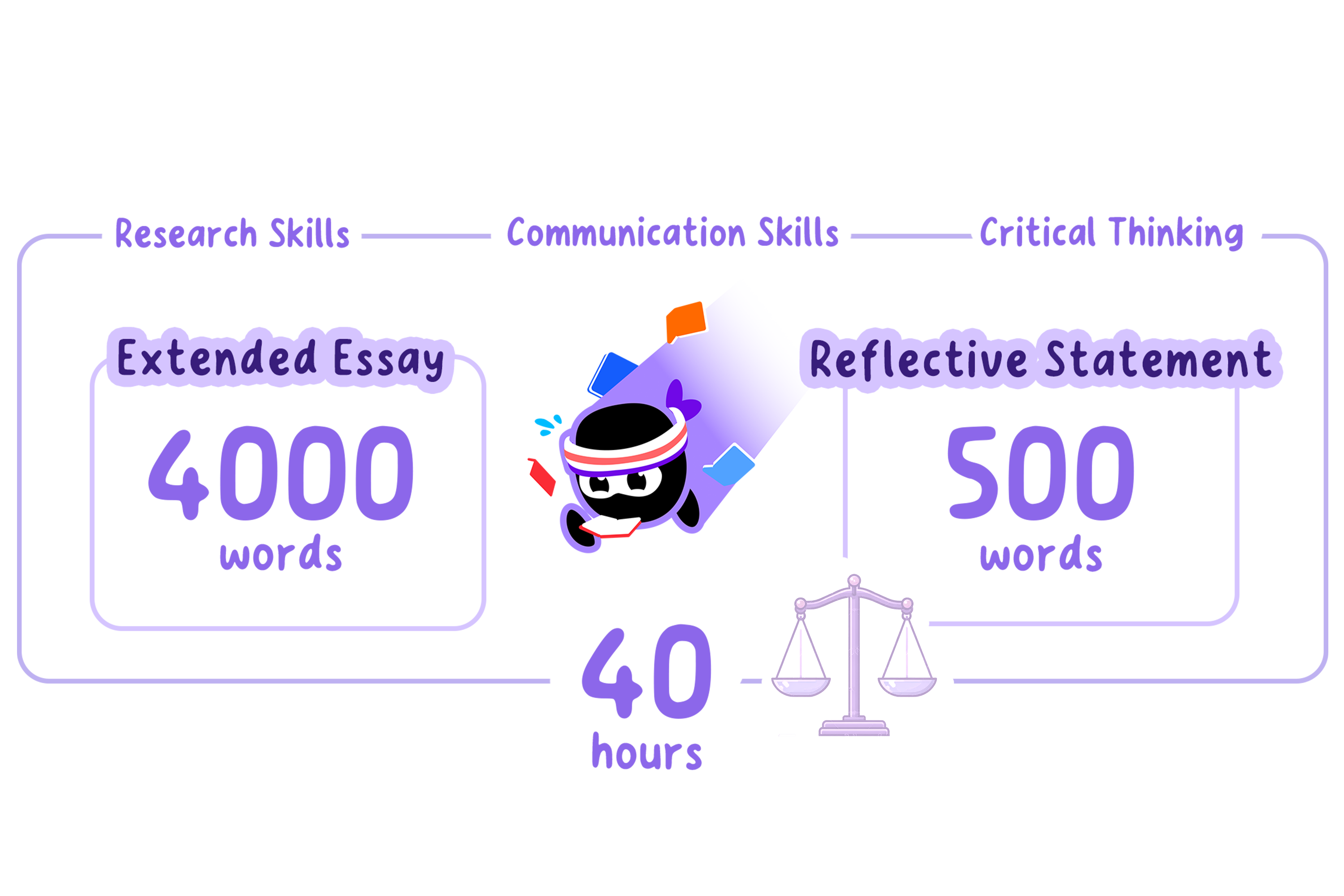
It allows for the development of research skills, communication skills, and encourages critical thinking.
Although an EE can be taken in different subjects, this guide will focus on an EE in economics.
Undertaking an EE in economics allows students to research a topic of interest in the field.
While the EE is predominantly a secondary data research project, primary data can also be collected and used to round out an economics investigation depending on the chosen topic.
The EE has a word count of 4000 words, together with a 500-word reflective statement.
Note
It is expected that the EE will involve approximately 40 hours of student work.
Purpose of the EE.
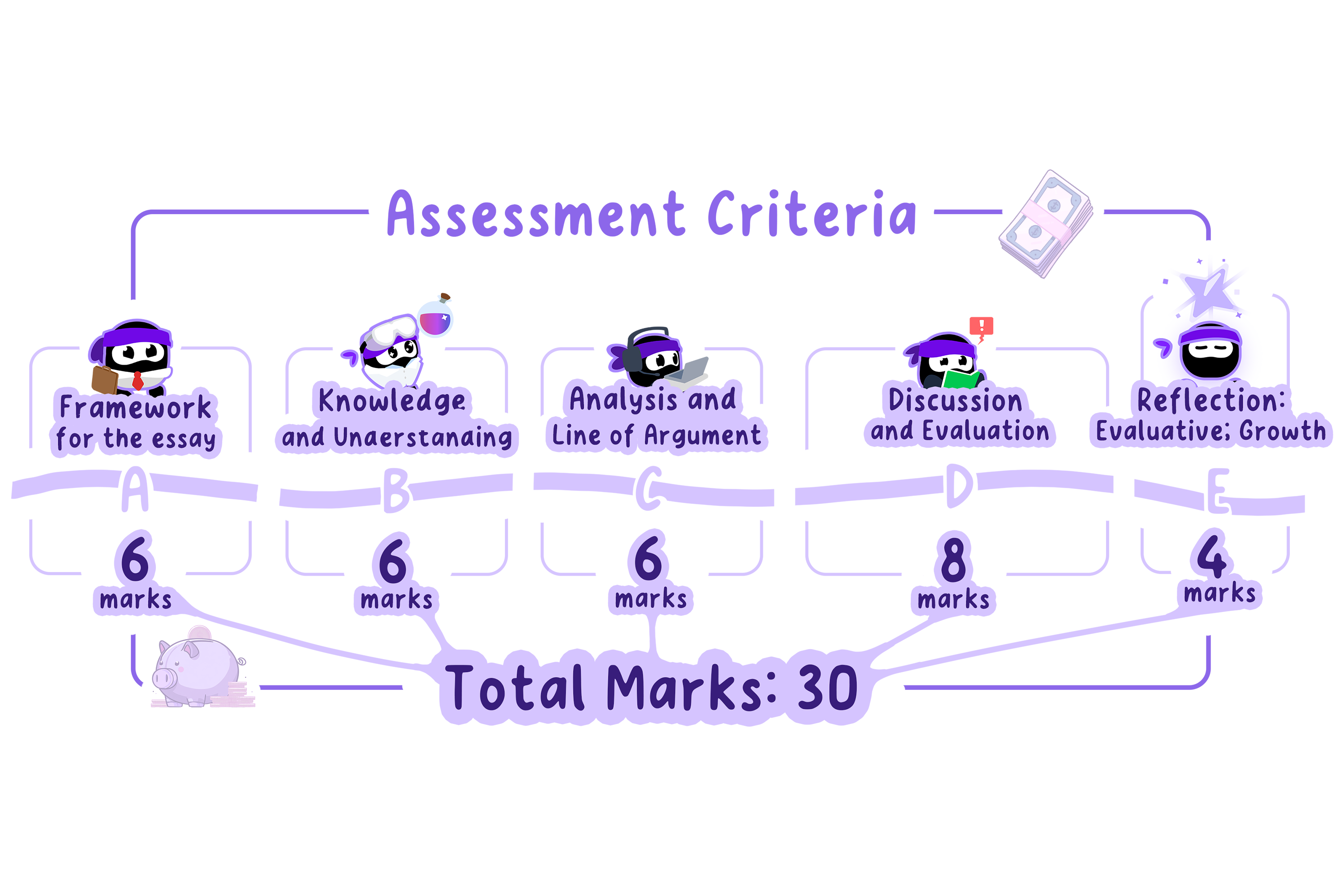
The EE is externally assessed against five criteria, which are listed below.
EE assessment criteria.
Together with TOK, the EE can contribute a maximum of three points to a student's overall Diploma score.
Note
A student must achieve a D or above for the EE to be awarded a Diploma.
A grade E in the extended essay is known as a failing condition.
Supervision in the EE
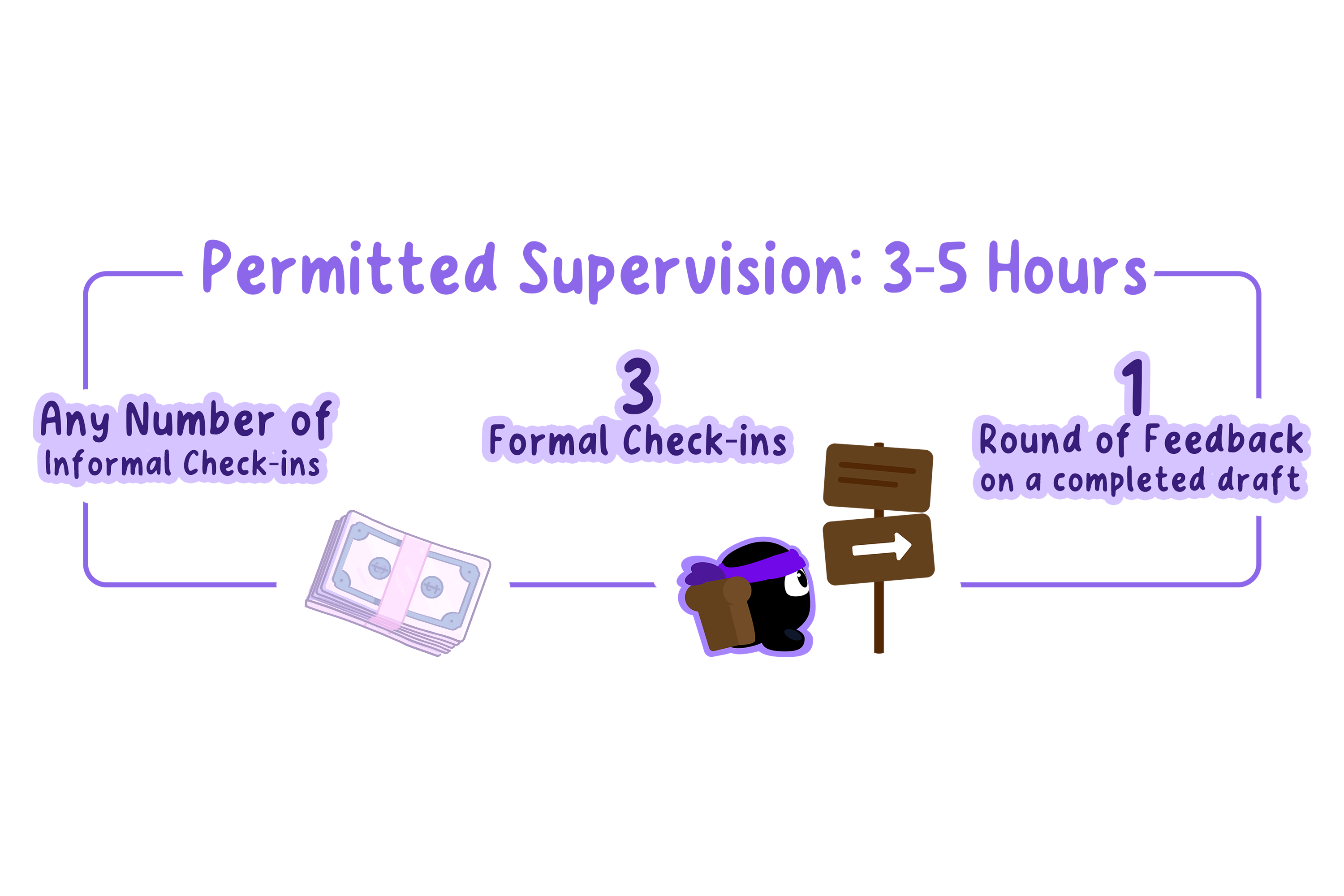
Components of permitted supervision during EE.
Each student is assigned a supervisor during the EE process, who is usually the teacher responsible for teaching the subject.
The supervisor is an essential part of the EE process.
Although the EE should be a student-led piece of work, it is important to remember that you are not alone.
Throughout the EE process, it is important that the student and the supervisor have regular meetings to discuss the progress of the EE.
Your supervisor is responsible for making sure that you understand the EE writing process.
This includes ensuring that you have access to the criteria and other support materials, such as exemplar extended essays for reference.
The total time allowed for supervision is between three and five hours (it must not exceed five hours).
Note
This time includes the informal check-in sessions as well as the three required formal reflection sessions.
Supervisors should also be available for regular check-ins in addition to the three mandatory reflection sessions.
They are responsible for providing feedback on one completed draft of the essay.
Supervisors are permitted to give written feedback on only one completed draft of the EE.
The feedback given should be related to how the work could be improved.
The essay must not be heavily annotated or edited by the supervisor.
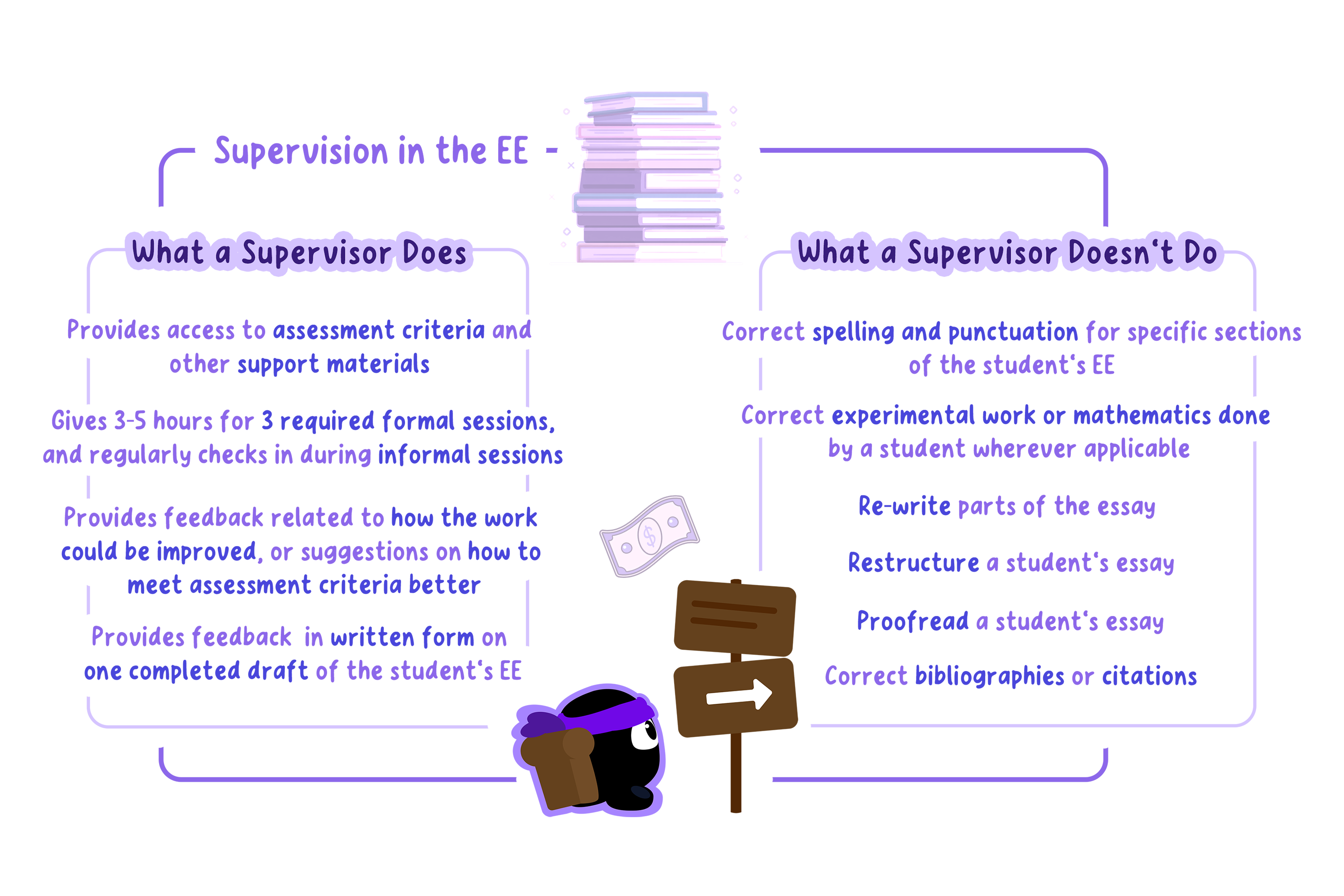
The following is a list of what supervisors cannot do:
Correct spelling and punctuation
Correct experimental work or mathematics
Re-write any part of the essay
Indicate where whole sections of the essay would be better placed
Proofread the essay for errors
Correct bibliographies or citations
Tip
Proofreading of the essay should be done by the student (in addition to a spelling or grammar checker)
It is not permitted to ask another person to do it
Summary of what your supervisor does and does not do.
Academic Integrity
The IB takes academic honesty extremely seriously and the EE is no exception.
Any work that is not the work of the student including the use of AI must be correctly cited.
Note
This includes paraphrasing, in-text citations, secondary data, literature values, graphs, figures and diagrams as well as citation of any prompts used with AI tools.
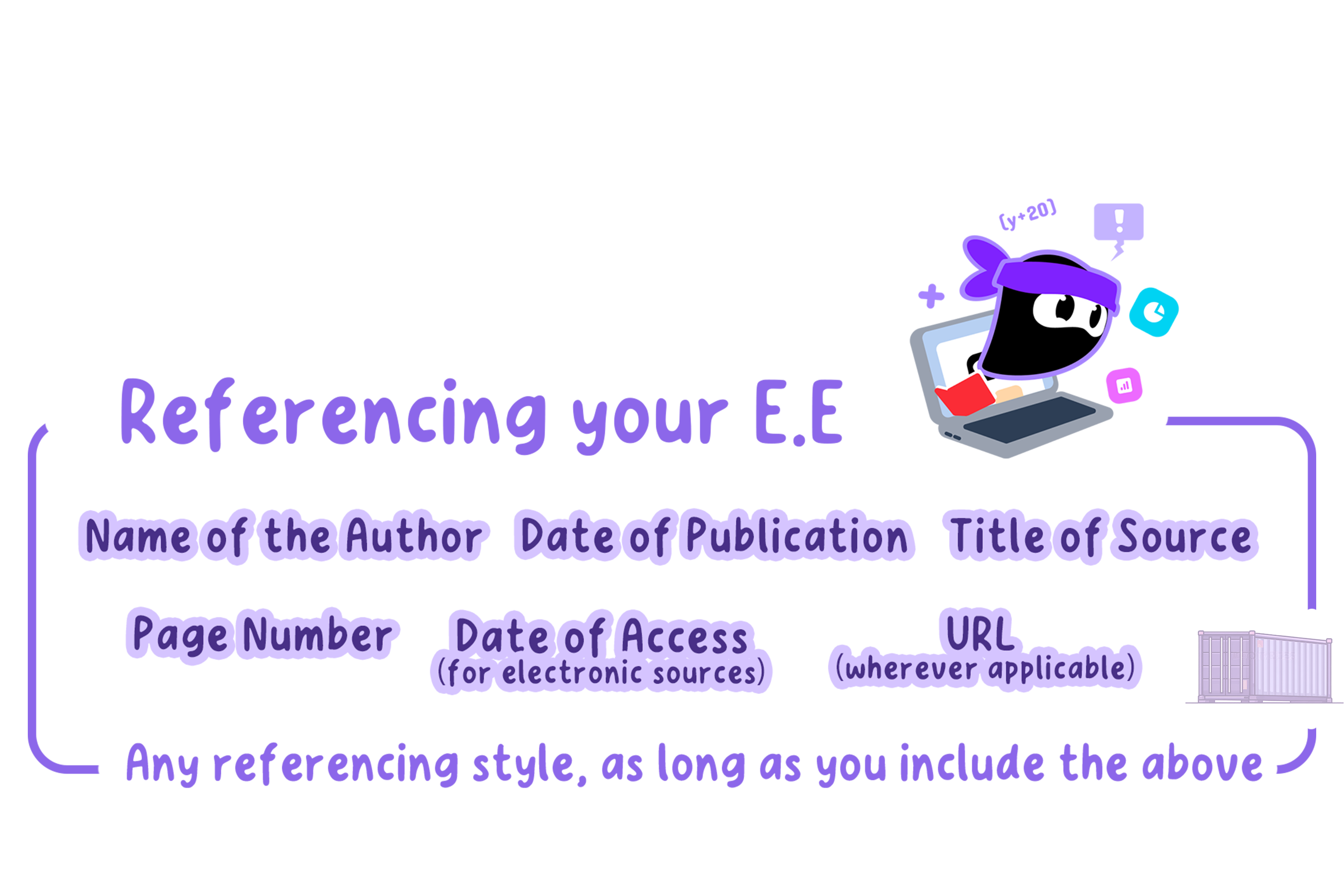
The actual reference style is not prescribed but whatever style is used, it should include the following and be consistently used throughout the work.:
Name of the author
Date of publication
Title of the source
Page number
Date of access for electronic sources
URL (where applicable)
Summary about referencing your EE.
Choosing a Topic
The choice of topic for an economics EE should be based on personal interest and enthusiasm for that topic.
This is because you are much more likely to be engaged in the EE writing process if you are interested in and have a genuine enthusiasm for said topic.
It is strongly recommended that students who choose an EE in economics take economics as a subject (some schools may have this as a requirement).
This ensures that the student has the necessary subject knowledge and skills to complete the process.
The topic itself must be grounded in economics.
Topics that span many different disciplines are only marked on their economics content, which could result in a lower mark being awarded for your EE.
It is also important to consider the time and resources available at your school.
Topics that are too simple or too complex are also unsuitable.
Tip
Once again, it is important to discuss your ideas with your supervisor, who will be able to provide you with the appropriate guidance.
It might be helpful to have a background knowledge of the topic, but it is not essential. Once you have chosen and started researching your topic, you will be required to conduct your background research, so prerequisite knowledge is not required.
Note
The choice of topic need not be limited to the DP Economics syllabus; it is perfectly acceptable to conduct an EE in a topic outside of the syllabus as long as it is suitable.
Key Points
It is strongly recommended that students who are undertaking an EE in economics also take the subject in the DP.
The chosen topic must be firmly grounded in economics.
Consider the available time and resources when choosing your topic.
The EE is a 4000-word academic research paper, and as such, the choice of topic must be of suitable complexity.
The topic does not have to be chosen from the DP Economics syllabus as long as the topic is suitable.
Hint
Indeed, examiners usually reward students who include economic theory beyond what is studied in the DP Economics course.
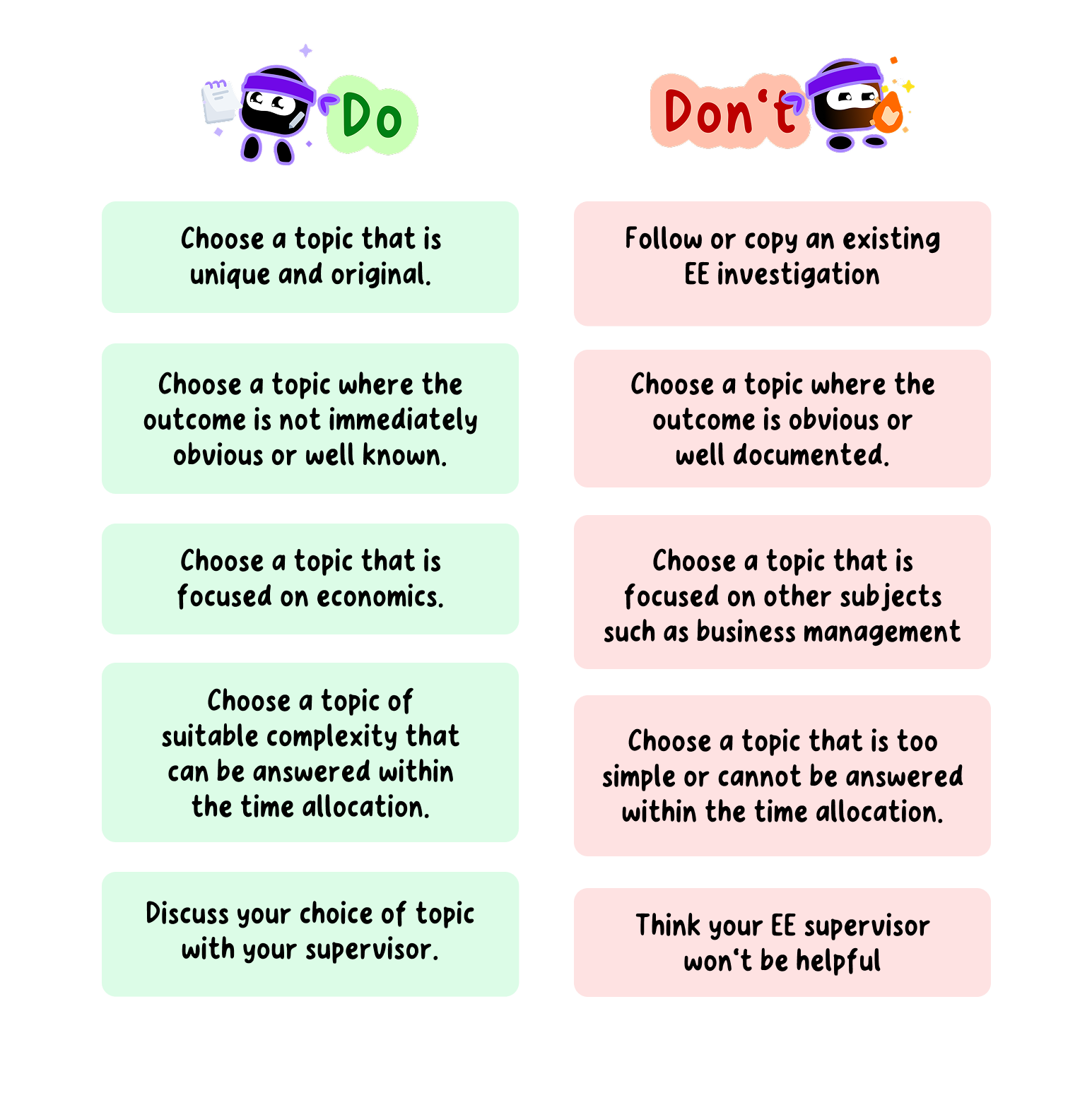
Do's & Don'ts for your Econ EE
The Researcher's Reflection Space (RRS)
It is strongly recommended that students use the researcher’s reflection space (RRS) to document the EE process. The RRS is an important resource when writing the 500-word reflective statement.
Note
The RRS can take the form of a reflective journal and can be an online resource or a physical resource.
Students should discuss the RRS and the form that it could take early in the EE process.
Extended Essay
View Exemplars
And thousands of other examples from high-scoring students.