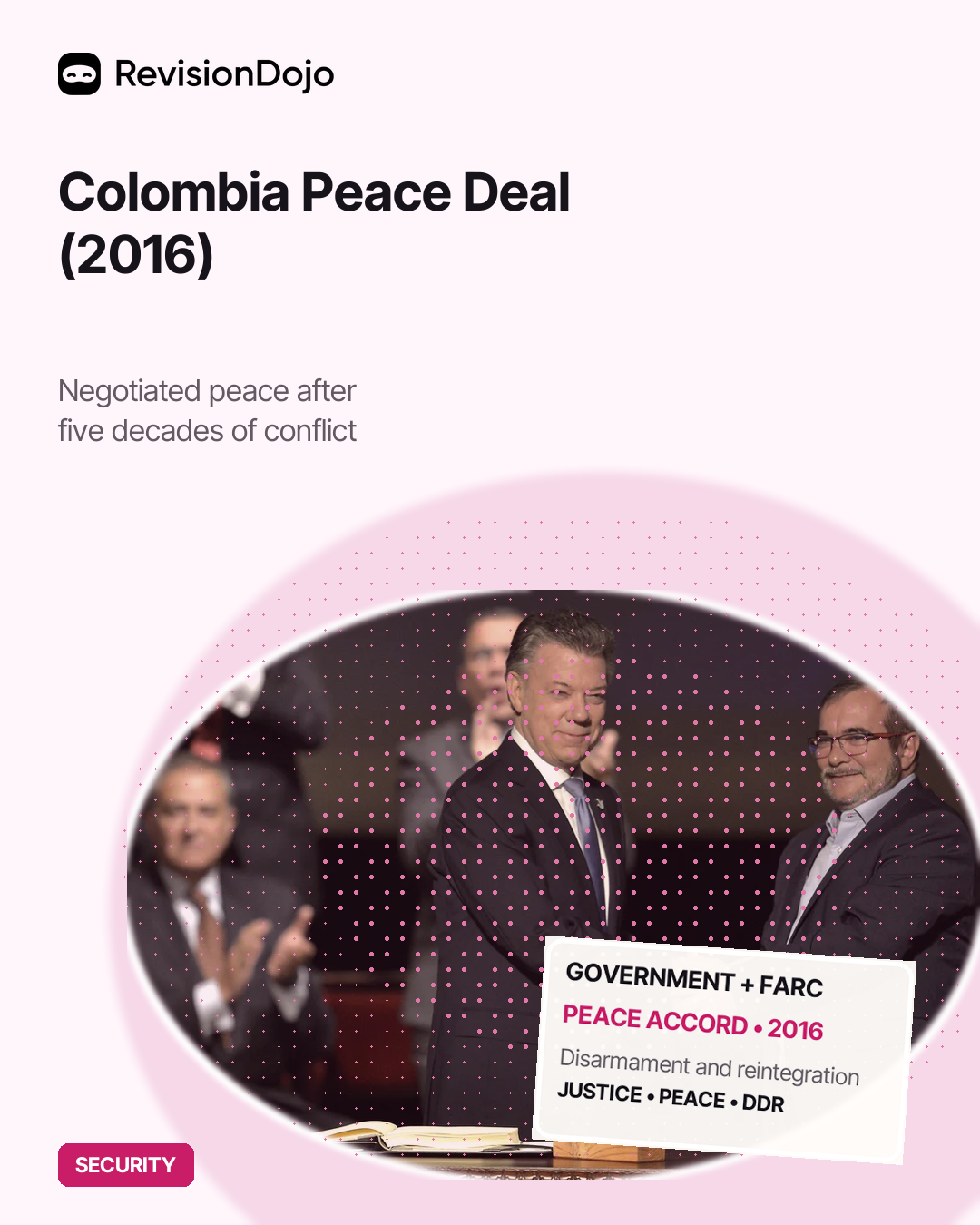
Context: The Colombia Peace Deal (2016) was an agreement between the Colombian government and the Revolutionary Armed Forces of Colombia (FARC) after more than five decades of armed conflict. The conflict involved guerrilla warfare , state security forces , paramilitary groups , drug-trafficking networks , and severe violence against civilians, especially in rural areas. The 2016 peace agreement aimed to end the conflict through a negotiated settlement rather than outright military victory. A central part of the agreement was Disarmament, Demobilization, and Reintegration (DDR) ,
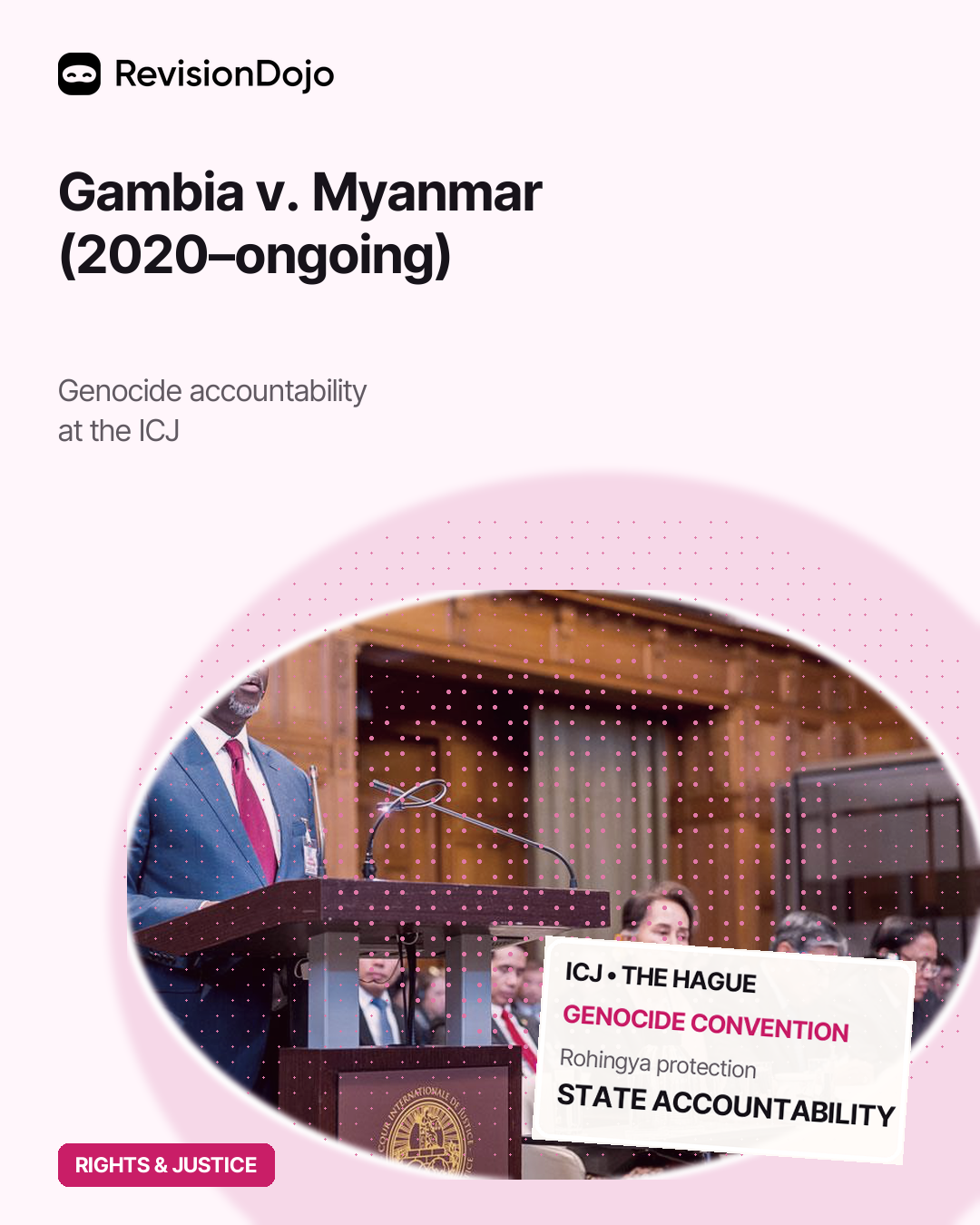
Context: In November 2019, The Gambia, acting on behalf of the Organisation of Islamic Cooperation (OIC) , filed a case against Myanmar at the International Court of Justice (ICJ) under the Genocide Convention , alleging that Myanmar's military operations against the Rohingya constituted genocide. The case is legally significant as the first time a state with no direct national connection to the alleged victims invoked the Genocide Convention's "erga omnes partes" obligations, establishing that all Convention states have a legal interest in preventing and punishing genocide. This became a
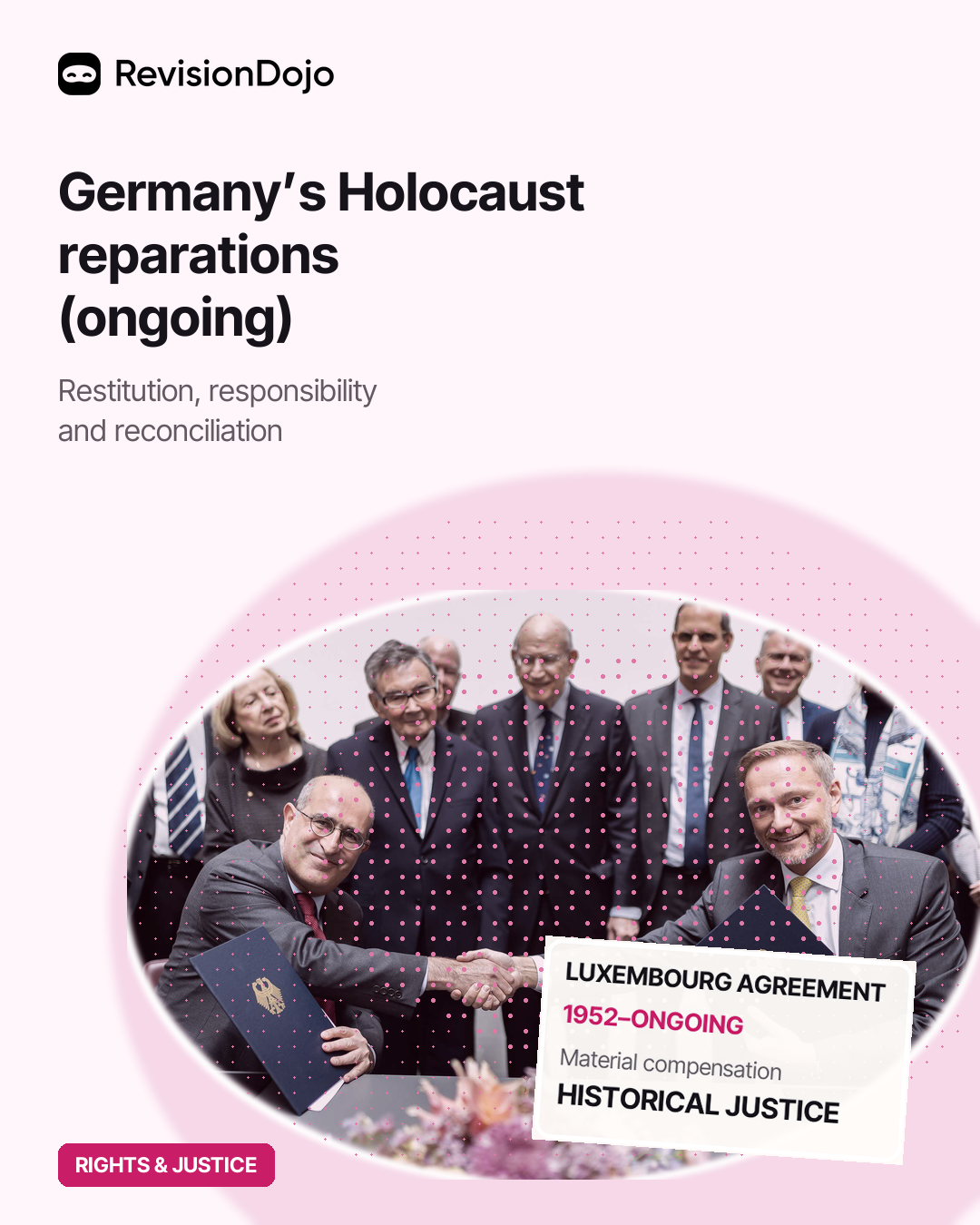
Context: Germany's Holocaust reparations programme, initiated through the Luxembourg Agreement (1952) between West Germany, Israel, and the Jewish Claims Conference, represents the most significant and sustained reparations programme in modern history, providing over 90 billion euros to Holocaust survivors and their descendants since 1952. The programme has evolved over decades to address new categories of victims including those in formerly communist Eastern Europe who were initially excluded, and continues today with ongoing payments to ageing survivors and institutional acknowledgments
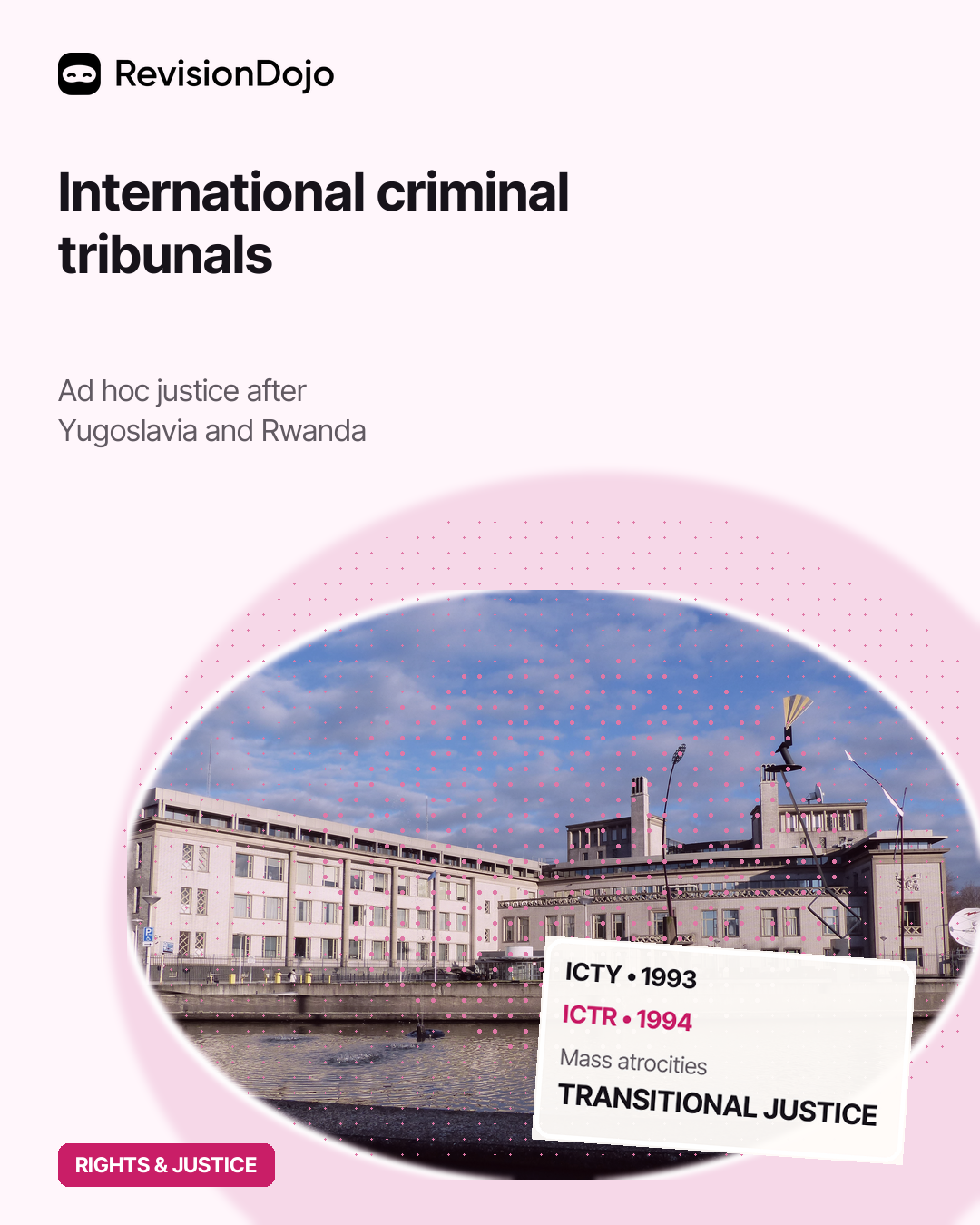
Context: International Criminal Tribunals, including the International Criminal Tribunal for the former Yugoslavia (ICTY, 1993) and the International Criminal Tribunal for Rwanda (ICTR, 1994) , were established by the UN Security Council to prosecute individuals responsible for genocide, war crimes, and crimes against humanity in specific post-conflict situations. These ad hoc tribunals represented the first international criminal courts since Nuremberg and Tokyo, establishing the principle that individuals bear criminal responsibility for mass atrocity crimes under international law, and
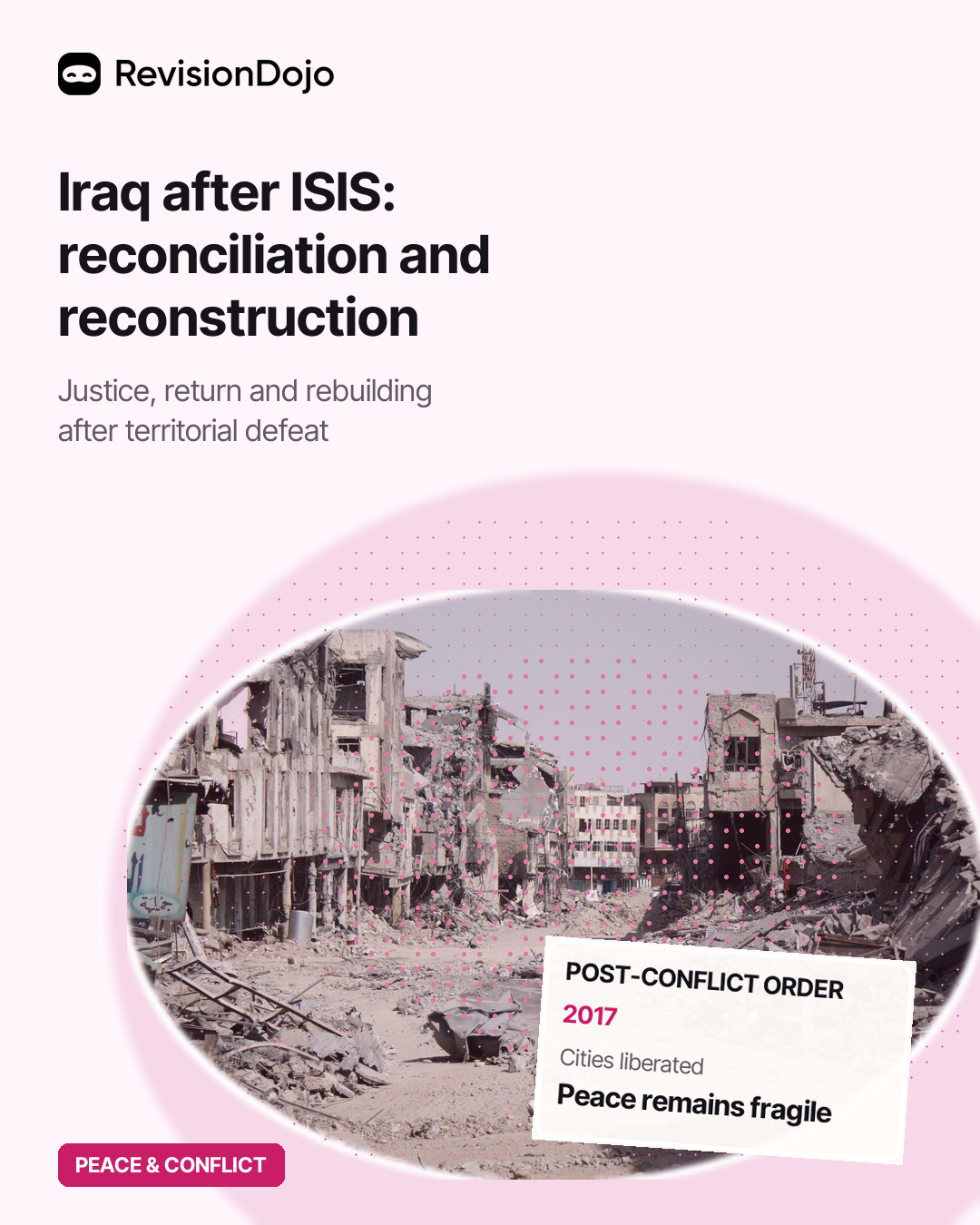
Context: Following the territorial defeat of ISIS in Iraq in December 2017, the Iraqi government faced the challenge of rebuilding a shattered state while reconciling deeply divided ethno-sectarian communities . Mosul, Iraq's second largest city, lay in ruins after nine months of urban warfare, with an estimated 80% of its Old City destroyed. ISIS had governed territory home to approximately 8 million Iraqis between 2014 and 2017, creating a legacy of mass atrocities, displacement, and social fracture. The post-conflict period has been defined by struggles over transitional justice, return
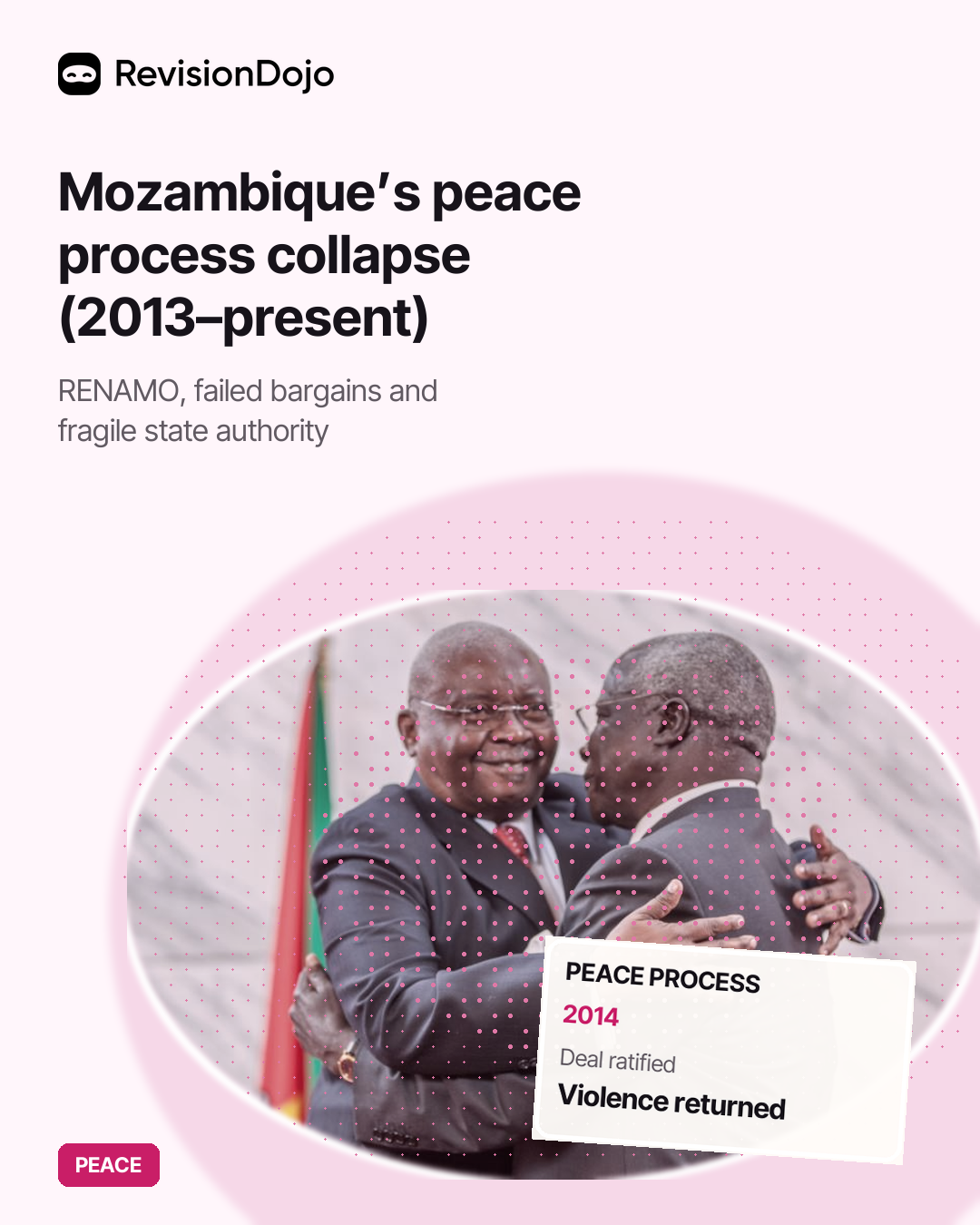
Context: Mozambique's peace process, once celebrated as a model of post-civil war reconciliation after the 1992 General Peace Agreement ended 16 years of conflict , collapsed dramatically when RENAMO returned to armed insurgency in 2013. The country now faces a compounding crisis as a new Islamist insurgency in Cabo Delgado province threatens the north while political violence erupted across the country following the disputed October 2024 elections. The 2024 election crisis saw security forces kill over 300 protesters according to civil society monitors, as opposition supporters rejected re
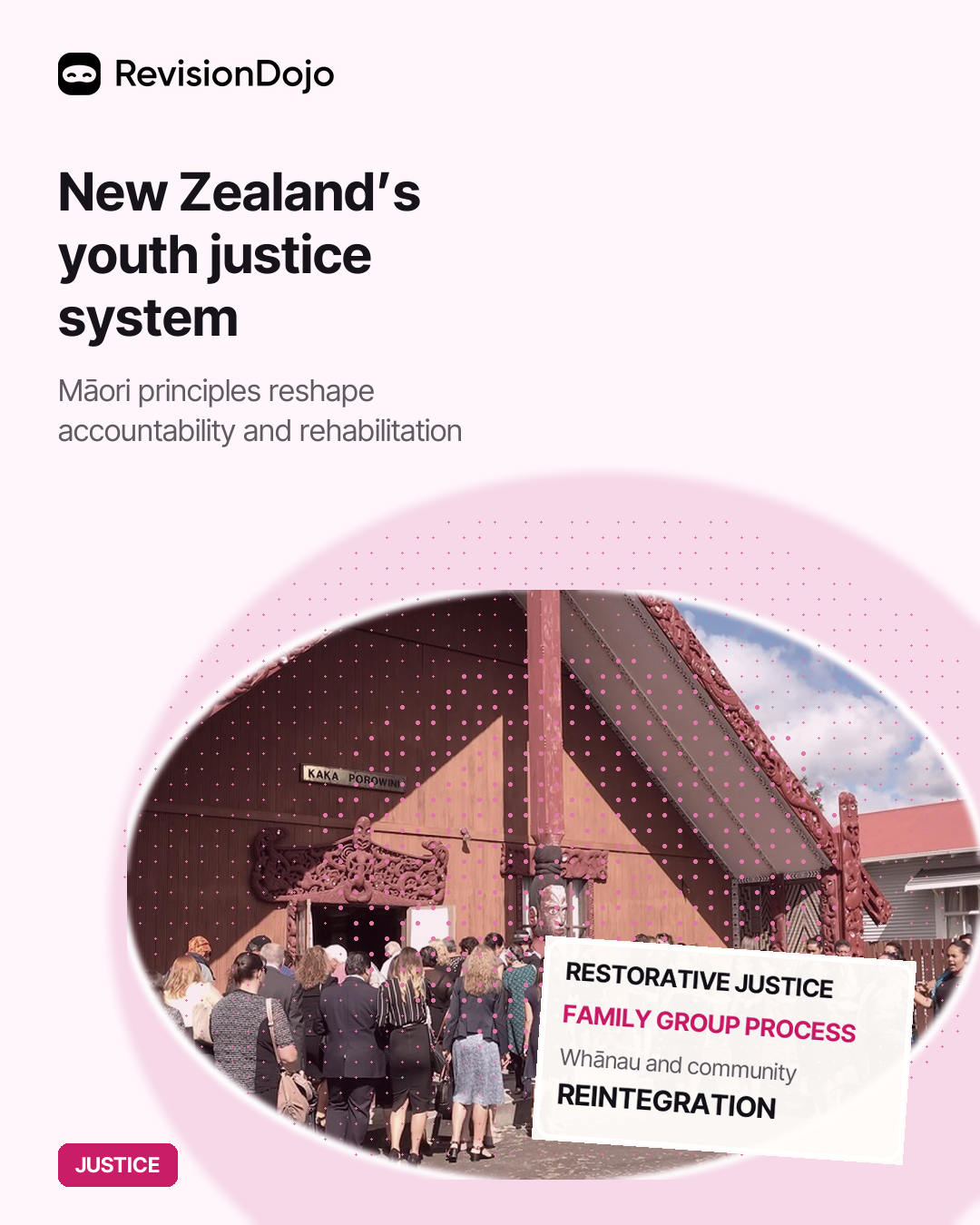
Context: New Zealand's Youth Justice System, established under the Children, Young Persons, and Their Families Act (1989) , is internationally recognised as one of the most innovative and effective approaches to juvenile justice, replacing traditional punitive court processes with Family Group Conferences (FGCs) rooted in Maori concepts of collective responsibility and restorative justice. The system diverts the vast majority of young offenders away from formal courts through police warnings, youth aid referrals, and FGCs, reserving formal prosecution for the most serious cases and resultin
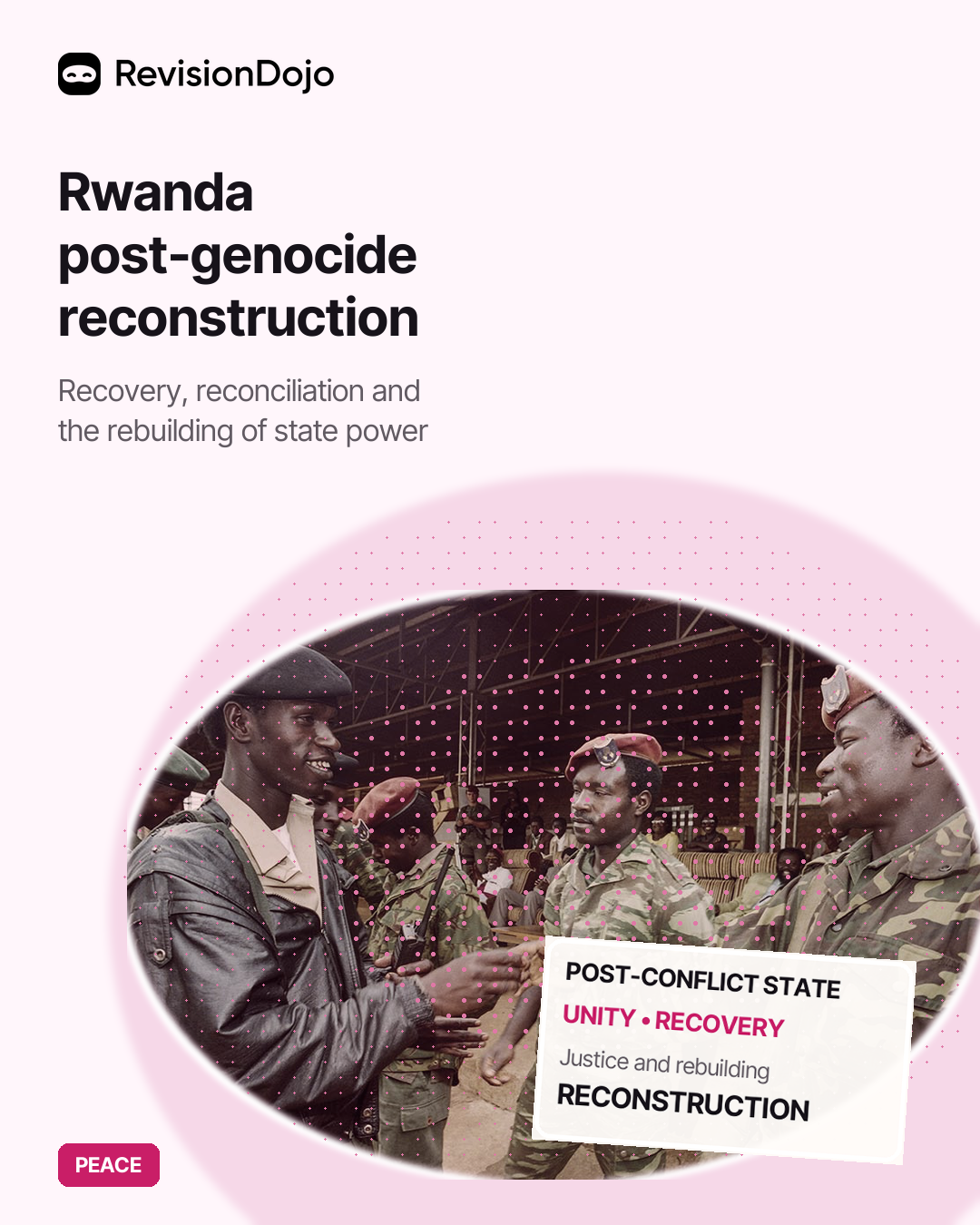
Context: Following the 1994 genocide that killed approximately 800,000 people in 100 days, Rwanda has undergone one of the most remarkable post-conflict reconstruction processes in modern history, rebuilding state institutions, achieving significant economic growth, pioneering community-based transitional justice through the Gacaca courts, and establishing the world's highest female parliamentary representation. The RPF government under President Paul Kagame has pursued a developmental authoritarian model combining extraordinary economic and social development achievements with systematic s
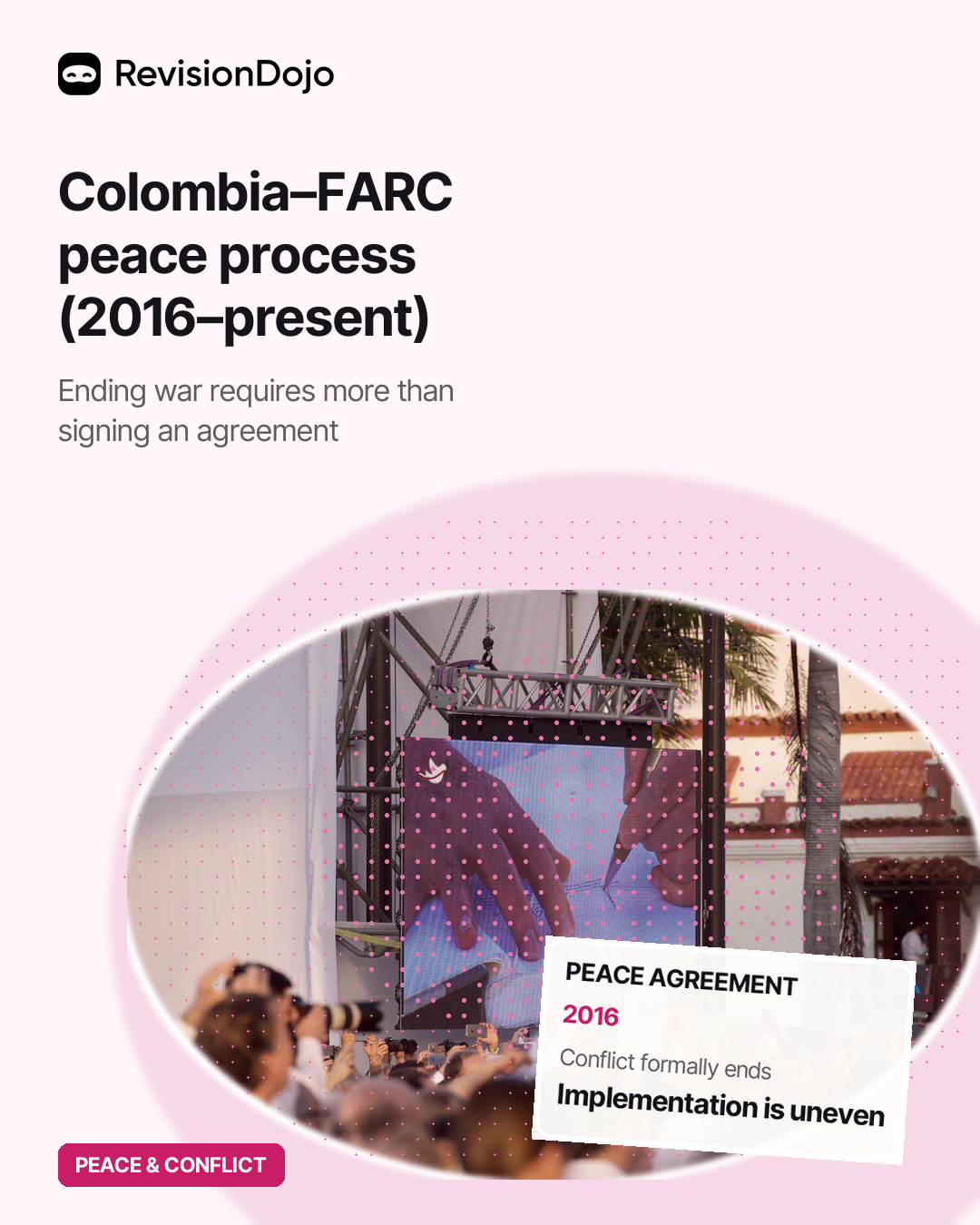
Context: In November 2016, the Colombian government signed a historic peace agreement with the FARC-EP (Revolutionary Armed Forces of Colombia), ending a 52-year armed conflict that had killed over 260,000 people, displaced 7 million, and left 80,000 missing. The agreement was brokered with Cuban and Norwegian mediation and represented the most comprehensive peace agreement of the 21st century . The peace process survived a shock rejection in an October 2016 referendum (50.2% No), after which a revised agreement was ratified by Congress . Implementation has been uneven: FARC disarmament wa
Context: The United Nations Mission in South Sudan (UNMISS) was established by UN Security Council Resolution 1996 (2011) when South Sudan gained independence from Sudan, making it the world's newest state. UNMISS was tasked with supporting peace consolidation, state-building, and civilian protection in a country with almost no functioning institutions. In December 2013, civil war erupted between forces loyal to President Salva Kiir and those supporting former Vice President Riek Machar, rapidly acquiring an ethnic dimension between the Dinka and Nuer communities and producing one of the w
Context: Thomas Lubanga Dyilo was the first person convicted by the International Criminal Court (ICC) in March 2012, found guilty of the war crime of conscripting and enlisting children under the age of 15 and using them to participate actively in hostilities in the Ituri region of the Democratic Republic of Congo between 2002 and 2003. Lubanga was the leader of the Union des Patriotes Congolais (UPC) and its armed wing the FPLC, which recruited child soldiers as young as seven years old and used them in ethnic conflict against the Lendu community in Ituri, a conflict that killed approxim