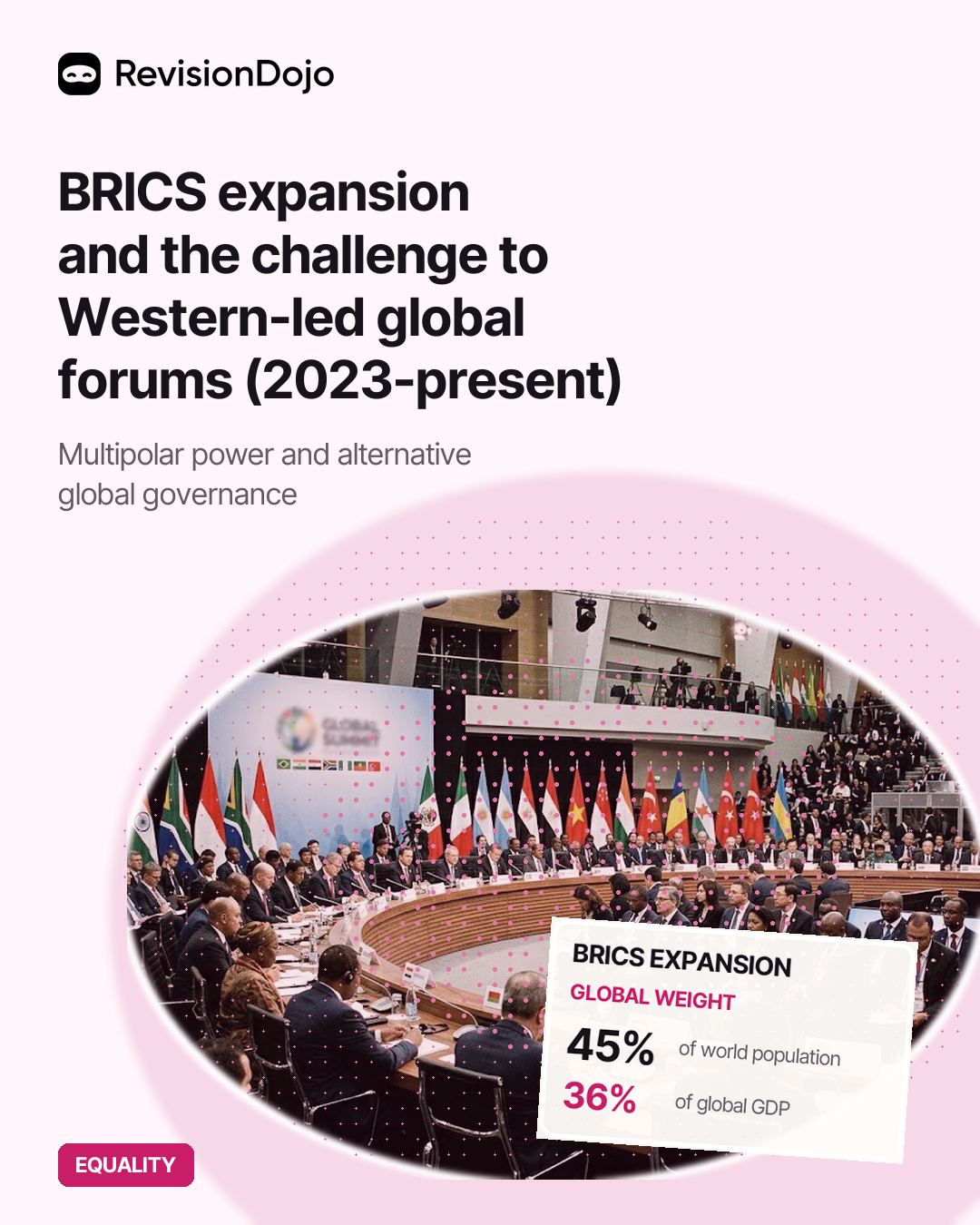
Context: At the Johannesburg summit in August 2023, the BRICS grouping - originally Brazil, Russia, India, China, and South Africa - invited six new members to join from January 2024: Egypt, Ethiopia, Iran, Saudi Arabia, and the UAE (Argentina declined under new President Milei). This expansion transformed BRICS from an informal economic acronym into a political bloc explicitly challenging Western-dominated global governance, with the expanded grouping representing over 45% of the world's population and approximately 36% of global GDP. The expansion signalled a fundamental shift in global p
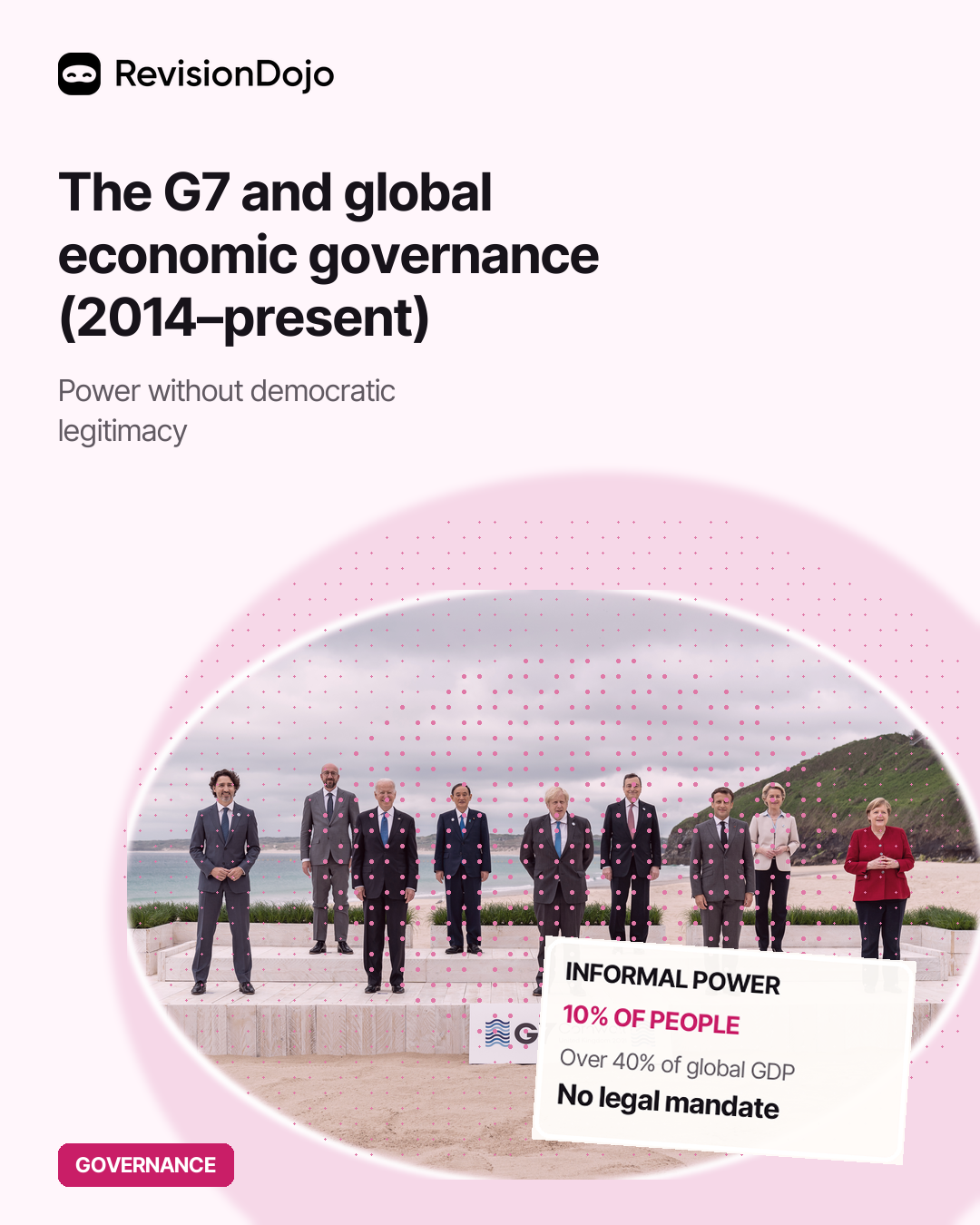
Context: The Group of Seven (G7) - comprising the United States, United Kingdom, France, Germany, Italy, Canada, and Japan - is the world's most influential informal political forum , setting the agenda on issues from economic policy to security despite having no charter, no permanent secretariat, and no legal authority. Founded in 1975 as a response to the oil crisis, the G7 evolved from an informal fireside chat among leaders into a powerful coordination mechanism whose communiques move markets and shape global policy. Russia's expulsion from the G8 in 2014 after its annexation of Crimea tr
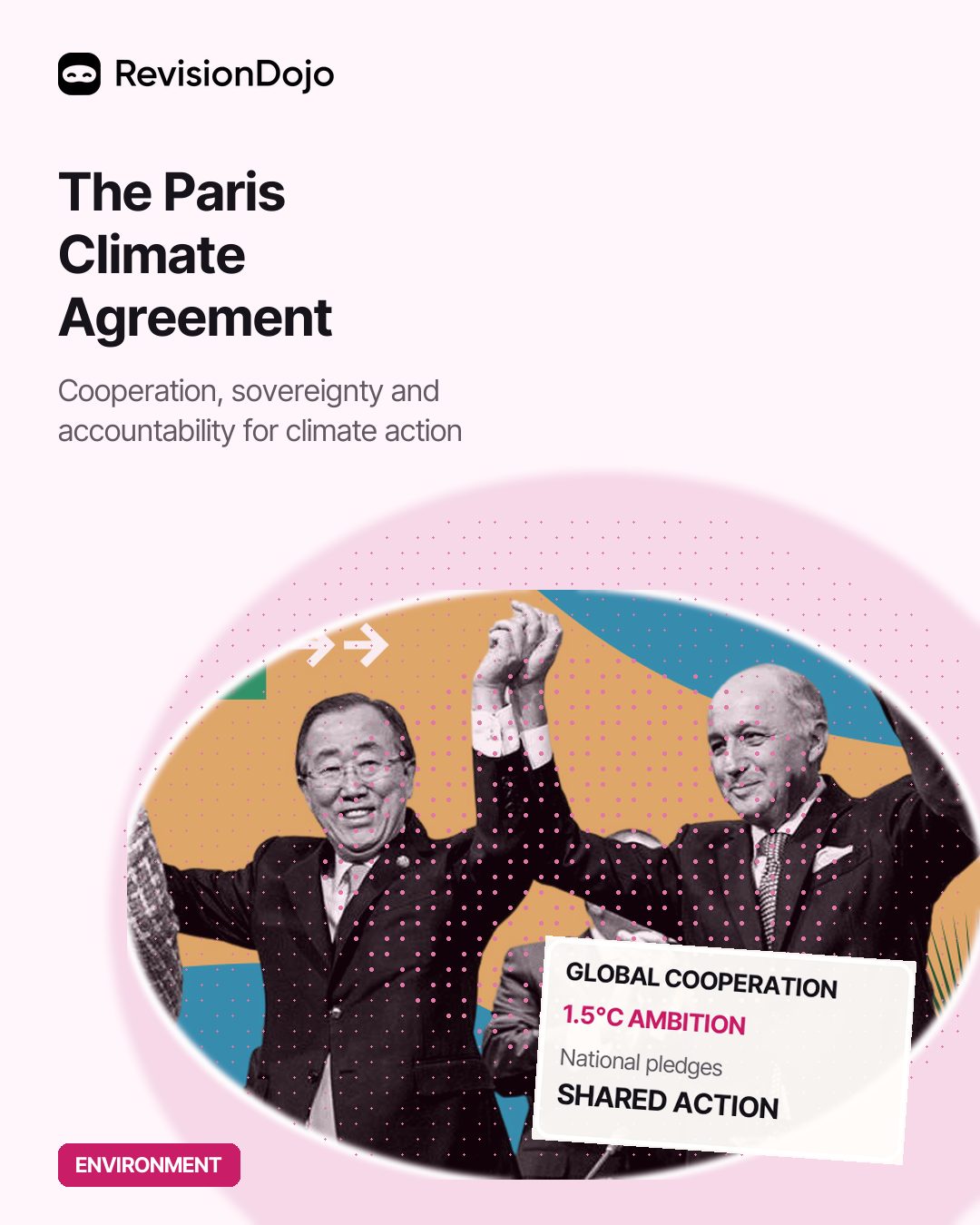
Context: The Paris Agreement was adopted in 2015 (COP21) under the United Nations Framework Convention on Climate Change (UNFCCC) as the central global framework for addressing climate change . It emerged after earlier climate governance efforts showed major limits: Kyoto (1997) demonstrated that top-down binding targets were politically fragile when participation was uneven and major emitters resisted constraints. Copenhagen (2009) exposed a deep trust breakdown between developed and developing states, especially over fairness and climate finance . Paris became a defining glob
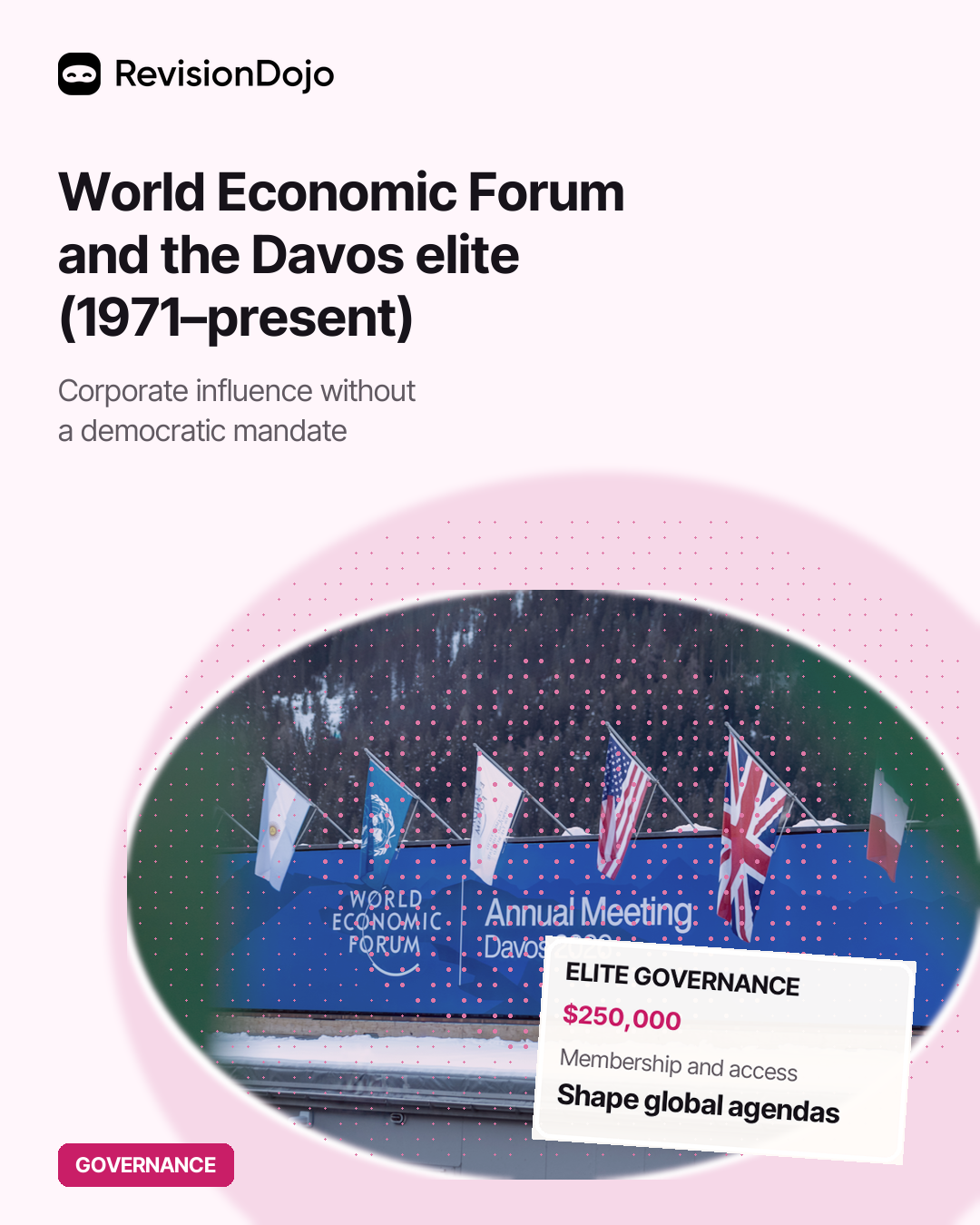
Context: The World Economic Forum (WEF), founded in 1971 by German economist Klaus Schwab, has evolved from an obscure European management conference into the world's premier informal political forum where corporate executives, heads of state, and civil society leaders shape global agendas . Each January, approximately 3,000 participants gather in Davos, Switzerland - paying up to $250,000 for membership and attendance - to discuss global challenges in a setting that blurs the boundaries between corporate strategy, government policy, and international governance. The WEF's influence extends f