Practice Metabolism, cell respiration and photosynthesis (HL) with authentic IB Biology exam questions for both SL and HL students. This question bank mirrors Paper 1A, 1B, 2 structure, covering key topics like cell biology, genetics, and ecology. Get instant solutions, detailed explanations, and build exam confidence with questions in the style of IB examiners.
Paper
Level
Question 1
HLPaper 2
The image shows part of a plant cell with a chloroplast in close proximity to mitochondria.
1.[2]
State two structural similarities between mitochondria and chloroplasts.
2.[2]
Compare and contrast mitochondria and chloroplasts in terms of the substrates they use and the products they produce.
3.[3]
Outline how the compounds produced by chloroplasts are distributed throughout the plant.
Question 2
HLPaper 2
The electron micrograph shows part of a cell including a mitochondrion. 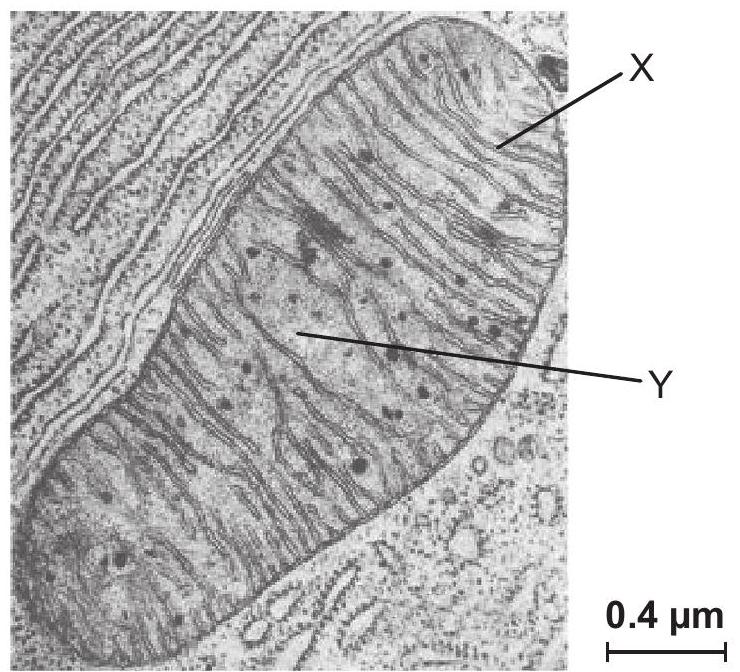
1.[2]
Outline how the structures labelled X and Y are adapted to carry out the function of the mitochondrion.
2.[4]
Explain how ATP is generated in mitochondria by chemiosmosis.
Question 3
HLPaper 1A
This reaction occurs in mitochondria.
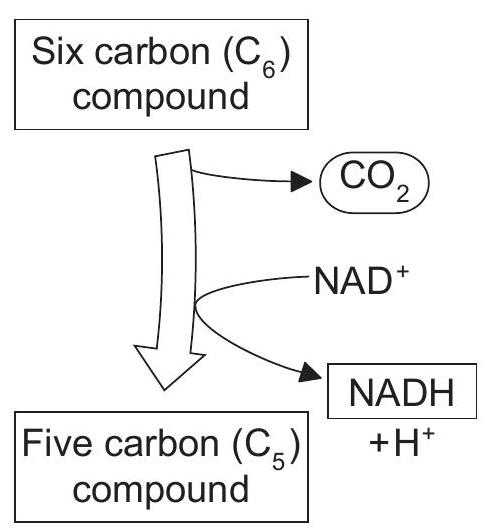
What explains that this reaction enables energy to be converted into a usable form?
Question 4
HLPaper 1A
The electron micrograph shows a section through part of an animal cell.
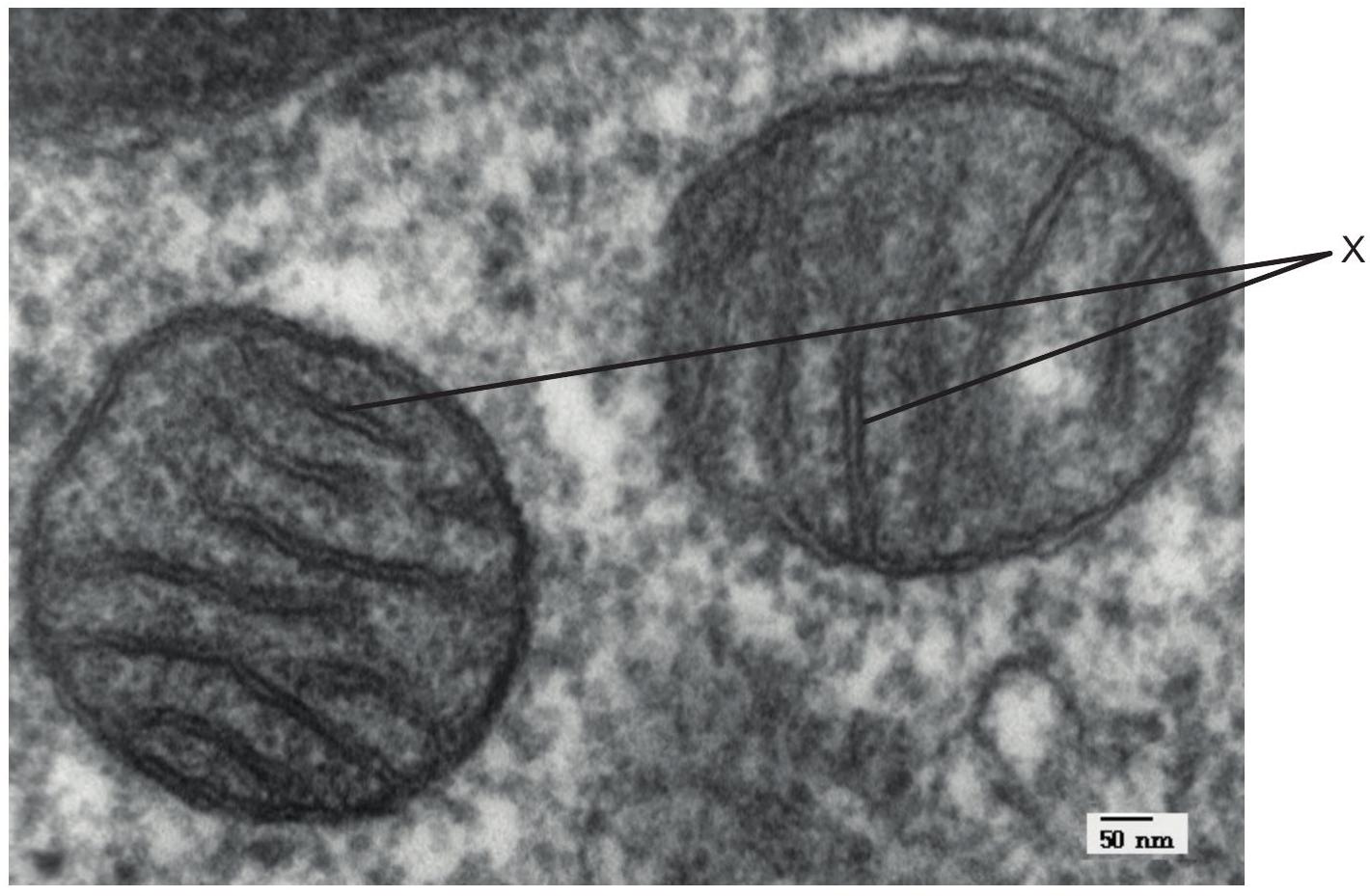
Which process is occurring on the structures labelled X ?
Question 5
SLPaper 1A
Which of the following processes occurs during the light-dependent reactions of photosynthesis?
Question 6
HLPaper 2
1.[6]
Describe the structure of triglycerides (fats).
2.[4]
Outline the use of fats in cell respiration.
3.[8]
Explain how the structure of the mitochondrion allows it to carry out its function efficiently.
Question 7
HLPaper 1A
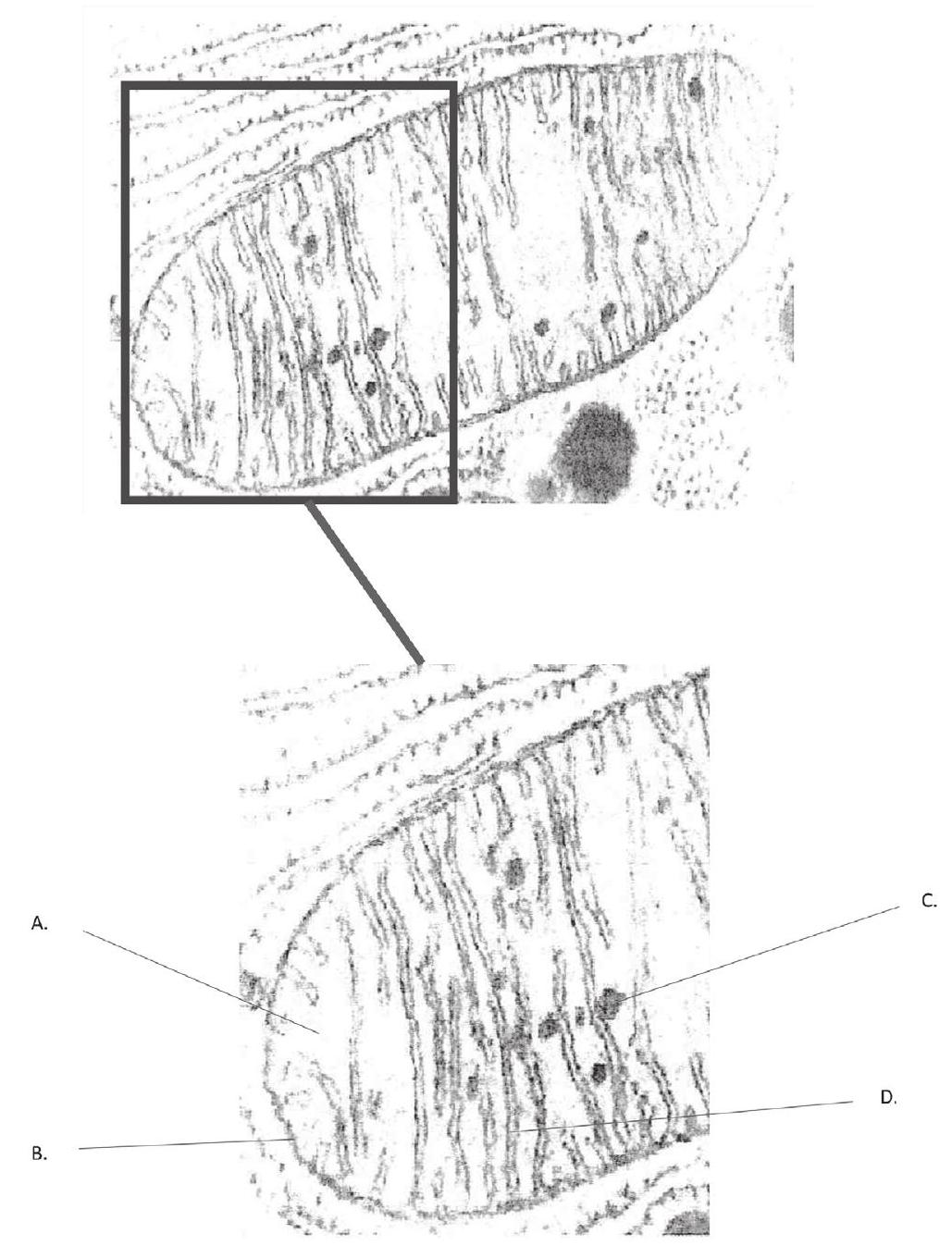
The mitochondrion in the electron micrograph shows some features that make it efficient for its function. Which labelled feature allows a rapid build-up of proton concentration for chemiosmosis?
Question 8
HLPaper 2
1.[4]
Identify four examples of proteins that illustrate the wide range of functions of this group of biochemicals in living organisms.
2.[4]
Describe how the structure of the chloroplast is adapted to its function in photosynthesis.
3.[7]
Explain the role of hydrogen ions used in photosynthesis.
Question 9
HLPaper 1A
Which process requires oxygen in aerobic cell respiration?