1. Essentials of the Internal Assessment | RevisionDojo
1. Essentials of the Internal Assessment
Biology
Purpose of the Internal Assessment
The Internal Assessment (IA) is a cornerstone of the IB Biology programme, representing 20% of the final grade across all four courses.
It's a unique opportunity for students to apply scientific biological concepts to areas of personal interest, free from the constraints of timed examinations.
Why the IA Matters for Students
Real-World Application: Students connect Biological projects, experiments, data-based research ideas and results to diverse situations and other fields of knowledge, fostering adaptability and problem-solving skills.
Ethical Awareness: Encourages appreciation for the moral, social, and ethical implications inherent in Biological Sciences with .
global perspective
Types of investigations
The different types of data collection and/or analysis suitable for use in Biology scientific investigation are:
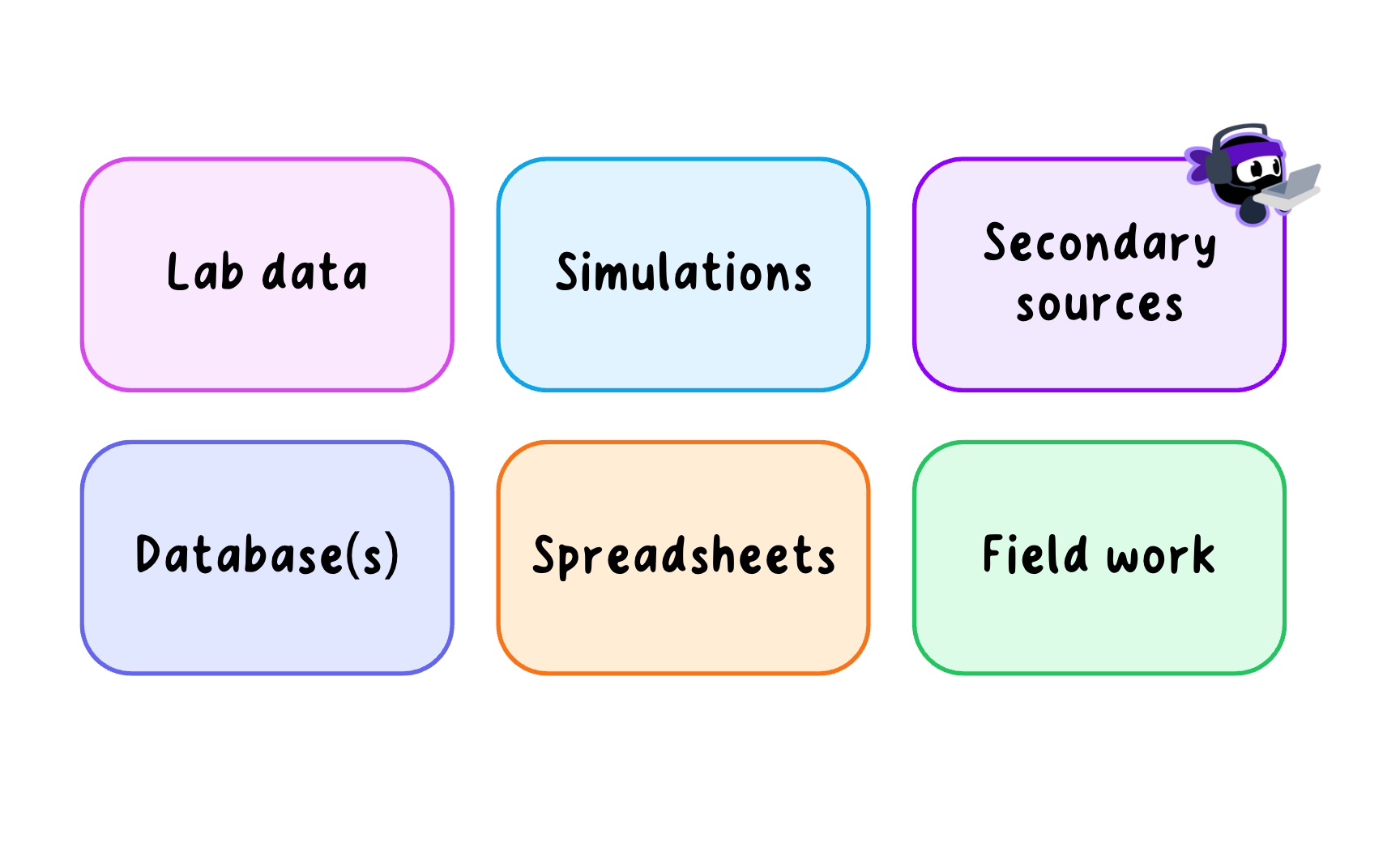
There are 6 main investigation types for the Biology IA
Of the different types of investigation, the first (hands on experiment) is by far the most common and will produce primary data, which is data collected by the student themselves.
The use of a simulation will also produce primary data, whereas a database will involve the collection of secondary data.
The data from a database or obtained from a simulation can be used in a hands-on investigation, but should not be the main source of data.
A spreadsheet should be used in the investigation for data analysis, such as plotting graphs and determining best-fit lines.
Fieldwork might be possible and is suggested if the candidate is interested in Environmental research within Topic Ecology
Different sampling methods are suggested for this type of research, such as quadrat sampling, transect methods, and capture-mark-release-recapture.
Note
A simulation that produces identical results every time is not suitable for the scientific investigation, as it chooses the variables for the student.
If students decide to choose this method of data collection, it is advisable that the tutors discuss their ideas to ensure that the chosensimulation issuitable.
Group work guidelines
Depending on the resources available, it may be possible for students to work in groups during the data collection part of the investigation.
The rules can be summarised as follows:
The maximum number of students in a group is three.
Each student must formulate their own research question.
A student can choose a different independent variable from the other members of the group, or the same independent variable, but a different dependent variable from the other members.
A student cannot use the same raw data as another member of the group, however, they may use different data from that used by other group members from a larger set of data that was collected together.
Each student must submit their own individual report, clearly indicating that they worked as part of a group.
All submitted work must be the work of the individual student; a group report is not permitted.
It is also possible to do a class collaboration where data is collected in a large-scale activity. In this case, the data is treated as if it came from a database.
This is different from the collaborative sciences project.
Reflection sheets are not submitted for assessment but are retained by theschool.
These may be requested during the five-yearly school evaluation process.
Note
Because of the complexity of the rules, it is strongly recommended that the tutors discuss the rules and requirements with their students beforehand, to avoid any issues related to academic honesty.
Required Sections and Recommended Structure
The scientific investigation is assessed through a written report.
Although the IB offers no specific guidance as to the structure of the report, it is recommended that it be written in the form of a lab report.
The following is a recommended structure which includes the correspondent sections, however, it is by no means mandatory that students follow this structure.
Note
Sections marked with a * are required by the IB and should be present on the front page.
The following are not included in the word count:
Charts and diagrams
Data tables
Equations, formulas and calculations
Citations/references (whether parenthetical, numbered, footnotes or endnotes)
Bibliography
Headers
The following details should be stated at the start of the report:
Title of the investigation
Candidate's personal code (alphanumeric, for example, xyz123)
All group members' personal codes (if applicable)
Number of words
A title that reflects the aims or purpose of the investigation*
Candidate’s personal code (and all group members’ personal codes, if applicable)*
Word count*
A brief introductory paragraph that introduces the reader to the investigation
The research question
Background context or research
Experimental variables (independent, dependent and control)
Hypothesis
Procedure or method (including a list of apparatus, chemicals, materials, etc.)
Risk assessment
Raw data (Data Collection)
Processed data (Data Processing)
Graph(s) – (Not compulsory if other analysis methods are used)
Conclusion
Evaluation
Works cited
Tip
Unlike the EE, a cover page and table of contents are not required in the IA.
Appendices are recommended but any relevant information must be included within the main body of the report.
If the report contains excess raw data, a sample of data at relevant intervals should be included.
Can students include an appendix to their IA?
An appendix must not be included except to show an example of a blank consent form, or a questionnaire used in the investigation.
If a large amount of data has been collected, a representative sample could be shown in the final report.
Graphs can also be used to highlight patterns in large amounts of data that have been collected in place of a large table.
Teachers should confirm that all of the data is authentic.
Note
Examiners are not expected to read beyond 3000 words, that is the maximum for IA.
Word Count
The internal assessment report has a maximum word count of 3000 words. This does not include the following:
Charts and diagrams*
Data tables
Equations, formulas and calculations
Citations/references (whether parenthetical, numbered, footnotes or endnotes)
Bibliography
Headers
Tip
*The IB recommends that if large amounts of data have been collected, students should include only a sample of the data.
Academic honesty
The IB takes academic honesty very seriously.
Any work or ideas that are not the work of the student must be clearly referenced.
This also includes any images or figures that are used in the report.
The report should also include a works cited list.
The style ofreferencing used can be determined by the student (or the school) and must be consistent throughout the report.