


A friend once told me university admissions feels like being a book in a crowded library: you might be excellent, but you still need a spine title that makes someone pull you out.
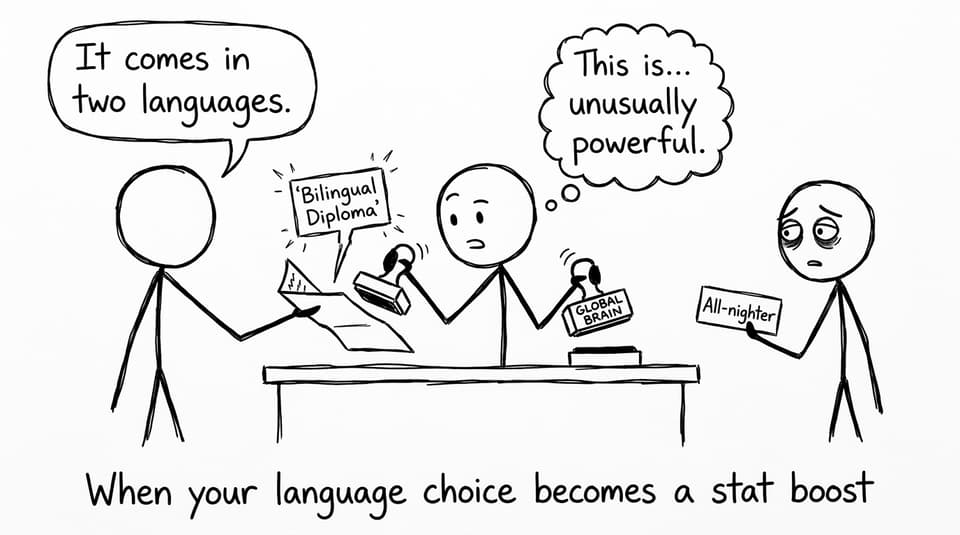
For some students, that spine title is a bilingual IB Diploma. Not because it magically guarantees admission, but because it signals something admissions teams understand quickly: you can think, write, and perform academically in more than one language. In the world of IB Languages, that is a serious kind of evidence.
This article breaks down what the bilingual diploma really means, how universities tend to interpret it, and how you can turn your IB Languages choices into practical advantages for uni applications and first-year life.
Quick checklist: is the bilingual diploma worth chasing?
Use this as a fast gut-check before you commit time, stress, and timetable space.
-
You genuinely enjoy IB Languages (reading, writing, speaking), not just the status.
-
You can realistically maintain at least a grade 3 in both qualifying subjects.
-
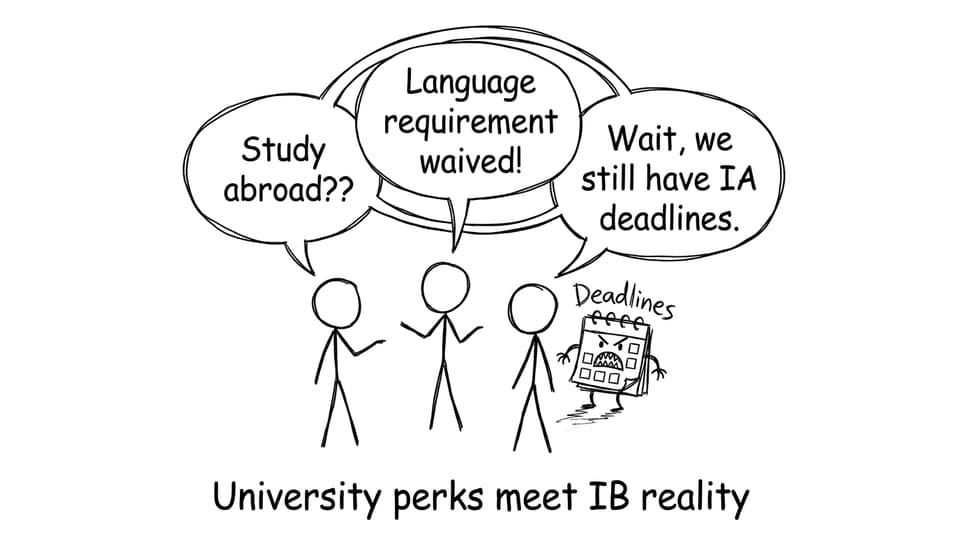
Your university plans include a language requirement, international program, or globally focused degree.
-
You want a differentiator that is academically legible (not just “I speak two languages”).
-
You have a revision system for IB Languages exams that includes feedback and timed practice.
If you’re also choosing between courses, this guide can help you decide what fits your strengths: English A: Literature vs Language & Literature.
What a bilingual IB Diploma actually proves
A bilingual IB Diploma is not a separate program. It’s a distinction awarded alongside the full IB Diploma when you meet specific language criteria.
In simple terms, universities read it as: this student can handle academic assessment in two languages, not just casual conversation.
There are two common pathways:
Two Language A subjects
You take two Group 1 (Language A) subjects in different languages and earn at least a grade 3 in both.
One Language A plus another subject taught in a different language
You take one Language A, then take a Group 3 or Group 4 subject taught and assessed in another language (again, typically with a minimum grade requirement).
If you want the clean official breakdown, see: How to Earn a Bilingual IB Diploma and What is an IB Bilingual IB Diploma?.
This is why the distinction matters inside IB Languages: it isn’t about being “bilingual” socially. It is about proving you can read complex texts, write controlled analysis, and think precisely under exam conditions.
Why universities value IB Languages (especially in a bilingual pathway)
Admissions officers rarely have time to decode every school’s internal story. They rely on signals.
A bilingual diploma is one of those signals, because it compresses several desirable traits into a single line: academic rigor, communication range, and cultural literacy.
It shows academic stamina, not just talent
Doing well in IB Languages requires endurance. The work is cumulative: vocabulary, style, text familiarity, and clarity under time pressure. Universities know that if you can sustain that across two languages, you probably have strong study habits.
If you’re wondering how hard the wider program is, this context helps: Is it hard to crack the IB exam?.
It signals cultural competence without you having to “sell” it
Some application essays try to claim global mindedness. A bilingual diploma tends to demonstrate it. Many uni programs (international relations, business, politics, humanities, health) value students who can navigate ideas across cultures.
It gives you a practical head start in first year
Even if admissions doesn’t obsess over the label, you may benefit once you arrive:
-
language prerequisites can be easier to meet
-
academic writing feels less intimidating
-
readings across perspectives become more natural
In other words, IB Languages can reduce the shock of moving from “school success” to “university independence.”
The real university benefits students actually notice
Here’s what tends to matter in real life, beyond the idea of “standing out.”
A clearer application story
If you’re applying to competitive courses, your narrative matters. IB Languages helps you build one:
-
Why your degree choice makes sense
-
Why you can handle reading-heavy courses
-
Why you’re prepared for international or multilingual environments
This is especially strong if your activities and coursework align: Model UN, language exchange, bilingual volunteering, or research in a second language.
Possible course credits or placement (depending on the university)
Many universities have policies for IB scores that may allow advanced standing or credits. The details vary widely by country and institution, but language performance can sometimes place you into higher-level modules sooner.
Better performance in “communication-heavy” assessments
University is full of tasks that look suspiciously like IB Languages:
-
close reading
-
argument structure
-
seminar discussion
-
timed writing
If you train these intentionally now, you save future stress.
To sharpen the most transferable skill (clear writing under pressure), read: How to Write the Perfect Essay in a Foreign Language Exam and Tips for Writing a Successful Language B Essay.
How to prepare for IB Languages exams without burning out
A bilingual diploma only helps if you actually score well. So here’s a calm approach.
Build a feedback loop, not just a routine
Many students “practice” IB Languages by doing more reading or rewriting notes. What moves grades is feedback: what you did, what the rubric wanted, and what you’ll do differently next time.
RevisionDojo supports this in a practical way:
-
Questionbank to target skills (reading comprehension, writing tasks, analysis)
-
Study Notes and Flashcards to keep language patterns alive
-
AI Chat to clarify grammar, structure, and phrasing when you’re stuck
-
Grading tools to get rubric-aligned feedback on writing
-
Predicted Papers and Mock Exams to rehearse timing
-
Coursework Library for exemplars and standards
-
Tutors when you need a human to diagnose what you keep missing
If you’re doing English A alongside your bilingual pathway, these will strengthen your exam technique: Effective Study Techniques for IB English A: Language and Literature and Preparing for IB English A: Literature Exams.
The quiet advantage of IB Languages
A bilingual IB Diploma is rarely a dramatic turning point. It’s more like a small lever you can pull, consistently, over time. In admissions, it can make your application easier to understand and slightly harder to ignore. In first year, it can make reading, writing, and adapting feel more familiar.
If you’re going to chase it, do it the calm way: build a revision system that respects the reality of exams and protects your energy. RevisionDojo is built for exactly that, from IB Languages practice in the Questionbank to Flashcards, AI Chat, Grading tools, and full Mock Exams that make your preparation feel measurable.
When you’re ready, make your language pathway more than a label. Make it a skill you can rely on.