


If you’ve been in the IB long enough, you know the moment.
It’s late, your desk is crowded, and your “revision plan” has quietly become a pile of documents you’re scared to open. Somewhere in that pile is what you actually need for the 2026 IB exams: the exact definitions, relationships, and steps that earn marks.
That’s the gap RevisionDojo’s IB Cheatsheets were built to close.
They don’t try to impress you with length. They try to help you perform. And in the IB, performance is the difference between “I understand this” and “I can prove it in exam conditions.”
The quick checklist: what makes an IB cheatsheet actually useful?
Before we get into why RevisionDojo stands out, use this mini-checklist. A strong IB cheatsheet should:
-
Match the latest syllabus and language used in marking
-
Separate what’s “nice to know” from what’s consistently assessed
-
Make recall easy (not just reading easy)
-
Show connections (because IB questions love connections)
-
Fit into a wider routine: notes, flashcards, questions, timed practice, feedback
RevisionDojo’s approach works because the cheatsheets aren’t a standalone product. They’re a hub that plugs into the rest of your IB system.
If you want to see what students mean when they say “this finally feels organized,” start at RevisionDojo’s IB Cheatsheets.
Built for how the IB marks (not how textbooks talk)
Textbooks explain. The IB awards points.
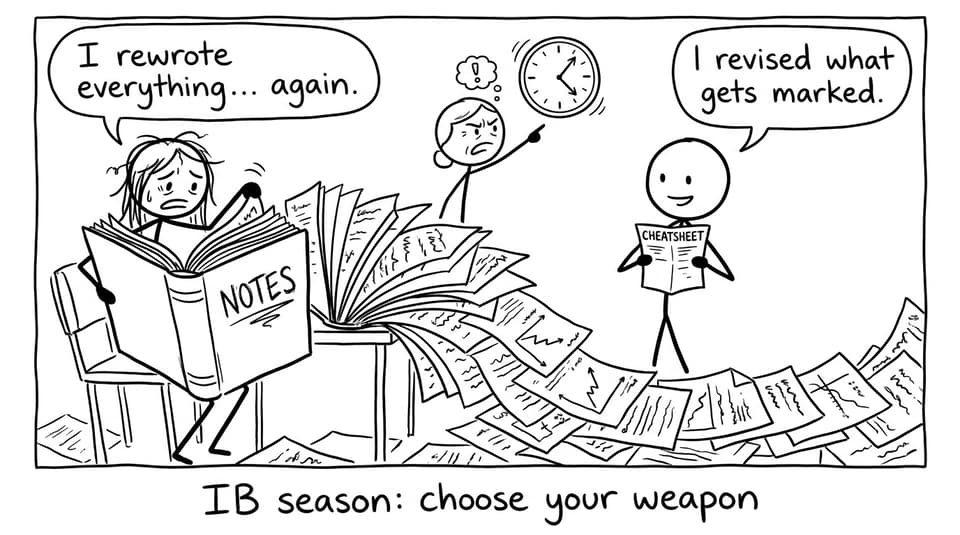
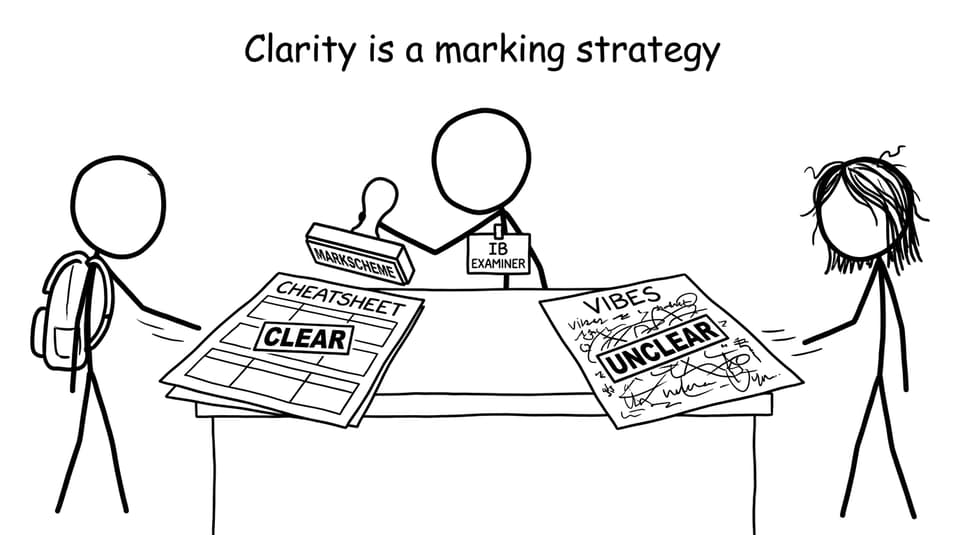
That sounds harsh, but it’s freeing once you accept it. In the IB, you can write a beautifully intelligent paragraph and still lose marks if the examiner can’t quickly find the credited idea.
RevisionDojo’s IB Cheatsheets are structured to make “credited ideas” obvious. They prioritize:
-
Examiner-friendly wording
-
The definitions that actually score
-
The typical traps and common confusions
-
The links between subtopics that show up in Paper-style questions
This is why cheatsheets feel different from generic notes. They’re not just condensed content; they’re condensed marking logic.
To pair that logic with practice immediately, many students run a short loop: cheatsheet first, then targeted practice from the Questionbank. If you’ve never used one properly, IB Question Bank | How to Use It Effectively is a solid starting point.
Updated alignment for the current syllabus era
The IB evolves. Not always loudly, but enough to make old resources quietly risky.
RevisionDojo’s IB materials are designed to stay current with modern syllabuses and the way assessment language shifts. That matters because revision is not neutral: you can spend hours mastering something that simply won’t be rewarded.
This “alignment” shows up in small, practical ways:
-
Terms appear in the form you’re expected to reproduce
-
Topic boundaries are clearer (what belongs where)
-
The sheet layout helps you revise by paper and skill, not just by chapter
If you like seeing how RevisionDojo organizes learning materials across subjects, you can explore the bigger ecosystem via the International Baccalaureate (IB) hub.
Cognitive efficiency: the cheatsheets are designed to be used, not admired
A lot of IB students fall into a quiet trap: they collect resources that feel reassuring.
Reassurance is not retention.
RevisionDojo’s IB Cheatsheets are built to push you toward the habits that create long-term memory and exam calm:
-
Chunking so your brain can hold the shape of a topic
-
Dual coding (visual structure + words) to create faster recognition
-
Active recall prompts so you test yourself instead of rereading
-
Spaced repetition compatibility so you can revisit quickly without starting over
Here’s the practical difference: instead of spending 40 minutes reading a chapter, you can spend 10 minutes mapping the concept, then 20 minutes proving it with questions.
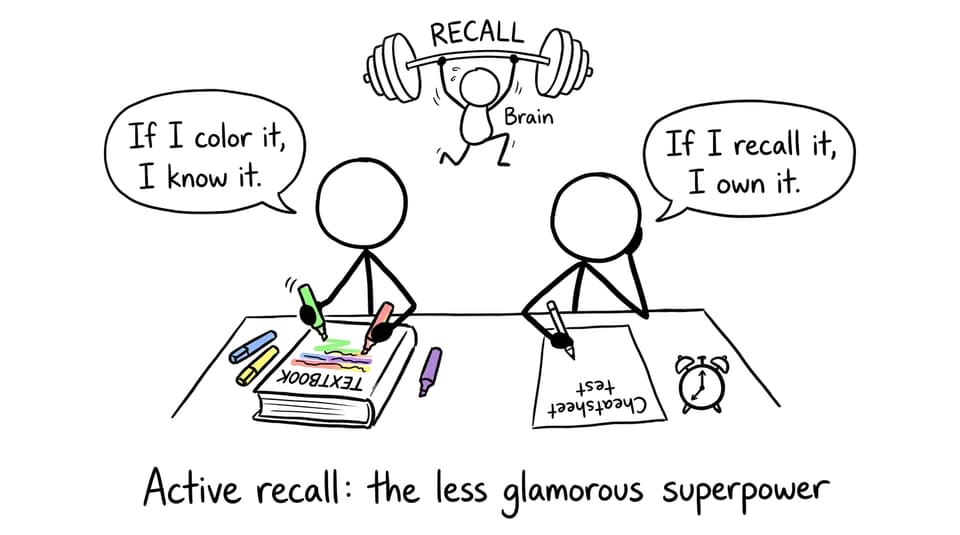
For the retention part of the routine, the cheatsheets pair naturally with IB Flashcards with Spaced Repetition (SRS). You can turn your weak spots into daily retrieval reps that actually stick.
Every subject, SL and HL, with clarity on what changes
One reason the IB feels heavy is that it isn’t one course. It’s six courses running at once, each with its own skills.
RevisionDojo’s IB Cheatsheets help because they’re consistent across subjects and they label what matters for level differences. That matters most in HL-heavy courses, where students often revise “broadly” and then discover too late that their precision wasn’t HL-precise.
Want an example of how topic organization looks in practice? Browse a subject hub like IB Biology Resources or a dedicated collection such as Biology Cheatsheets, Visual Study Guides. Even if Biology isn’t your subject, the layout shows the philosophy: clear scope, clear structure, clear next step.
The “detail vs brevity” balance that saves your week
Good IB revision is a budgeting problem.
You have limited time, limited energy, and too many possible things to improve. Most resources fail by choosing a side:
-
Too long, so you never finish.
-
Too short, so it feels shallow.
RevisionDojo’s IB Cheatsheets sit in the middle: compact enough for repeat review, complete enough to guide real exam answers.
And that’s the key phrase: repeat review. In the IB, your grade improves less from one heroic study session and more from small, consistent returns to the same high-yield ideas.
To build that system beyond cheatsheets, many students use RevisionDojo’s full toolchain: Study Notes for clarity, Flashcards for recall, Questionbank for application, AI Chat when something doesn’t click, Grading tools to learn what “good” looks like, then Mock Exams and Predicted Papers for realism.
If you want a broader notes layer that complements cheatsheets, Study Notes is designed exactly for fast understanding that turns into marks.
Time efficiency under pressure: the 15-20 minute advantage
The closer you get to exams, the more valuable a resource becomes if it can:
-
Refresh an entire topic quickly
-
Show you what you forgot
-
Tell you what to do next
That’s why RevisionDojo’s IB Cheatsheets are so effective in the final stretch for 2026. They’re the ideal bridge between “I once learned this” and “I can retrieve it fast.”
And when you’re ready to stress-test that retrieval, the best next move is timed practice. RevisionDojo makes that transition smooth through mock workflows and exam-style sessions.
For planning that phase, these guides are helpful:
The quiet confidence benefit (and why it’s not fluff)
Exam stress is often framed as an emotion problem.
In reality, it’s often an information problem. You’re anxious because you can’t see the boundaries of what you need to know, and you can’t trust your recall.
RevisionDojo’s IB Cheatsheets reduce that anxiety in a practical way:
-
They give you a visible map of the syllabus
-
They let you check coverage quickly
-
They help you build a routine you can repeat even on tired days
That last point matters most. Confidence isn’t a mindset you force. In the IB, confidence is usually the side effect of repetition and clear feedback.
If your mocks didn’t go as planned, Failed Mock Exams? You Can Still Pass IB is one of the most grounding reads on rebuilding a system.
How to use RevisionDojo IB Cheatsheets for the 2026 timeline
Here’s a simple routine that fits real student life. Adjust the minutes, keep the structure:
Weekly structure (repeatable)
-
2x per week (30-45 min): Cheatsheet review + 10-15 targeted questions from the Questionbank
-
Daily (10 min): Flashcards on weak definitions/processes
-
1x per week (60-120 min): Timed paper section or mock-style set, then error log
The rule that changes everything
Use cheatsheets as a launchpad, not a pillow.
If you read a sheet and feel calmer but can’t answer questions after, you’re not done. You’re only comfortable.
Closing: the simplest way to make 2026 feel manageable
The 2026 IB exams won’t reward the student who collects the most resources.
They’ll reward the student who builds a small system and repeats it until it becomes automatic.
RevisionDojo’s IB Cheatsheets are the best place to start because they cut through noise and give you a map you can trust. Then, when you’re ready, RevisionDojo gives you the rest of the machine: Questionbank practice, Study Notes, Flashcards, AI Chat support, Grading tools, Predicted Papers, Mock Exams, a Coursework Library, and Tutors when you need a human to diagnose what’s holding you back.
If you’re preparing seriously for the IB in 2026, open the map first: RevisionDojo’s IB Cheatsheets. Then build the loop that turns revision into results.