


Sometimes cheating doesn’t look like a hidden note or a smartwatch. In the IB, it can look like a normal notification: “What topics came up?”
That message feels small. Almost harmless. But in a global exam system, small messages can tilt the playing field. That’s the real problem behind IB timezone cheating: it exploits the fact that not everyone sits an exam at the exact same moment.
Below is what timezone cheating is, how it happens, what it risks, and what to do instead if you’re an IB student preparing for exams and feeling that familiar, end-of-term panic.
What is timezone cheating in the IB?
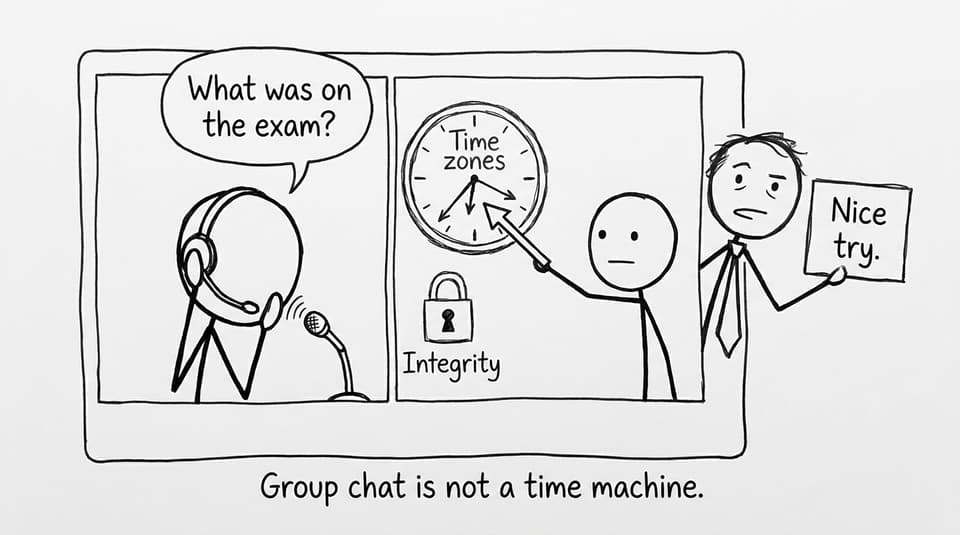
Timezone cheating in the IB is when exam information is shared between students who sit the same assessment at different local times, giving later candidates an unfair advantage. Because the IB runs exams worldwide, start times are organized across regions (students often call these “time zones” or “exam zones”).
The intent of the system is fairness and security. The loophole appears when someone who finishes earlier shares details about questions, topics, prompts, or answers with someone who has not sat the paper yet.
If you want the broader context of exam zone timing, see IB Time Zone 1 vs Time Zone 2: What Students Must Know.
A quick checklist: what counts as timezone cheating?
If you’re unsure where the line is in the IB, use this fast test:
-
Did someone who already sat the exam tell you what was on it?
-
Did you ask for “topics that came up,” question formats, or any prompt details?
-
Did you read screenshots, summaries, or “leak” threads before your sitting?
-
Did you share anything specific after your exam while others were still waiting?
If the answer is yes, you’re in timezone-cheating territory (or close enough that it’s not worth the risk).
For a bigger integrity framework, read How to Uphold Academic Integrity in IB Assessments.
How timezone cheating actually happens (and why it spreads fast)
Timezone cheating in the IB usually isn’t a movie-style conspiracy. It’s more like frictionless sharing.
Casual “debriefs” that turn into details
A student finishes a paper and tells friends, “It was heavy on Topic X.” That feels like comfort, not cheating. But it can shape what others revise in their final hours, which is exactly the unfair advantage the IB tries to prevent.
Group chats, social media, and anonymous channels
Technology is the accelerant. A single message can be copied, screenshot, and reposted in minutes. By the time the rumor reaches you, it often looks like “everyone knows,” which makes it emotionally easier to justify.
Coordinated sharing
Less common, but more serious: groups plan who will memorize what, or who will post what, across regions. That’s no longer casual. That’s deliberate exam misconduct.
If you want to understand how exam leak stories unfold (and why chasing them backfires), see Shocking IB Math 2025 Exam Leaks: What Happened & How to Prepare Without Cheating.
Why timezone cheating is a serious issue in IB
The IB isn’t just testing what you know. It’s testing under conditions: time pressure, independent thinking, and fairness across schools.
Academic consequences
Timezone cheating can lead to severe outcomes, including nullified results and losing credit for the work tied to the incident. Even when students think they’re only “reading a hint,” the IB treats gaining advance exam content as academic misconduct.
For a deeper breakdown, read What Are the Consequences of Being Caught Cheating in IB? and What Are the Penalties for Academic Misconduct in IB?.
Personal consequences
There’s also the quieter cost: you train yourself to rely on last-minute information instead of preparation. That habit doesn’t scale to university, interviews, or any high-stakes setting where no one can whisper the “topics.”
Program-wide consequences
When timezone cheating becomes widespread, everyone pays: tighter rules, heavier supervision, and more suspicion directed at ordinary IB students who did nothing wrong.
How to protect yourself (and still feel prepared)
The hard truth is that anxiety is the fuel for timezone cheating. So the solution is partly ethical, and partly practical: build a prep system that makes you feel safe without shortcuts.
Use RevisionDojo to replace rumors with real readiness
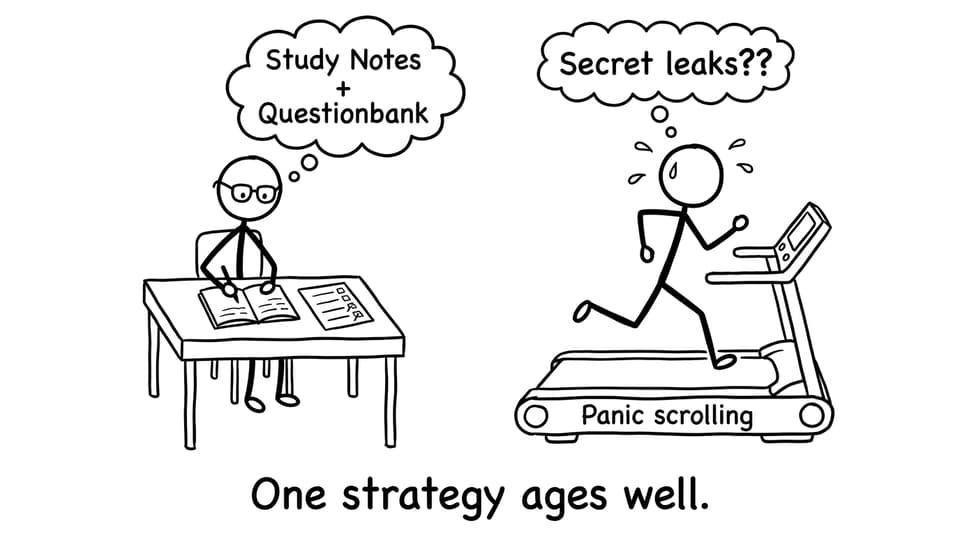
If you’re tempted to seek exam info, it usually means you want certainty. RevisionDojo gives you a healthier version of that certainty: evidence from practice.
A simple loop that works for IB exam prep:
-
Study Notes to clarify a weak concept fast
-
Flashcards for daily recall (small, consistent)
-
Questionbank to practice exam-style thinking under variety
-
Predicted Papers and Mock Exams to simulate timing and pressure
-
AI Chat when you’re stuck and need an explanation, not an answer to copy
-
Grading tools to see how marks are actually earned
-
Coursework Library and Tutors to reduce background stress that spills into exam panic
To set this up as a routine, see RevisionDojo App: The Smarter Way to Prep for IB Exams and IB Predicted vs Specimen Papers: What They Mean.
Do “time-matched” practice
If your IB exam is early, practice early once a week. If it’s midday, do one timed block at midday. Your brain learns the rhythm, and the urge to grab last-minute “intel” fades.
Keep one clean rule: don’t ask, don’t share, don’t read
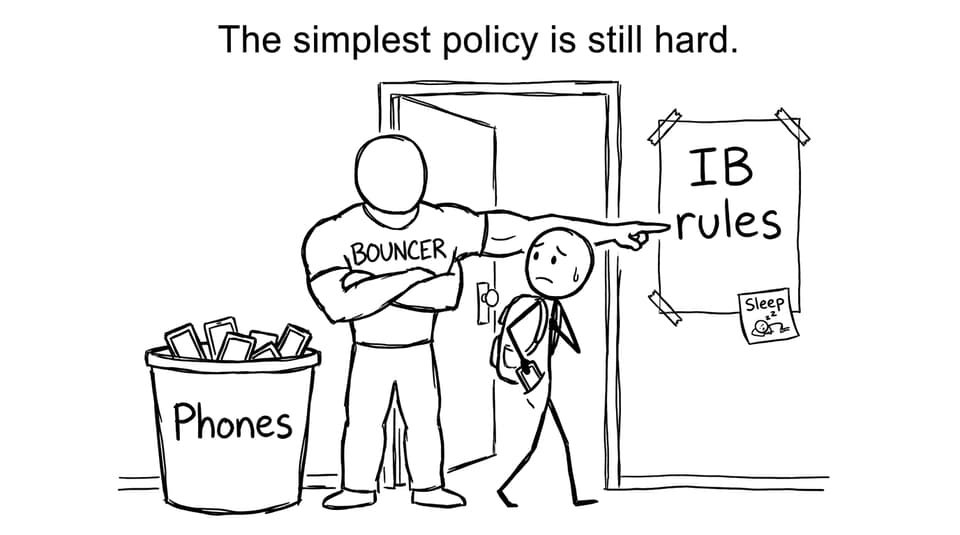
It’s simpler than debating gray areas. If someone sends you exam details, don’t engage. Close it. Mute the chat. Protect your results.
Closing: choose the kind of IB student you want to be
Timezone cheating in the IB thrives in the last 24 hours, when stress convinces smart people to do silly things. You don’t need that spiral.
If you want a calmer, more defensible path, build your preparation where it counts: RevisionDojo Study Notes, Flashcards, Questionbank, AI Chat, Grading tools, Predicted Papers, and Mock Exams, plus the Coursework Library and Tutors when life gets busy. That’s how you walk into your IB exams with something stronger than rumors: proof.