



The first time you realise a line of poetry has weight is rarely at your desk.
It’s when you say it out loud, hear the pause land, and notice your friend’s expression shift. Suddenly, the “analysis” you wrote in the margin becomes something physical: timing, voice, silence, movement. That’s the quiet promise at the heart of English A: Literature and Performance, and it’s why so many IB English students find it surprisingly memorable.
What is English A: Literature and Performance?
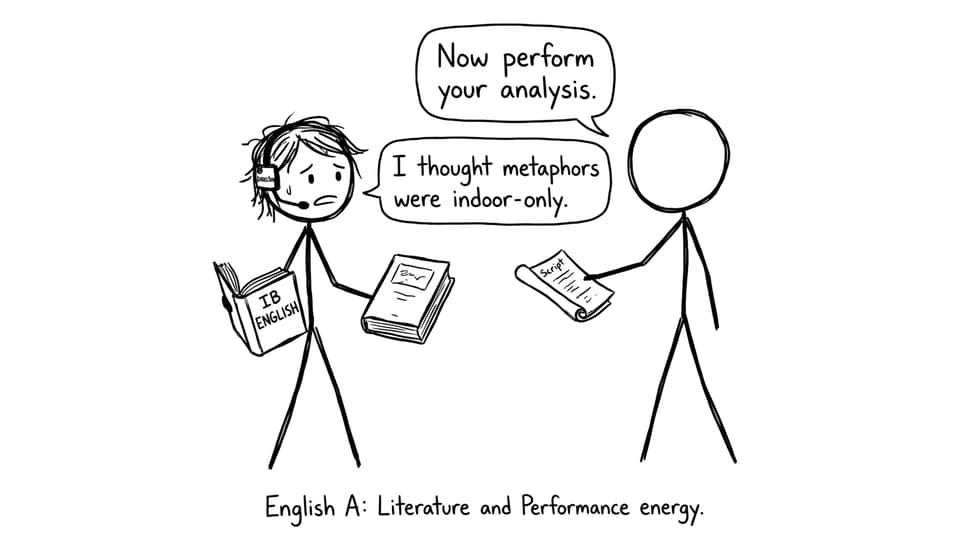
English A: Literature and Performance is an IB course that blends two skills you normally keep separate: close literary analysis and performance choices.
You still do the classic work of IB English: interpreting themes, analyzing authorial choices, and building arguments with evidence. But you also explore how meaning changes when a text is staged, spoken, adapted, or embodied. In simple terms: you study literature, then test your interpretation by bringing it to life.
If you want adjacent guidance for IB English tasks that still apply (even when your course feels different), the IB English tag hub is a useful starting point.
Quick checklist: is this course the right fit?
Before you commit (or before you panic), use this quick check:
-
You like discussing how a writer creates meaning, not just what happens.
-
You’re willing to experiment with voice, gesture, staging, and tone.
-
You want stronger speaking skills alongside stronger writing skills.
-
You’re aiming to feel more confident in assessments across IB English, especially in timed tasks and oral components.
For general exam prep habits that transfer well, keep Preparing for IB English A: Literature Exams open while you plan your revision schedule.
The “two halves” that actually feed each other
Literary analysis: the anchor
The literature side is what keeps your work rigorous. You’ll still practice the fundamentals that show up across IB English:
-
Close reading (patterns, contrasts, shifts)
-
Authorial choices (structure, imagery, diction, perspective)
-
Evidence selection (short, precise quotations with real commentary)
-
Coherent argument (a line of inquiry that doesn’t drift)
If your essays ever feel like they’re becoming summary, the advice in What Makes an Effective Thesis Statement? can help you rebuild the “engine” of your analysis.
Performance studies: the pressure-test
Performance is where you discover whether your interpretation holds up. When you stage a moment, you have to answer uncomfortable questions:
-
Who has power in this scene, and how would an audience see it?
-
Where does the tension live: in the words, the pauses, the movement?
-
What changes if you deliver the same line as a joke, a threat, or a confession?
That’s not “extra.” It’s a deeper version of analysis, because it forces you to commit.
How to revise for Literature and Performance (without feeling scattered)
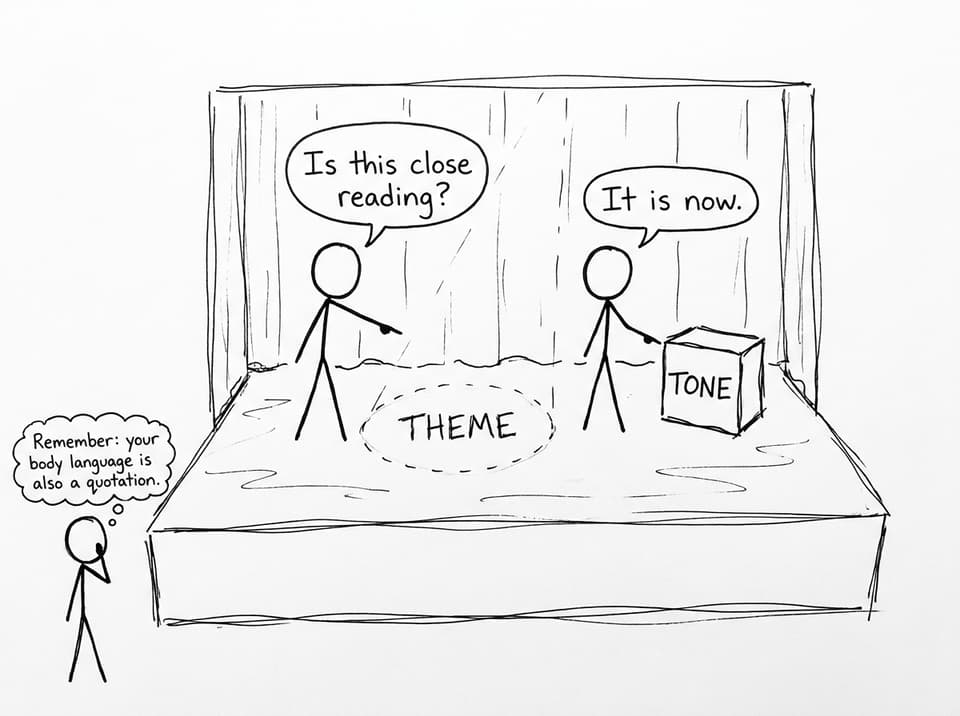
Most students revise IB English as if it’s purely written. In this course, your best strategy is to revise in two directions:
-
Page to stage: annotate a passage, then decide how it should sound and move.
-
Stage to page: perform a moment, then write the paragraph that explains why those choices create meaning.
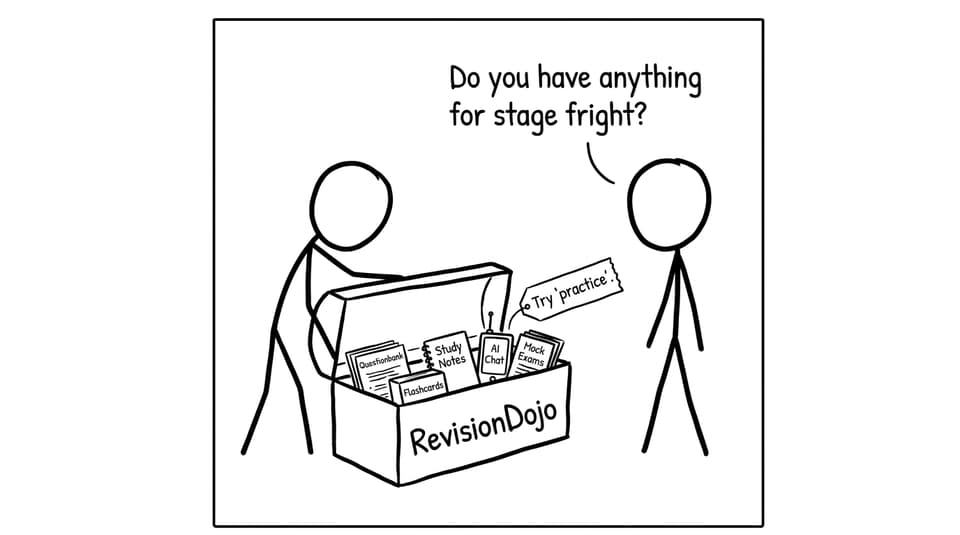
RevisionDojo makes this practical. You can build a tight loop using:
-
Study Notes to keep your terminology precise (tone, pacing, dramatic irony, staging).
-
Flashcards for quick retrieval of techniques and quote-purpose pairings.
-
Questionbank to practise exam-style prompts with clear focus.
-
AI Chat to generate alternative interpretations (then you choose the best one).
-
Grading tools to check whether your writing actually matches rubric language.
-
Mock Exams and Predicted Papers to rehearse timing under pressure.
-
Coursework Library to calibrate what “good” looks like in real student work.
-
Tutors when you need fast, human feedback on clarity and structure.
If you also take English A Literature or want crossover support, explore the IB English A Lit resources hub and the focused notes for Paper 1 and Paper 2 essay writing.
Bringing it all together
English A: Literature and Performance is what happens when IB English stops being only a subject you write about and becomes a subject you can hear and see. When you revise by moving between page and stage, your interpretations get clearer, your evidence gets smarter, and your confidence becomes more durable.
If you want a calmer path from practice to performance, build your routine inside RevisionDojo. Use the Questionbank, Study Notes, Flashcards, AI Chat, Grading tools, Predicted Papers, Mock Exams, Coursework Library, and Tutors to make IB English revision feel structured again.