

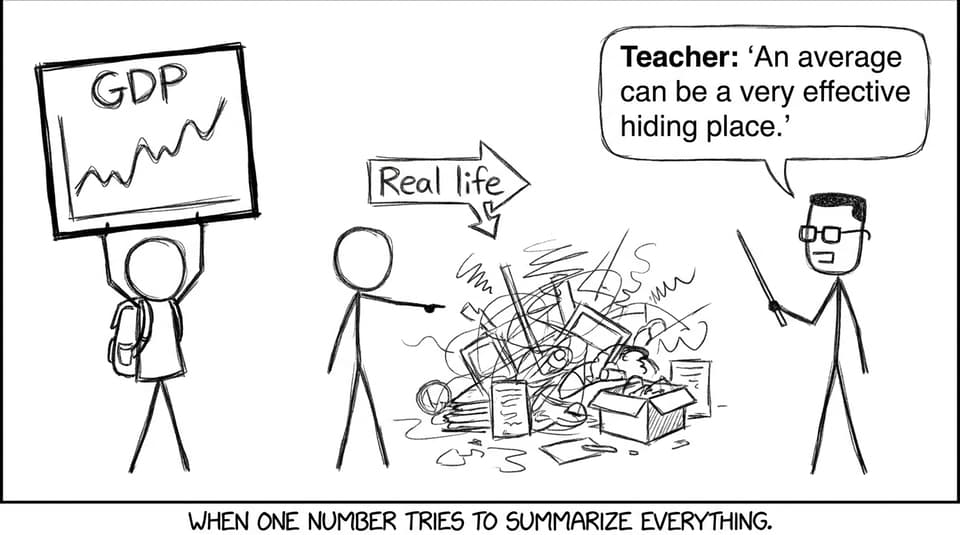
GDP feels comforting because it looks clean. One number. One ranking. One headline that says a country is “doing well.” But in IB Geography, the moment you look closely, GDP starts acting like a blurry photo: technically real, practically incomplete. If you’re preparing for exams, this is exactly the kind of evaluation examiners reward: knowing what GDP shows, and what it quietly hides.
What GDP measures (and why IB Geography still uses it)
GDP (Gross Domestic Product) is the total value of goods and services produced in a country in a given time period. In IB Geography, it’s often used as a single indicator of development because it’s widely available, easy to compare, and broadly reflects economic activity.
Quick exam reminder: GDP is most useful when you pair it with other measures. If you want a wider toolkit, RevisionDojo’s explanation of how human development is measured helps you compare single vs composite indicators.
The limitations of GDP as a development indicator
GDP hides inequality
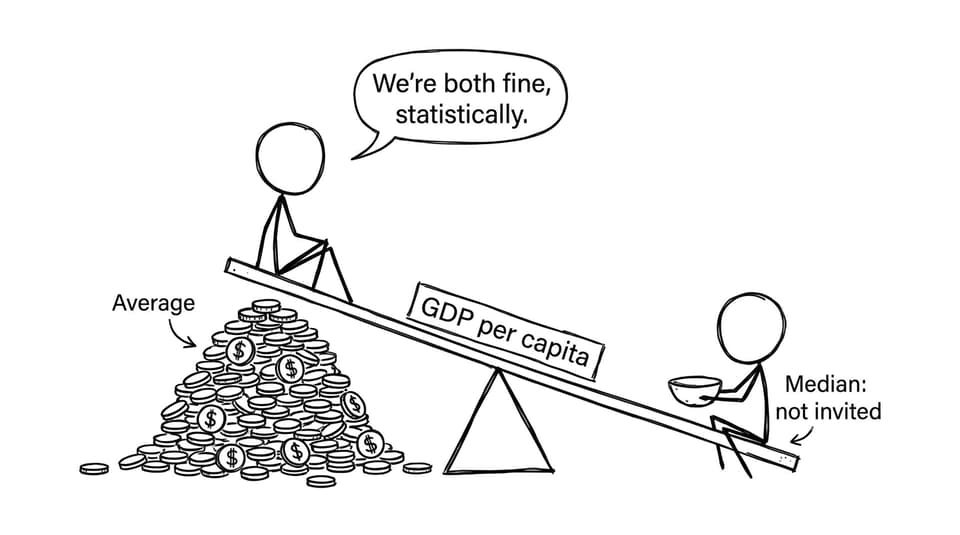
GDP per capita is an average, which means it can disguise extreme income distribution. Two countries can have similar GDP per capita but very different realities on the ground. In IB Geography, this is a classic evaluation line: averages can conceal regional, gender, or ethnic disparities.
To sharpen your terminology for this, use the IB Geography Key Definitions page as a quick revision anchor.
GDP ignores quality of life
GDP does not directly capture health outcomes, education access, life expectancy, safety, or happiness. A country can produce more goods and services while its population experiences rising stress, weak healthcare, or poor educational opportunity. That gap between “economic output” and “human development” sits at the heart of many IB Geography essays.
For a syllabus-aligned overview of development measurement, see IB Geography 5.1.1 Measuring Human Development Notes.
GDP misses informal and unpaid work
A major limitation of GDP is what it leaves out: informal economies and unpaid labour (childcare, subsistence farming, domestic work). This matters especially in LICs and rural regions where large portions of economic life are not recorded. In IB Geography, this becomes a strong point when evaluating data reliability and comparability.
GDP overlooks environmental sustainability
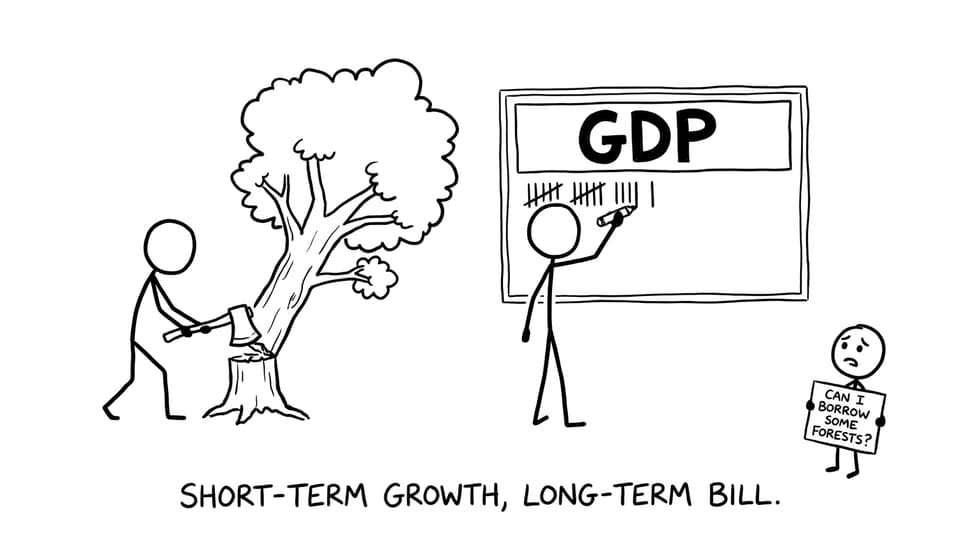
GDP can rise because a country is extracting resources fast, cutting forests, or polluting waterways. The number goes up, but long-term development capacity may fall. This is an easy link to sustainability, resource security, and the idea that short-term growth can create long-term costs.
GDP can increase after negative events
Rebuilding after a hazard or conflict can increase spending, employment, and construction output, which can raise GDP. But people may be worse off in housing security, health, or education. This is why GDP alone is a weak “progress” story.
A quick IB Geography checklist for better evaluation
-
State what GDP measures (economic output).
-
Add at least two limitations (inequality + well-being are the fastest pair).
-
Add a third limitation if relevant (informal economy or sustainability).
-
Conclude: GDP should be used alongside composite indicators (e.g., HDI) and social measures.
To practise building these evaluation paragraphs under time pressure, use the IB Geography Human Development and Diversity Questionbank and the wider IB Geography Resources hub.
Conclusion: GDP is a number, not a life
GDP is still worth knowing in IB Geography, but only as one instrument on a crowded dashboard. It can hint at capacity, productivity, and economic momentum, yet it can’t tell you who benefits, what gets damaged, or whether people are actually healthier and safer.
If you want to turn that understanding into exam-ready responses, RevisionDojo helps you practise with a syllabus-aligned Questionbank, digest concepts with Study Notes and Flashcards, ask targeted follow-ups in AI Chat, and build confidence through Mock Exams, Predicted Papers, and Grading tools. When GDP shows up in a prompt, you won’t just define it, you’ll evaluate it like an IB Geography student aiming for the top band.