




Spaced repetition feels like a small cheat code the first time it works.
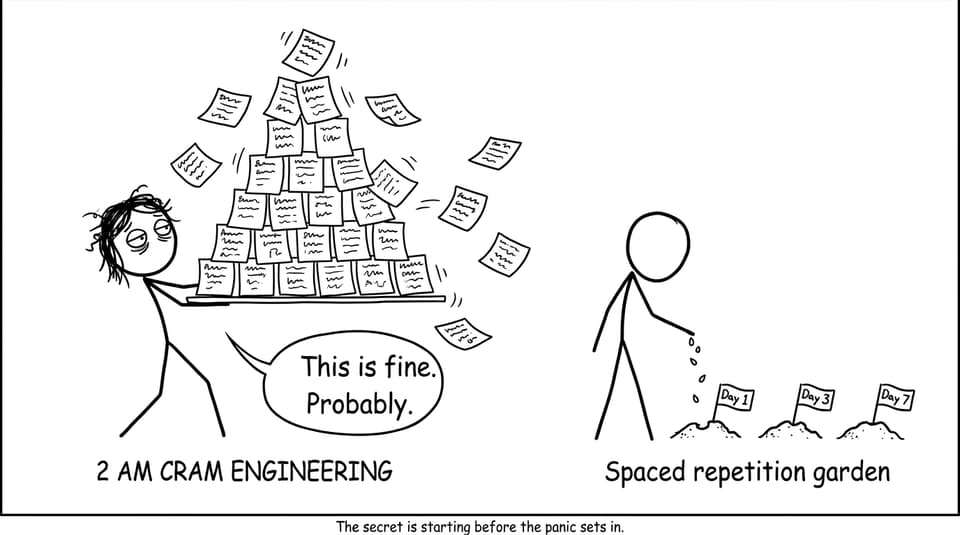
You review something for seven minutes on Monday, again on Thursday, once more next week, and somehow it’s still in your head a month later, even under exam pressure. For IB students, that’s not just comforting. It’s strategic. These Studying Tips aren’t about doing more. They’re about timing your effort so your brain stops treating everything like disposable trivia.
Studying Tips: What spaced repetition actually is
Spaced repetition is a study method where you review information at increasing intervals, instead of re-reading it in one long session. The core idea is old (Hermann Ebbinghaus explored memory and forgetting in the 19th century), but the practical payoff is modern: it helps you keep knowledge accessible when you need it, not just when you just learned it.
If you want a deeper walkthrough tailored to IB, keep this open as a companion: Spaced Repetition for IB: Scientific Study Method.
The brain reason it works (and why cramming doesn’t)
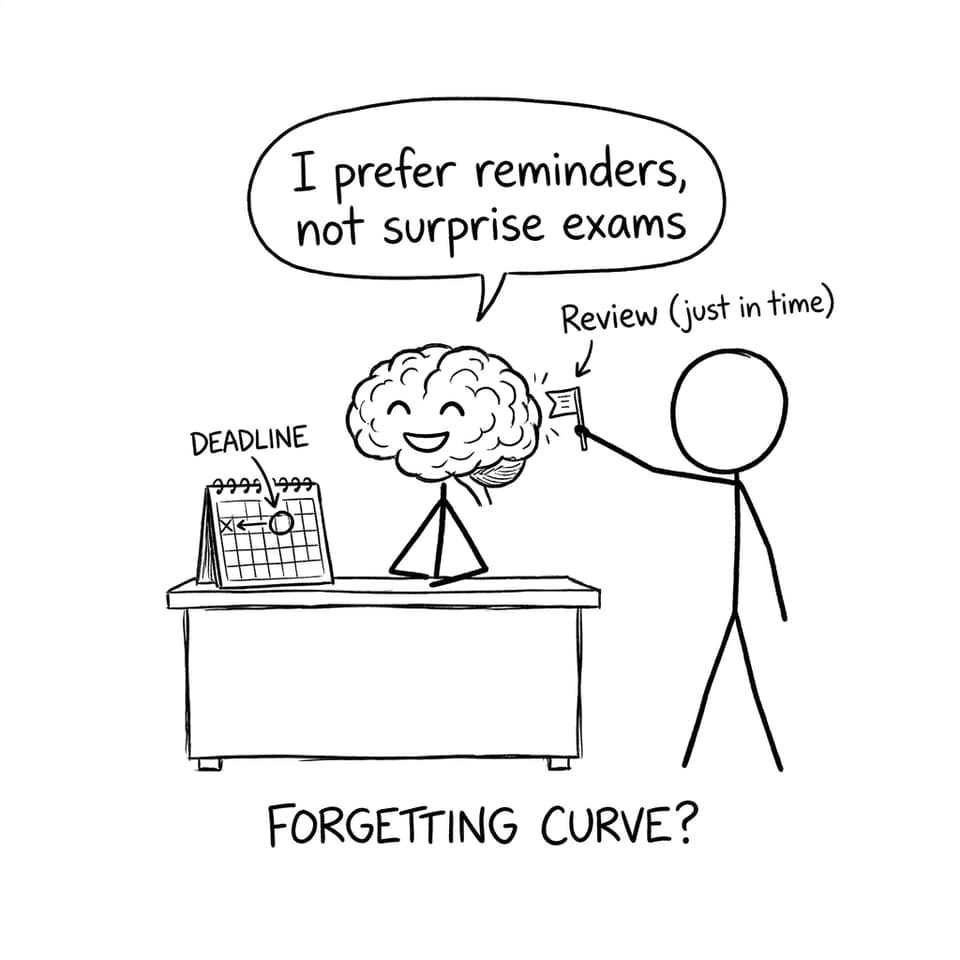
Your brain forgets on purpose. The “forgetting curve” is basically your mind saying: If you don’t use this, I’ll recycle it.
Spaced repetition works because it interrupts forgetting right before it completes. Each review is like re-saving a file before the battery dies. Over time, the memory trace strengthens, recall gets faster, and you spend less energy re-learning.
Cramming can produce short-term familiarity, but it rarely builds long-term retrieval. And IB exams reward retrieval: definitions, method steps, command terms, case studies, quotations, processes, and the ability to apply them.
A simple spaced repetition checklist for IB students
Use these Studying Tips as a default loop:
-
Learn one small subtopic using RevisionDojo Study Notes
-
Convert key points into RevisionDojo Flashcards
-
Review cards on a schedule (example: 1 day, 3 days, 7 days, 14 days)
-
Prove it with targeted practice from the RevisionDojo homepage (use Questionbank and timed practice)
-
Once a week, simulate pressure with mocks and predicted papers in your revision plan
If you’re building a full routine around this, this is useful context: RevisionDojo App: The Smarter Way to Prep for IB Exams.
Studying Tips: How to use spaced repetition without overcomplicating it
Here’s the mistake most IB students make: they treat spaced repetition like another project to manage.
Instead, treat it like brushing your teeth. Small, daily, non-negotiable.
Start with tiny daily reviews
The best spaced repetition system is the one you’ll do when you’re tired. Build a 7-10 minute habit with flashcards. RevisionDojo’s SRS scheduling means you don’t have to guess what to review next.
Related reading if you study on the go: Mobile IB Flashcards: Study Cards on Your Phone.
Pair recall with exam-style application
Spaced repetition keeps facts available, but IB grades come from using them. After your card session, do a short set of exam-style questions, then log mistakes.
For a practical, burnout-aware structure: How to Study for IB Mocks (Without Burning Out).
Use feedback loops, not vibes
If you missed a question because you forgot a definition or method step, that becomes a flashcard. If you missed it due to unclear understanding, use Study Notes or Jojo AI Chat to fix the gap fast, then re-test.
If you’re planning the final stretch, this helps: IB: The Last 2 Weeks Before Exams (What Matters).
Conclusion: Study less, remember more
The quiet promise of spaced repetition is that it rewards you for showing up briefly, repeatedly. That’s the whole point of real Studying Tips: less drama, more results.
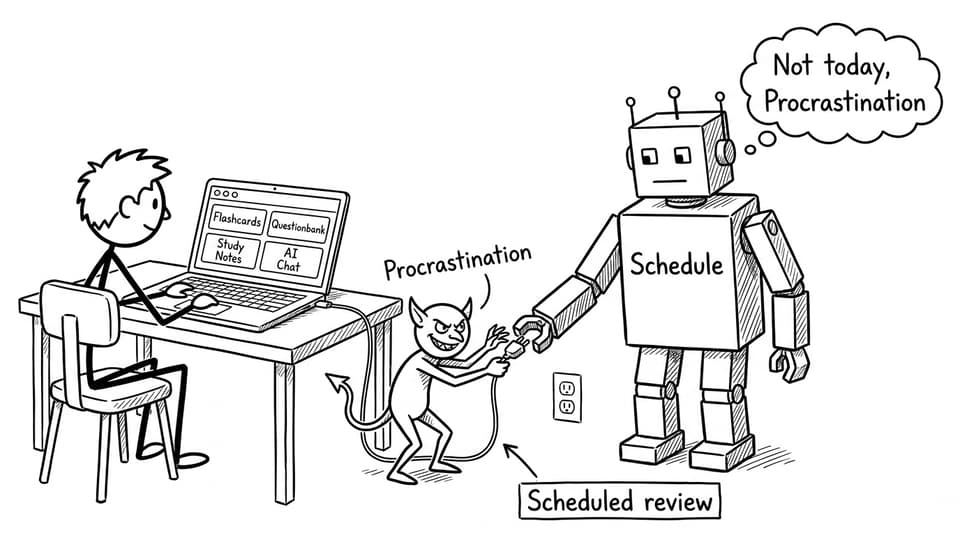
If you want this to feel automatic, build your loop inside RevisionDojo: learn with Study Notes, remember with Flashcards, apply with Questionbank practice, then sharpen under timed pressure with Mock Exams and Predicted Papers. Your future self will notice the difference the moment the exam starts.