
Research in the IB rarely looks dramatic.
It looks like a student at 11:47 p.m. rereading one sentence, realizing the source they trusted is shaky, then starting over, not because they are lazy, but because they never built a system.
The twist is that research is not only for your IA or Extended Essay. In the IB, research is the hidden engine behind strong exam answers too. The student who can locate the right evidence, evaluate it quickly, and explain it clearly tends to feel calmer in every paper, even when the question surprises them.
This article breaks down the role of research in the IB curriculum, the exact research habits that earn marks, and how to keep those habits light enough that you can still revise for exams.
The role of research in the IB: why it matters beyond coursework
The IB is designed around inquiry. That sounds philosophical, but for you it becomes practical fast: research is how you prove you can think, not just remember.
In coursework, research is obvious. Your IA lives or dies by the quality of your sources, data, and evaluation. Your EE is essentially a long argument built on evidence. RevisionDojo’s hubs for IB IA Guides and IB Extended Essay Guides exist because the criteria reward students who research with intention.
In exams, research is quieter but still present. When you revise with good research habits, you:
-
build explanations from reliable models (not random summaries)
-
learn the vocabulary and definitions examiners expect
-
practise selecting evidence and linking it to a claim
That is why research feels like an “extra” until it suddenly becomes your advantage.
A quick IB research checklist you can actually follow
Keep this checklist short enough that you will use it in the middle of a busy IB week:
-
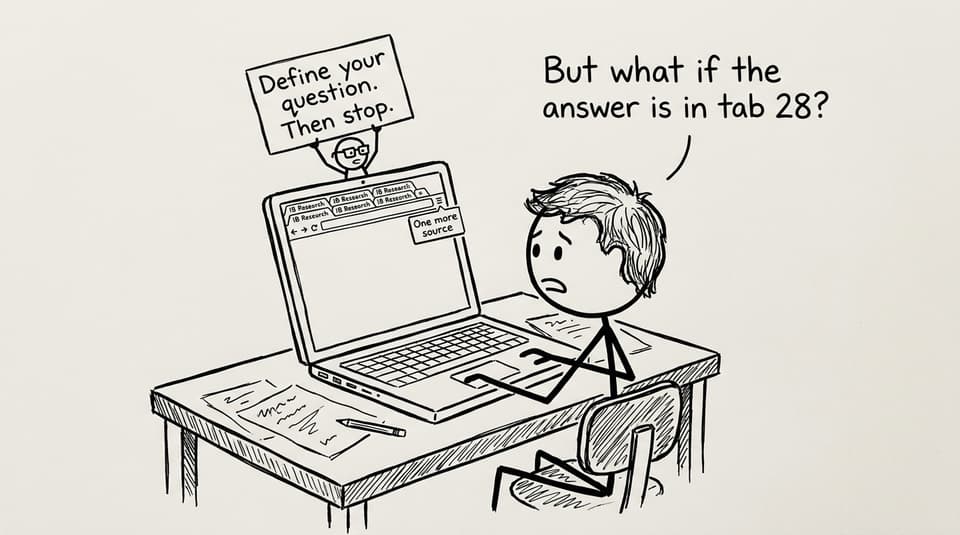
Question first: Write your research question in one sentence.
-
Minimum sources: Find 5 strong sources before you collect 25 okay ones.
-
Source log: Track citation details immediately.
-
Notes by argument: Take notes in categories that match your claims.
-
Evaluate as you go: Reliability, bias, date, relevance.
-
Draft early: Your first draft reveals what you still need to research.
-
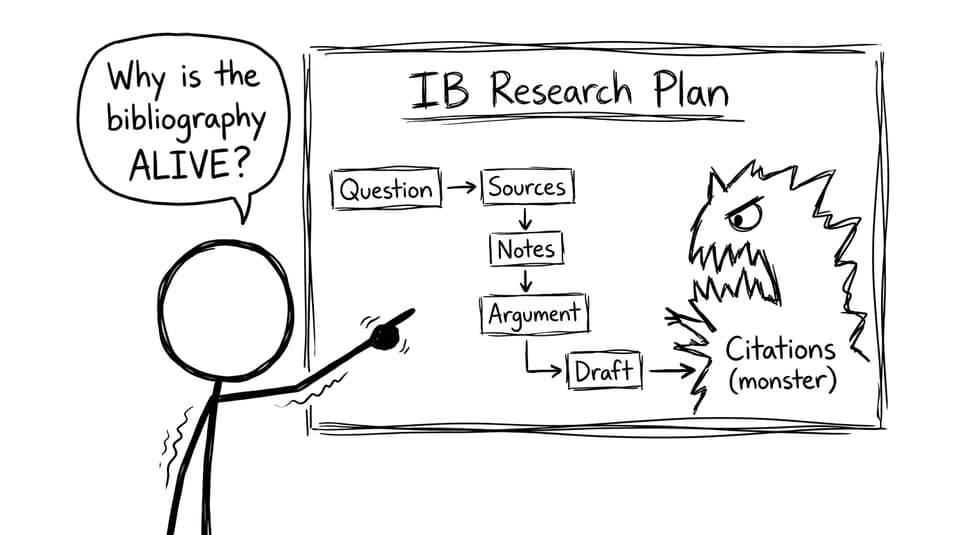
Citations running: Bibliography is not a final-day activity.
If you want examples of how these habits appear in real student work, browse the Research Skills tag and keep a few posts bookmarked.
What “good research” looks like in the IB (and what it is not)
Most IB students think research means collecting a lot.
Examiners reward something else: selecting a little, then using it well.
Good IB research is:
-
Focused: You can explain why each source is relevant to your question.
-
Balanced: You can acknowledge limitations and competing interpretations.
-
Traceable: Your reader can follow where claims came from.
-
Analytical: You do not just report facts; you explain what they mean.
Bad research is often “impressive” on the surface: long bibliographies, fancy quotes, and paragraphs that feel smart but do not answer the question.
If you are unsure where you fall, read Teaching Research Skills That Strengthen IAs and the EE. It frames research as a skill continuum, which is exactly how the IB treats it across subjects.

How to do research efficiently when you still have IB exams to study for
The hardest part of IB research is not intelligence. It is time.
Here is a simple workflow that protects your exam revision.
Start with a narrow IB research question (or your workload explodes)
A broad question creates broad reading, and broad reading creates panic.
If you are working on an IA, use Refine Your IA Research Question for Clarity and Focus as your filter. Your aim is to make the question answerable with evidence you can actually gather.
Use a “two-pass” source method
Pass 1 (10 minutes per source): scan abstract/intro, highlight the single most useful section, write one sentence on how it helps your argument.
Pass 2 (later): deep read only the best sources.
This is how you stay sane in the IB without sacrificing depth.
Build notes that convert into paragraphs
Instead of copying quotes, create notes in three columns:
-
Claim you might make
-
Evidence from the source
-
Commentary (your interpretation, limitation, or implication)
That third column is where IB marks tend to appear.
Treat citations like brushing your teeth
If you delay references, your research becomes fragile. The IB cares about academic integrity, but more than that: citations keep your thinking organized.
When you want a deeper integrity-focused checklist, see Top Strategies for Ethical Research and Referencing in IB Internal Assessments.
Where RevisionDojo fits: research for coursework, structure for exams
In the IB, research and exam prep can fight each other for attention. RevisionDojo is built to stop that tug-of-war by putting the whole loop in one place.
Here is a practical way to use its features without turning it into another task:
-
Use Study Notes to clarify the concepts you keep meeting in sources.
-
Use Flashcards to retain definitions, case studies, and evaluation phrases.
-
Use the Questionbank to convert “I understand it” into “I can score on it.”
-
Use AI Chat when a source confuses you or your interpretation feels shaky.
-
Use Grading tools to get rubric-aware feedback on drafts, especially for IA/EE structure.
-
Use Mock Exams and Predicted Papers to practise timing and decision-making under pressure.
-
Use the Coursework Library to see what strong structure looks like across subjects.
-
Use Tutors when you need a human to help you sharpen arguments fast.
If you want the exam-prep loop explained cleanly, read RevisionDojo App: The Smarter Way to Prep for IB Exams and Developing IB Core Skills Through RevisionDojo’s Integrated Approach.
Conclusion: the IB rewards the student who can prove, not just say
Research in the IB is not about sounding academic. It is about being able to point to evidence and say, calmly, “This is why I think this is true.”
When you build that habit, your IA and EE get clearer. But more importantly, your exam prep stops being a guessing game. You revise with purpose, practise with feedback, and walk into the room with fewer surprises.
If you want one place to run that system, start with RevisionDojo: tighten understanding with Study Notes, lock memory with Flashcards, build marks through the Questionbank, and use AI Chat and Grading tools to keep your research and writing aligned with IB expectations.