



If you chose IB ESS, there’s a good chance you liked the idea of a science that talks like the real world: messy, political, ethical, full of trade-offs. The 2026 syllabus leans harder into that reality. It’s not a “new coat of paint” update. It’s a quiet shift in what the course rewards: how you think, how you use evidence, and how well you can connect systems instead of reciting them.
So if you’re preparing for the first assessment in 2026, here’s the useful mindset: IB ESS is becoming less about having the right paragraph and more about building the right judgement.
IB ESS 2026 at a glance: a quick student checklist
Use this as your “am I studying the right way?” filter for IB ESS:
-
Know the core topics, but practise connecting them with systems thinking.
-
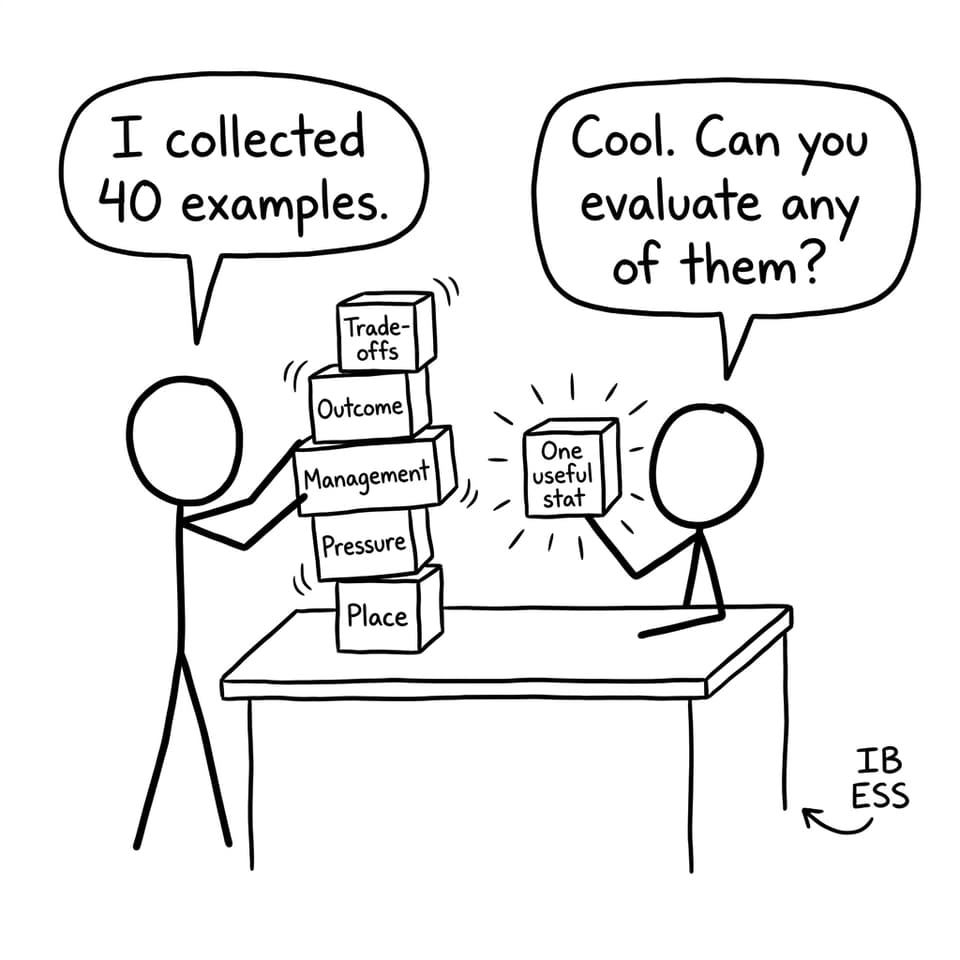
Build a smaller set of flexible case studies you can evaluate under pressure.
-
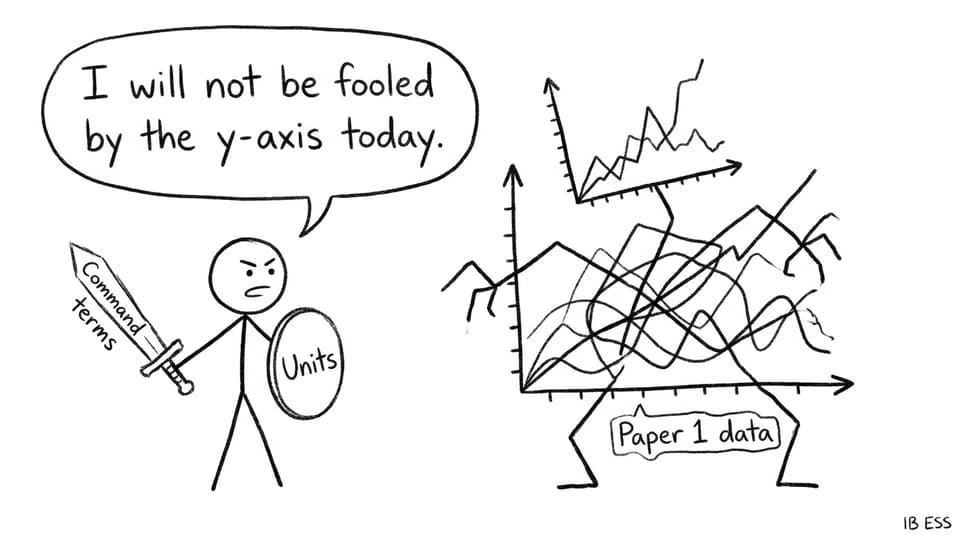
Train data skills early (graphs, trends, uncertainty, units).
-
Expect more application and less comfort-zone recall.
-
For HL, prepare for the three lenses (law, economics, ethics) to show up in how you write.
A helpful starting point is the RevisionDojo hub for the new syllabus: IB Environmental Systems and Societies (ESS) Resources.
What’s actually new about IB ESS for 2026?
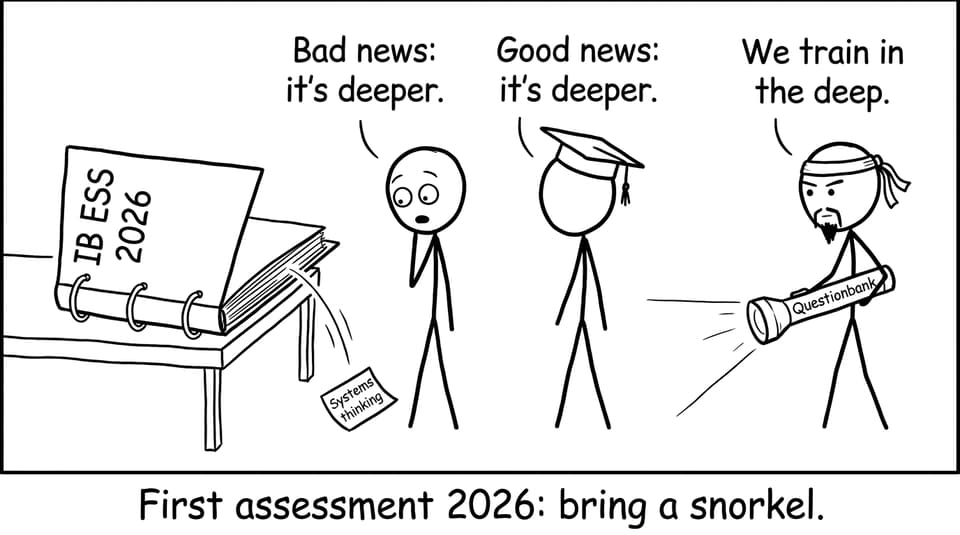
The most important change isn’t one topic being swapped for another. The change is that IB ESS increasingly tests transfer: can you take a familiar concept and apply it to unfamiliar data, a fresh scenario, or a case study with competing values?
RevisionDojo’s breakdown of the shift is worth reading alongside your teacher’s guidance: IB ESS 2026 Syllabus Changes: What Students Should Know.
A clearer, more modern topic structure
You’ll still recognize the heart of IB ESS: ecology, sustainability, resource use, human impact. But the syllabus is organized to make contemporary pressures feel central, not optional. That includes stronger emphasis on climate change, human-modified systems, and urban environments.
If you want a concrete example of how “modern reality” is now examinable, read: IB ESS: Do You Need Urban Systems for 2026 Exams?.
And when you want to study one topic in a syllabus-aligned way (notes + questions + flashcards in one place), use a topic hub like IB ESS Topic 4: Water.
Systems thinking moves from “nice idea” to “mark-making skill”
In IB ESS, systems thinking is no longer a philosophical intro you skim in Topic 1. It’s now a practical writing habit: linking pressures to feedback loops, showing trade-offs, and explaining why an intervention creates winners and losers.
If that phrase still feels vague, this guide makes it operational: What Does “Systems Thinking” Mean in ESS? (2026 First Assessment).
HL adds depth through lenses (not extra memorization)
The HL move is one of the biggest “new things” in IB ESS. You’re not just doing “more content.” You’re expected to look through environmental law, environmental economics, and environmental ethics. In practice, that means your evaluation becomes sharper: policy feasibility, externalities, equity, rights, and moral reasoning.
This matters because it changes what a top-band answer looks like. You can’t just explain; you need to justify.
Assessment changes: what IB ESS examiners will reward
The safest assumption for IB ESS 2026 is that the exam will keep rewarding students who can do three things calmly:
-
Interpret and comment on data.
-
Apply concepts to new contexts.
-
Evaluate with criteria and a clear judgement.
This overview is a strong map for what to expect: How is ESS Assessed in the New Syllabus? (2026 First Assessment).
Internal Assessment: more about inquiry, not decoration
The IA in IB ESS has always rewarded clarity and method, but the direction of travel is toward more meaningful investigation. That means:
-
Cleaner research questions.
-
Better rationale for methods.
-
More honest evaluation of limitations.
-
Stronger link back to environmental decision-making.
If your IA is on your horizon, these two are worth bookmarking early:
How to prepare for IB ESS 2026 (without panic-studying)
A lot of students respond to a new syllabus by collecting more resources. That feels productive. It’s also how you end up with 19 tabs open and no marks gained.
A better approach for IB ESS is to build a repeatable loop.
The “understand then practise” loop
-
Study Notes for one small subtopic until it’s clear.
-
Flashcards to force recall (definitions, processes, case study stats).
-
Questionbank to turn knowledge into exam marks.
-
AI Chat to fix one confusion at a time and tighten explanations.
RevisionDojo is designed around that loop, with connected Study Notes, Flashcards, Questionbank, AI Chat, plus Grading tools, Predicted Papers, Mock Exams, a Coursework Library, and Tutors when you want feedback that’s more specific than “revise more.” Start here: RevisionDojo for IB.
Case studies: fewer, deeper, more usable
In IB ESS, a case study isn’t a name. It’s an argument you can deploy.
The syllabus shift makes this even more true, because evaluation is the difference between mid marks and top marks. This guide helps you choose the right number and the right depth: IB ESS Case Studies: How Many to Memorize for 2026.
Train “7 thinking” early
The students who do best in IB ESS usually aren’t the ones who rewrite the neatest notes. They’re the ones who practise judgement: weighing evidence, using command terms as structure, and adding a justified conclusion.
Two strong reads for this:
Closing: treat the new IB ESS as an advantage
The 2026 syllabus is a reminder that IB ESS was never meant to be a subject where you “collect facts.” It’s a subject where you learn to make careful decisions with imperfect information. That’s also why it can be one of the most rewarding courses in the diploma.
If you want your revision to match what the exam actually rewards, start with the updated hub and build your loop using RevisionDojo’s Questionbank, Study Notes, Flashcards, and AI Chat. The sooner IB ESS practice becomes ordinary, the calmer exam season feels.