
If you’ve ever spoken Spanish confidently in your head, then watched the words vanish the moment someone says “Empieza,” you’re not alone. The Spanish oral in IB Language B isn’t just a test of vocabulary. It’s a test of composure: can you think, connect, and communicate while the clock is quietly ticking?
This guide breaks the Spanish oral down into something calmer and more controllable: a repeatable routine. You’ll learn the format, what to practise, and how to walk in sounding like yourself (just… in Spanish).
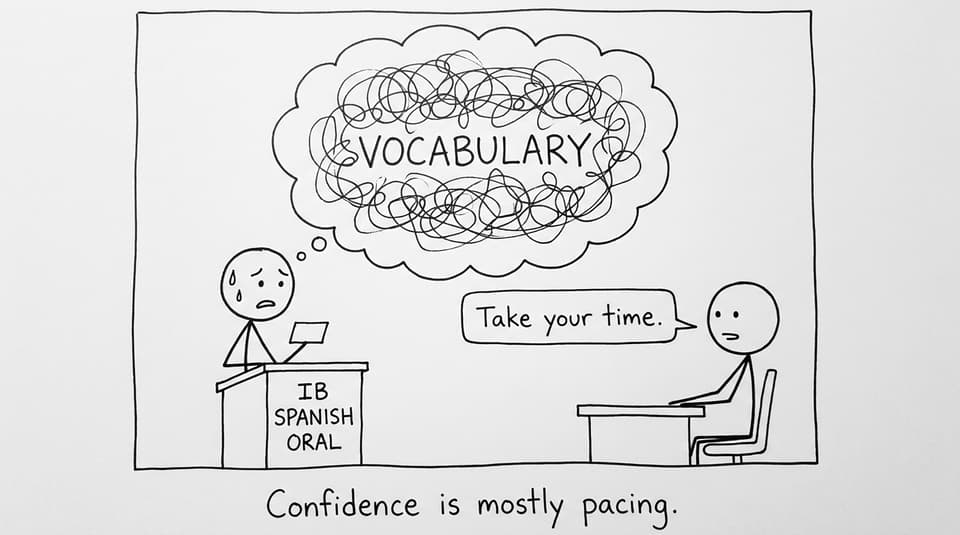
Quick checklist to prepare for the IB Language B Spanish oral
-
Know your version (Spanish B SL, Spanish B HL, or ab initio)
-
Anchor every answer to an IB theme (identities, experiences, human ingenuity, social organization, sharing the planet)
-
Prepare phrases + examples, not a memorized script
-
Train follow-up questions using timed drills
-
Record yourself weekly and fix one habit at a time
For theme planning, start with IB Spanish B Topics: Your Complete Guide for SL and HL.
What the Spanish oral exam is actually testing
In IB Language B, the oral rewards students who can do three things under pressure:
-
Communicate clearly (even if your Spanish isn’t perfect)
-
Develop ideas (opinions, causes, impacts, comparisons)
-
Interact naturally (responding, clarifying, extending)
When students lose marks, it’s often because they treat the oral like a speech competition. But the examiner is listening for a structured conversation, not theatrics.
If you want a broader overview of how the course fits together, see IB Language B Syllabus: Breakdown & Study Strategy.
Format overview: Spanish B vs ab initio (what to expect)
The format depends on your course, but the mindset stays the same: use the prompt as a launchpad, not a cage.
-
Spanish B students typically prepare briefly, speak for a few minutes, then move into discussion.
-
Spanish ab initio focuses more on accessible conversation skills and responding to prompts.
For a deeper format breakdown, use IB Spanish B Oral Exam: Master the SL and HL Speaking Assessment.
How to prepare with confidence (not panic)
Build a “topic kit” for each IB theme
Confidence in IB Language B often comes from having something to say. Create a small kit per theme:
-
12 high-utility words
-
6 opinion phrases
-
3 real examples (news, personal, school, culture)
-
5 connectors (sin embargo, por lo tanto, además…)
RevisionDojo helps here because you can combine Study Notes with Flashcards for daily recall, then test your output with short speaking prompts. Start with IB Spanish B Resources.
Practise the discussion, not just the opening
Most students rehearse the first minute until it sounds polished, then improvise the rest. Flip that.
Train follow-ups like:
-
“¿Por qué piensas eso?”
-
“¿Qué consecuencias tiene?”
-
“¿Cómo es diferente en otro país?”
Use timed prompts from 10 Proven Tips to Prepare for Your IB Language B Oral Exam and build consistency with IB Oral Practice Schedule.
Record, review, repeat (the fastest feedback loop)
Recording yourself feels awkward, but it’s honest. You’ll notice patterns fast: rushing, repeating the same verbs, avoiding the past tense, or losing structure mid-answer.
RevisionDojo’s AI Chat and Grading tools can help you diagnose what’s happening and suggest precise fixes, while Tutors can run realistic mock conversations.
To make recording systematic, see IB Oral Recording Platform: Professional Audio Analysis.
Common mistakes that quietly lower your score
-
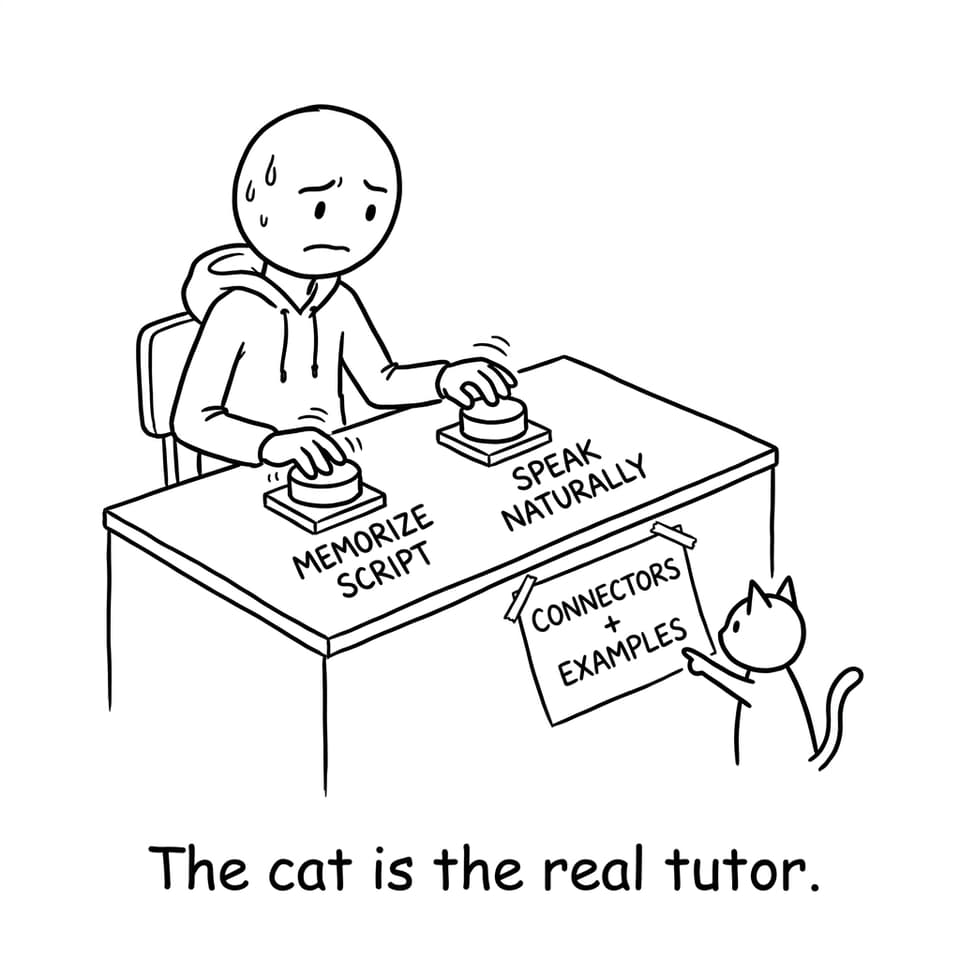
Memorizing a script (it sounds unnatural and collapses when you’re interrupted)
-
Describing instead of discussing (image talk without meaning)
-
No examples (opinions without support)
-
Ignoring the question (you keep talking, but not answering)
A good rule in IB Language B: every big claim deserves a reason, and every reason deserves an example.
Conclusion: confidence is a system you can build
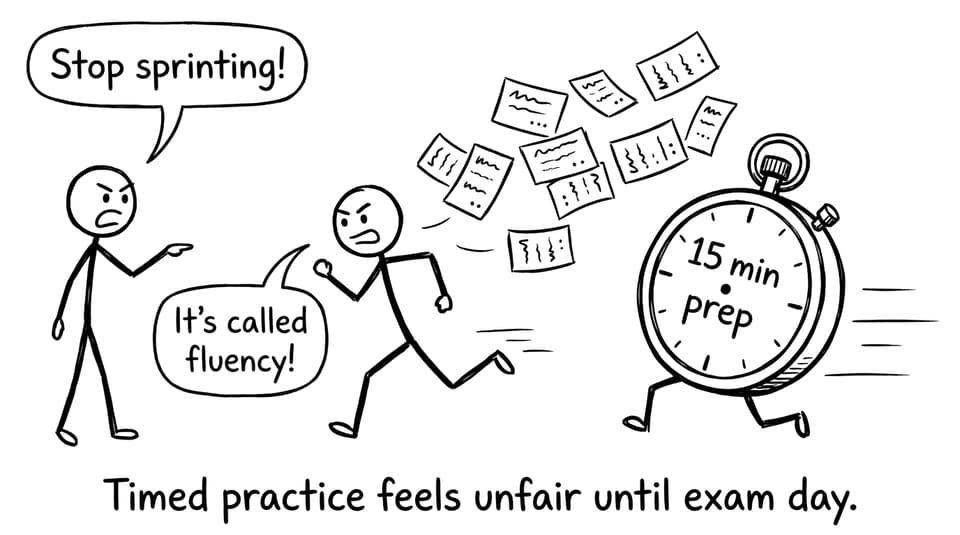
The Spanish oral feels intimidating because it’s live. But in IB Language B, confidence is rarely personality. It’s preparation that has been tested under a timer, corrected with feedback, and repeated until it sticks.
If you want a simple next step, open Mastering Language B Oral Practice and build a weekly routine using RevisionDojo’s Study Notes, Flashcards, AI Chat, Mock Exams, Predicted Papers, and Tutors. Show up often. Practise small. And on exam day, speak like you’ve been here before.