


The night your wall started talking
The strange thing about an IB Visual Arts exhibition is that it can look finished before it sounds finished.
You can have strong individual pieces. Clean mounts. Even a confident theme written at the top of your sketchbook. Then you pin everything up, step back, and the wall whispers: “Nice work… but who are you today?”
That’s what exhibition style really is in IB Visual Arts: not a single technique or aesthetic, but the consistent logic that links your choices. It’s the invisible thread that helps an examiner read your work as a coherent body, not a collection of unrelated victories.
IB Visual Arts exhibition style checklist (save this)
Use this quick scan when you feel overwhelmed. A strong IB Visual Arts exhibition style usually has:
-
A theme you can explain in one sentence
-
Selected works that feel curated, not simply included
-
Variety in media/approach that still feels intentional
-
A layout with breathing space and clear viewing flow
-
Consistent labels, mounting, and finish
-
A curatorial rationale that explains why (not just what)
If you want a broader view of what examiners reward across the course, keep IB Visual Arts Assessment Criteria Explained Simply open while you plan.
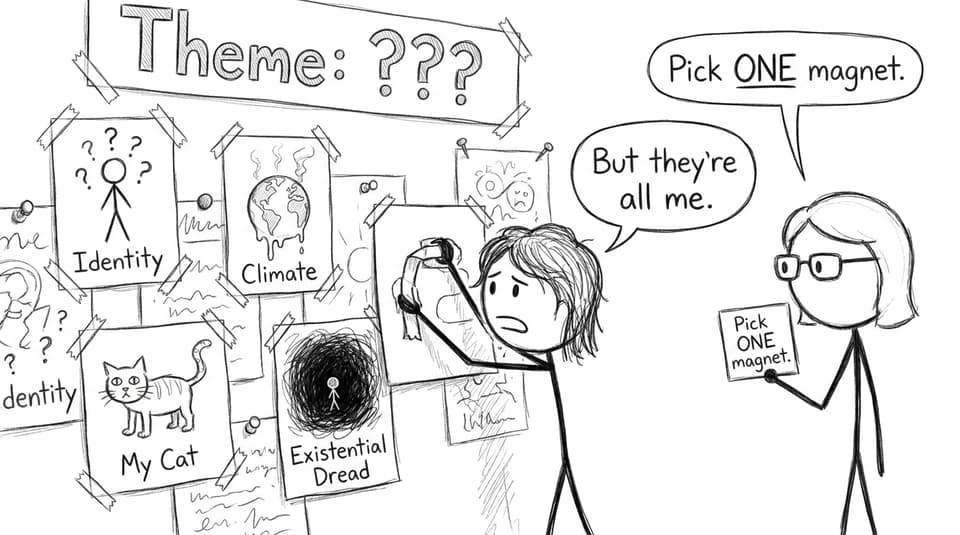
Build your IB Visual Arts exhibition style around one strong “magnet”
Most students start with a topic. Strong exhibitions start with a magnet.
A topic is something like “identity” or “nature.” A magnet is the specific force that pulls decisions into alignment: material choices, composition, symbolism, even scale.
Try one of these magnet prompts (and answer it honestly):
-
“I keep returning to ________ because it shaped how I see people.”
-
“I’m investigating how ________ changes when it’s repeated.”
-
“I want the viewer to feel ________, so I control color/texture/space by ________.”
Then test your magnet against your pieces. If you can’t defend how a work relates, it might be a great artwork that simply doesn’t belong in this IB Visual Arts exhibition.
For help tightening your direction, see How to Succeed in the IB Visual Arts Exhibition at SL vs HL.
Curate like an editor: selection creates style
In IB Visual Arts, your style is often created in the cutting, not the making.
An editor’s job is painful but simple: remove what weakens the story, even if it’s well-written. Curating your exhibition works the same way.
Three selection rules that protect your exhibition style:
Choose “resolved” over “promising”
A promising piece can belong in your Process Portfolio, where experimentation is valued. Your exhibition needs work that reads as complete, deliberate, and finished.
Keep variety, but make it purposeful
Yes, show range. But variety should look like exploration of a theme, not wandering. If you switch media, your reason should be visible (for example: “photography to document,” “charcoal to distort,” “thread to repair”).
Confirm the component boundaries
Your final number matters. If you’re unsure what’s expected, check How Many Artworks Do You Need for the IB Visual Arts Exhibition? so your IB Visual Arts plan stays realistic.
Layout is the sentence structure of IB Visual Arts
In a good gallery, you can feel where the “opening line” is. You can sense the climax. You understand when to pause.
That’s exactly what layout does for IB Visual Arts. It turns your work into a readable sequence.
Use these layout moves:
-
Anchor piece first: Place your strongest, clearest work where the viewer naturally begins.
-
Group by relationship: Pair works that share symbolism, palette, or tension.
-
Create rhythm: Alternate dense and quiet works, large and small, warm and cool.
-
Leave air: Space is part of the presentation. Crowding makes everything look less intentional.
For a practical setup walkthrough, use IB Visual Arts Exhibition Setup Tips for High Marks. And if you want to avoid the common traps, read Common Exhibition Mistakes That Cost IB Visual Arts Students Marks.
Presentation details: the quiet signals examiners notice
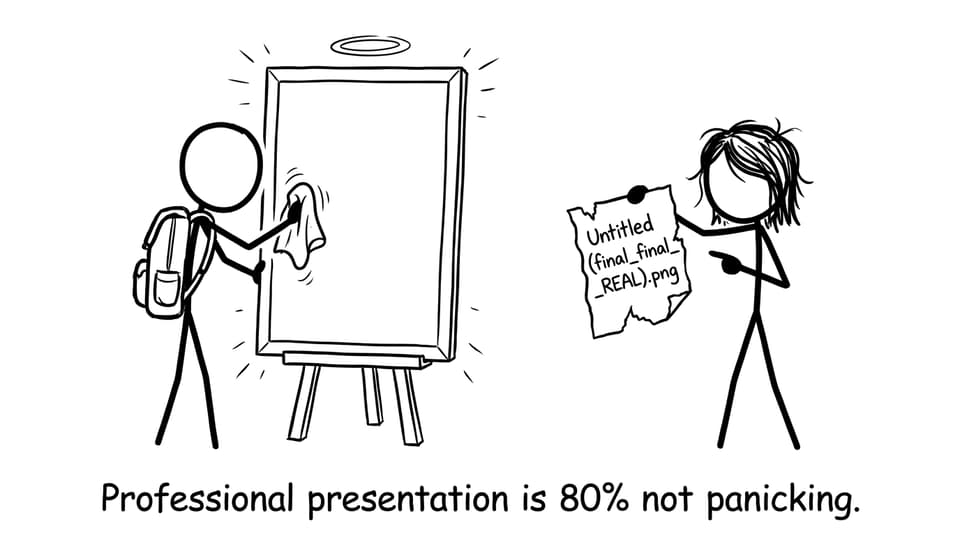
A calm truth: in IB Visual Arts, professional presentation doesn’t “win” marks by itself, but messy presentation can quietly drain them.
Focus on consistency:
-
Label formatting (title, medium, year) stays uniform
-
Mounting and framing look intentional (not improvised)
-
Edges are clean; surfaces are finished
-
Lighting supports the work (test it early)
If you’re including digital pieces, treat display decisions as curatorial choices, not tech chores. This guide helps: IB Visual Arts: Showcasing Digital Art in Your Exhibition.
The curatorial rationale: where your IB Visual Arts style becomes readable
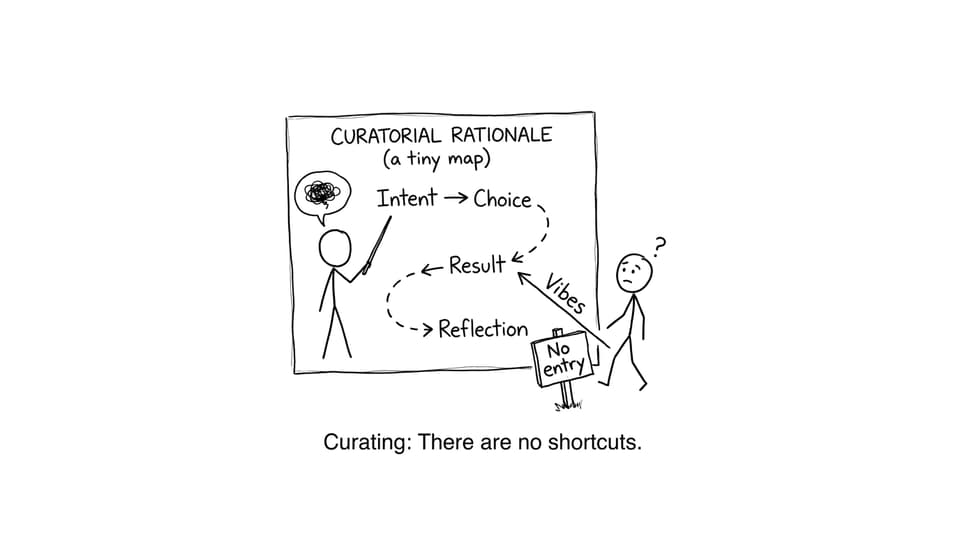
Your rationale is not a poetic artist statement. It’s a compact explanation of choices.
Think of it like translating your exhibition style into examiner-friendly language: intention, selection, and presentation decisions.
A strong structure:
-
Theme/magnet (1-2 sentences): what the exhibition investigates
-
Connections (2-4 sentences): how specific works relate and build meaning
-
Curatorial choices (2-4 sentences): layout, ordering, materials, scale, lighting
-
Reflection (1-3 sentences): how ideas developed, risks taken, what you refined
For a clear template and word-limit guidance, see IB Visual Arts Curatorial Rationale: A Clear Guide. If you want to match your writing to assessment language, Understanding the Marking Criteria for IB Visual Arts is worth keeping open in another tab.
How RevisionDojo helps you polish IB Visual Arts without losing your voice
Most IB Visual Arts stress comes from trying to hold everything in your head at once: criteria, selection, writing, and the practical chaos of installation.
RevisionDojo is built to make that load lighter.
-
Use Study Notes and Flashcards to internalize what examiners look for across exhibition, process work, and comparative analysis.
-
Use AI Chat to pressure-test your theme sentence, refine rationale clarity, and spot vagueness.
-
Use Grading tools (like the Visual Arts rubric graders) to check whether your writing and decisions align with rubric strands.
-
Use the Coursework Library to learn from high-quality examples: IB Visual Arts Exemplars.
-
Add structure with Mock Exams and Predicted Papers for your other subjects, so IB Visual Arts doesn’t get crushed by the rest of your timetable.
-
When you’re stuck, Tutors can help you diagnose what’s missing: coherence, variety, refinement, or simply clearer rationale.
If you want a single hub for more related guidance, browse All IB Visual Arts Posts.
Closing: make your IB Visual Arts wall feel inevitable
A strong IB Visual Arts exhibition style doesn’t feel loud. It feels inevitable, as if every piece had to be there, and every decision has a reason.
If you want that calm coherence, focus on the magnet, curate like an editor, and write a rationale that translates your visual logic into words. Then use RevisionDojo to keep your criteria, structure, and feedback loop tight: Questionbank, Study Notes, Flashcards, AI Chat, Grading tools, Mock Exams, Predicted Papers, the Coursework Library, and Tutors built for IB students who want real results.
When you’re ready, explore Creating an Outstanding IB Visual Arts Portfolio to keep your exhibition and process work reinforcing each other, the way top-scoring IB Visual Arts submissions always do.