
If you’ve ever watched a friend revise Math by grinding markscheme-style questions while you’re refining a Theatre director’s notebook for the fifth time, you’ve probably asked the quiet question: is scoring a 7 in IB Group 6 harder than other groups?
The honest answer sits inside IB Grading itself. Not in the idea that arts students are “less academic,” or that sciences are “more serious,” but in how points are actually earned. Group 6 rewards process, intention, and interpretation. That can be freeing. It can also feel like trying to hit a moving target.
In this guide, we’ll compare what makes IB Grading in Group 6 different, when it’s genuinely harder, when it’s secretly easier, and how to make a 7 feel less like a lottery and more like a plan.
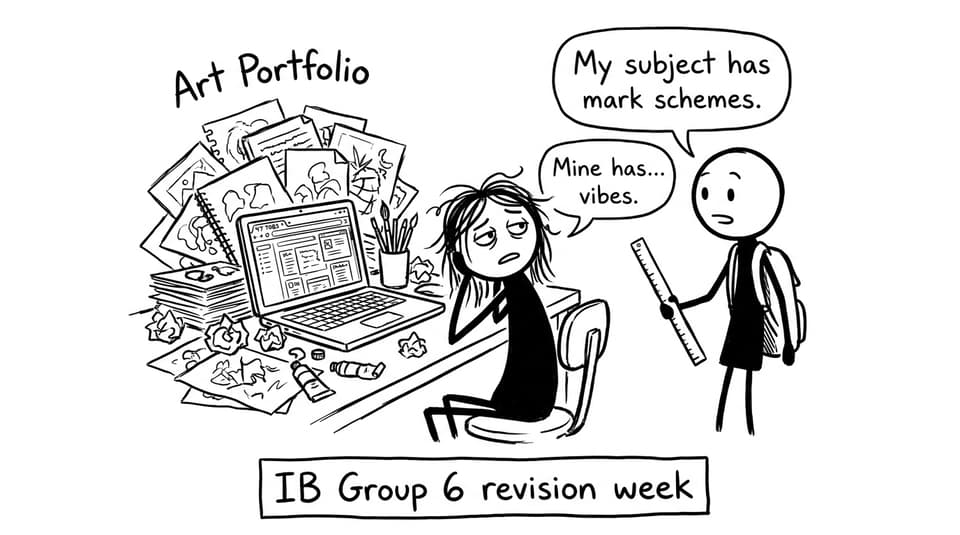
Quick checklist: what makes a Group 6 “hard 7”
Before comparing groups, use this fast diagnostic. A 7 in Group 6 often feels harder when:
-
You rely on “talent” more than documented improvement (bad fit for IB Grading).
-
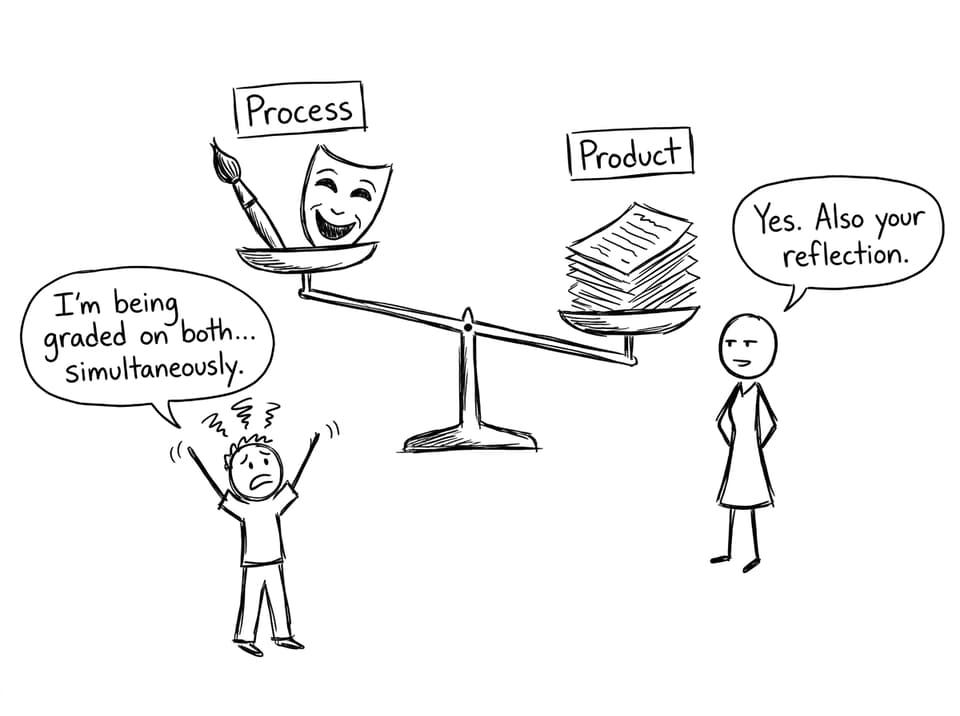
You create a strong final product but weak written reflection/commentary.
-
You start late and try to sprint projects that need iteration.
-
You don’t translate your creative choices into criteria language.
-
You get feedback, but you don’t apply it in visible ways.
If that list stings a little, good. It means the problem is controllable.
Why IB Grading feels different in Group 6
In many Group 1-5 subjects, IB Grading can feel transactional: do X steps, get Y marks. In Group 6, you’re often assessed on a triangle:
-
the work (portfolio/performance/production)
-
the thinking (research, intention, artistic decisions)
-
the evidence trail (process, development, reflection)
That last point is where many potential 7s quietly leak marks. Group 6 doesn’t just ask, “Can you do it?” It asks, “Can you show how you got there, and justify why it matters?”
If you want a clear overview of how components are assessed across arts subjects, read Understanding Assessment in IB Group 6 Subjects.
Is a 7 in Group 6 actually harder than other groups?
The case for “yes”
IB Grading in Group 6 can be harder for three reasons:
Subjectivity is real (but not random). Even with rubrics, artistic quality and communication involve judgment. Two examiners may agree you’re “strong” but differ on whether you’re “exceptional.” That’s stressful because students crave certainty.
You’re graded on expression and explanation. Many students can create. Fewer can explain their creative decisions with clarity, cultural context, and precise vocabulary. In IB Grading, that translation skill is often the difference between a 6 and a 7.
Time cost is sneaky. Group 6 work expands into evenings: rehearsal, editing, photographing work, curating, writing rationales, revising reflections. It’s not just “study time,” it’s production time.
If you’re still deciding whether Group 6 is the right fit, Choosing Your Group 6 Subject: A Comprehensive Guide lays out the workload personality traits that tend to win.
The case for “no”
Group 6 can also be more controllable than people admit.
Fewer surprises on exam day. Many Group 6 pathways are portfolio/coursework-heavy, which means less reliance on one timed paper deciding everything. For some students, that makes IB Grading feel fairer.
Iteration is a superpower. In sciences, you can’t “revise” your final exam after you sit it. In Group 6, your best mark is usually built through visible refinement. If you start early, you get multiple chances to move toward the top band.
Your strengths can compound. Artistic voice, technical skill, and thoughtful reflection reinforce each other. When it clicks, a 7 can feel more like momentum than miracle.
How to make IB Grading work for you in Group 6
Build a “criteria translation” habit
Every week, write three sentences that connect your work to the rubric:
-
“I chose this technique because…”
-
“This development shows experimentation by…”
-
“This decision communicates meaning through…”
That habit makes IB Grading predictable because you’re speaking the examiner’s language, not hoping they “get it.”
Practice like an artist, revise like an examiner
A lot of students do the first half and skip the second. You need both.
RevisionDojo helps you split the roles:
-
Use Study Notes to clarify theory, context, and terminology fast.
-
Use Flashcards to keep key vocabulary and artist references ready.
-
Use the Questionbank for any written/analysis components where applicable.
-
Use AI Chat when you’re stuck turning a creative choice into a sharp explanation.
-
Use Mock Exams and Predicted Papers where your subject has timed or structured external components.
To build your overall exam system across subjects (including Group 6), RevisionDojo App: The Smarter Way to Prep for IB Exams shows a simple loop that fits real life.
Get feedback that matches IB Grading standards
Teacher feedback is valuable, but it varies. What you want is feedback anchored to criteria language.
If you’re working on big written components (like reflections that need structure and precision), RevisionDojo’s IB Coursework Grader can help you see where marks are gained or lost in an IB-style way, and what to do next.
For a broader look at how structured feedback speeds up improvement, see IB IA Grading Service: Professional Assessment in Minutes.
Conclusion: Group 6 isn’t “harder”; it’s less forgiving of vague work
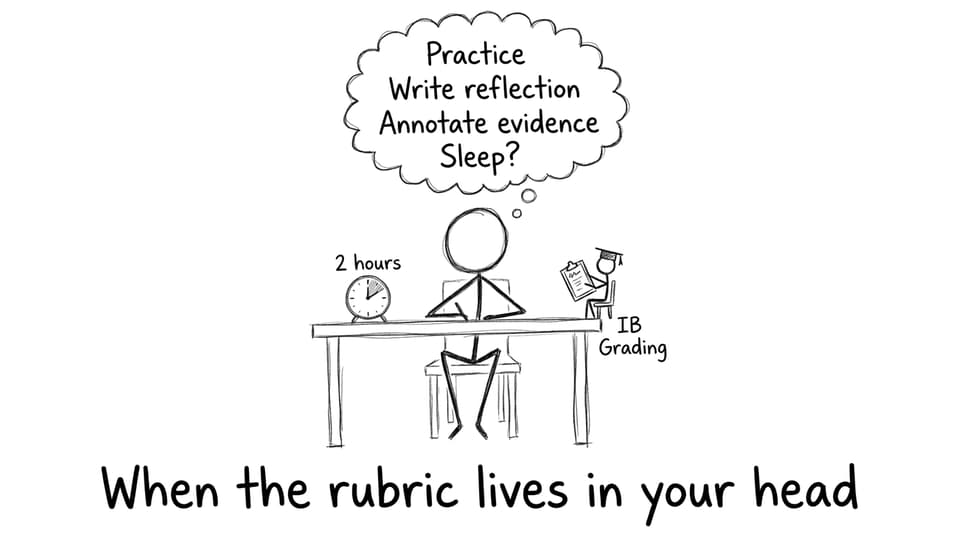
Scoring a 7 in Group 6 can feel harder because IB Grading asks you to be two people at once: the maker and the meaning-maker. If you only create, you cap your score. If you create and document and explain with precision, you start playing the same predictable game that math students have always been playing.
If you want that predictability, build your routine around RevisionDojo: drill understanding with Study Notes, lock language with Flashcards, pressure-test performance with Mock Exams and Predicted Papers, tighten reflection with AI Chat, and use Grading tools and the Coursework Library to see what top work looks like. When IB Grading becomes a system instead of a mystery, a 7 stops being a rumour and becomes a direction.
Further reading for Group 6 strategy: