
If you’ve ever watched a scene twice because something felt “off” (the cut, the silence, the way a character didn’t look at the other one), then you already understand the quiet pull of IB Film. The subject doesn’t just ask whether you like movies. It asks whether you can notice, explain, and eventually make meaning with the same tools directors use: framing, sound, rhythm, and choice.
But you’re also an IB student preparing for exams. You’re thinking about time, grades, workload, and whether this subject helps or hurts your overall diploma plan. So is IB Film worth taking?
Here’s an in-depth, exam-minded analysis that stays honest about the trade-offs.
IB Film in one minute: a quick decision checklist
Before you commit to IB Film, run this quick check. You’ll probably enjoy (and score well in) the course if most of these are true:
-
You like discussing how a film creates meaning, not just whether it’s “good.”
-
You can handle long projects without last-minute chaos.
-
You’re open to technical learning curves (editing, sound, exporting, file management).
-
You’re willing to rewatch scenes and write precise analysis.
-
You want a subject that rewards creativity and evidence.
If you’re unsure about what the course actually includes, skim Dive into the World of IB Film: A Comprehensive Syllabus Guide before deciding.
Why IB Film can be a smart choice (especially for exam performance)
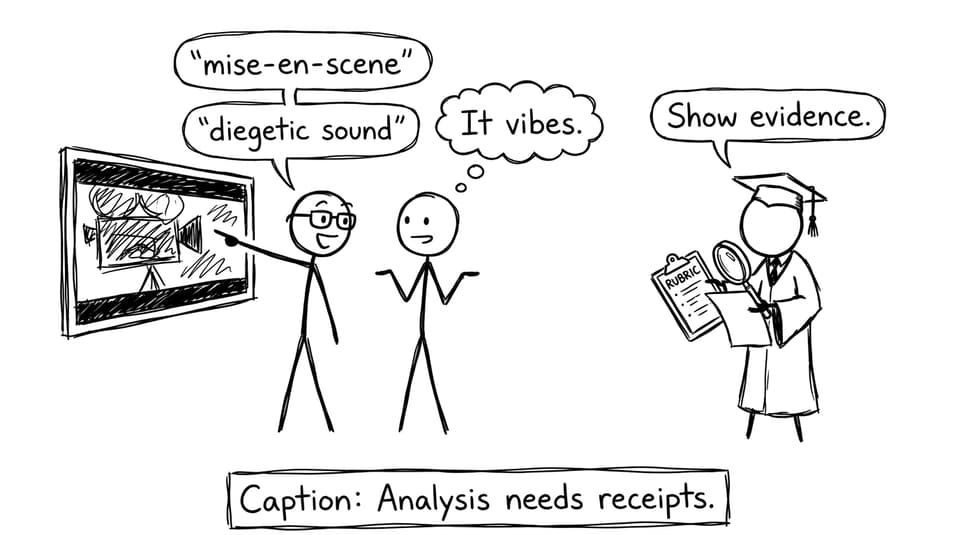
The best part of IB Film is that it trains a skill most subjects only hint at: turning intuition into explanation. At first, you might say, “That shot felt tense.” Later, you learn to say, “A low-angle close-up plus tight framing and a rising non-diegetic tone compress the space and signal threat.”
That shift matters for assessments because marks come from specific choices, supported by film language.
IB Film builds high-value academic skills
Even if you never work in media, IB Film develops skills that travel well:
-
Analytical writing: You learn to argue clearly and support claims with evidence.
-
Research confidence: Context, theory, and intention become part of your toolkit.
-
Communication: You practice explaining creative decisions without sounding vague.
If you’re focused on scoring, your edge comes from learning what examiners reward. Start with How to Choose Films for IB Film Comparative Analysis so your choices give you technique-rich material from day one.
IB Film rewards students who think like builders
Many IB subjects reward memory first. IB Film rewards construction: planning, drafting, shooting, revising, reflecting. When you treat the course like a series of small improvements, your work gets calmer and more examiner-friendly.
RevisionDojo helps here in a surprisingly practical way: use Study Notes to clarify techniques, the Questionbank to drill analysis habits, and Flashcards to lock in terminology that keeps your writing precise. When you’re stuck, AI Chat is ideal for turning a messy idea (“it feels lonely”) into a rubric-aligned explanation.
You can explore the tools directly: Study Notes, Flashcards, and Questionbank.
The real challenges of IB Film (and how to avoid common traps)
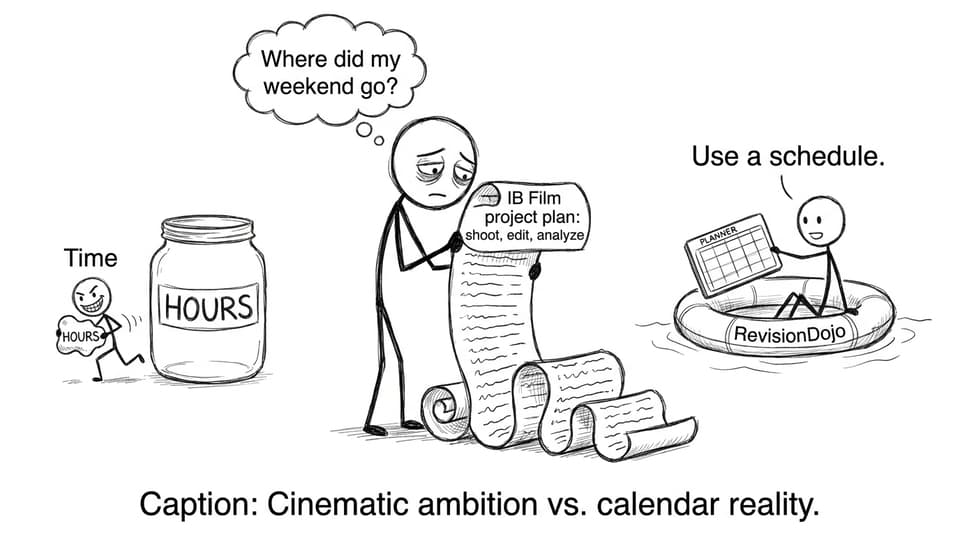
The downside of IB Film is not that it’s “hard.” It’s that it’s wide. Analysis, context, production, reflection, deadlines, file exports, group coordination. The workload can be manageable, but only if you treat time as part of the curriculum.
Time management is the hidden syllabus
Film projects expand to fill the time you give them. A two-minute sequence can take hours to shoot and longer to edit. If you’re taking heavy content subjects (HL sciences, HL math, etc.), you need a system.
A simple approach:
-
Plan backwards from deadlines.
-
Lock “capture days” early.
-
Set a weekly minimum (even 60-90 minutes) for editing so you don’t compress everything into one weekend.
For a list of what students often forget until it costs marks, read Common Mistakes in IB Film Portfolios and How to Fix Them.
Technical skills are learnable, but only with repetition
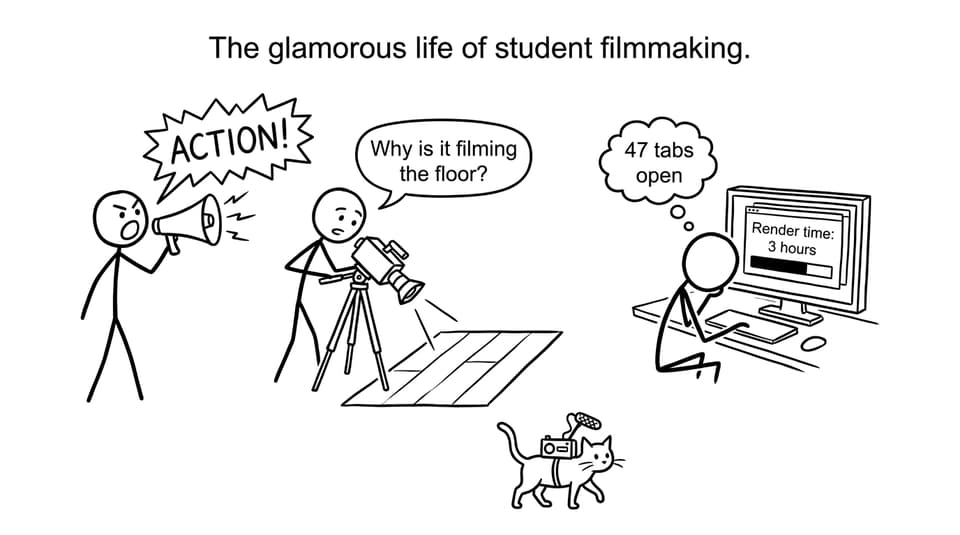
Most students worry about cameras. Examiners usually worry about sound and clarity. You don’t need a cinema camera to succeed in IB Film, but you do need control over basics: stable framing, intentional lighting, usable audio, and clean edits.
A practical guide to reduce tech stress is Tips for Recording and Editing Your IB Film Project.
So, is IB Film worth taking? Who it fits best
IB Film is worth it if you want a subject where your personality can show up in your work, but your marks still come from disciplined evidence. It fits students who like:
-
storytelling and creative problem-solving,
-
argument writing (with specific technique references),
-
long projects with iterative improvement.
It may not be the best choice if you strongly prefer clear right/wrong answers, or if your schedule is already overloaded and you don’t have time to shoot and edit consistently.
If you want extra clarity on assessment components, this guide helps: How to Prepare for the IB Film Internal Assessment. And if your course includes an oral component, keep How to Prepare for the IB Film Oral Exam Successfully open while you practice.
Final verdict: take IB Film if you want a subject that makes you sharper
If you want a course that teaches you to notice the world, explain it with precision, and create something real under constraints, IB Film is worth taking. It’s not a free ride. It’s a craft. But the effort compounds: every project teaches you how to plan better, analyze cleaner, and communicate with more authority.
When you’re ready to turn that effort into marks, RevisionDojo is built for it: Questionbank, Study Notes, Flashcards, AI Chat, Grading tools, Predicted Papers, Mock Exams, Coursework Library, and Tutors working together so your creativity stays organized and your exam prep stays realistic.
Start by exploring the IB Film collection here: All IB Film Posts.