



If you have ever watched someone in your class deliver a confident monologue and thought, They’re definitely getting a 7, IB Theatre will surprise you.
Because in IB Group 6 Arts, a top score is rarely about “being naturally talented.” It’s about proving your thinking. The student who earns a 7 in IB Theatre usually isn’t the loudest performer in the room. They’re the one who can explain why a choice was made, what it did to an audience, what changed after feedback, and how the work connects to research.
So is it hard to get a 7? Yes. But it’s hard in a specific way: it requires sustained evidence, not last-minute inspiration.
The honest answer: it’s hard, but not mysterious
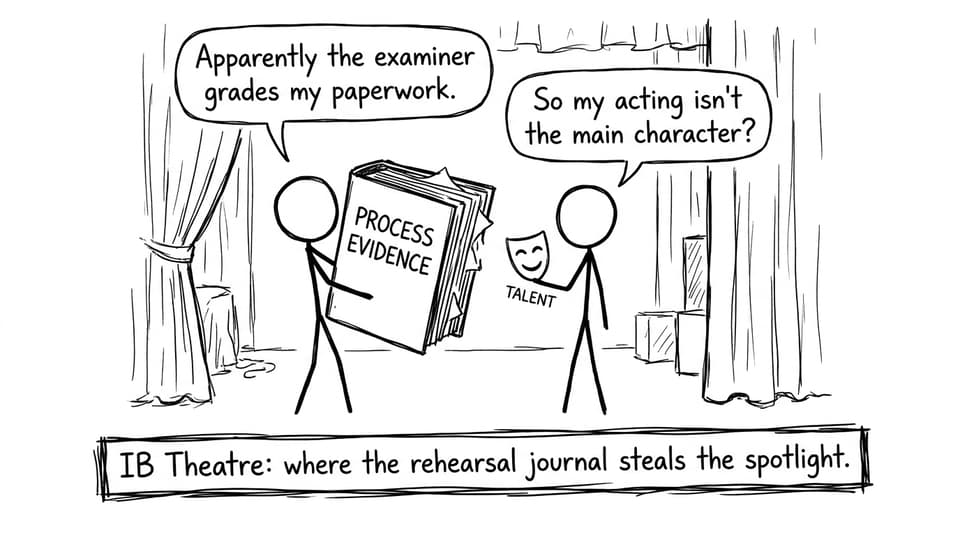
In IB Group 6 Arts, students often assume the arts are “subjective,” so marks feel unpredictable. IB Theatre is the opposite. The course rewards clarity: clear intention, clear research, clear process evidence, and clear reflection.
If you want a 7, the goal isn’t to become a different person. It’s to become a better theatre-maker on paper and in practice.
A good starting point is understanding the course structure itself. If you haven’t yet, read Exploring the IB Theatre Syllabus: A Comprehensive Guide or the broader Dive into the World of IB Theatre: An In-Depth Syllabus Overview.
Quick checklist: what a level 7 student does differently
Use this as a weekly compass (and yes, it applies across IB Group 6 Arts):
-
Collect evidence every week (photos, drafts, rehearsal notes, feedback)
-
Link choices to intention and audience impact
-
Research widely, then apply narrowly (2-3 conventions done well beats 12 name-drops)
-
Practise reflection language: discovery, limitation, adjustment, next step
-
Build a system: notes + flashcards + targeted self-testing
RevisionDojo makes this system easier: use Study Notes to lock in terminology, Flashcards for practitioners and conventions, a Questionbank for retrieval practice, and AI Chat to pressure-test your explanations before you write.
Where students lose marks in IB Theatre (and how to fix it)
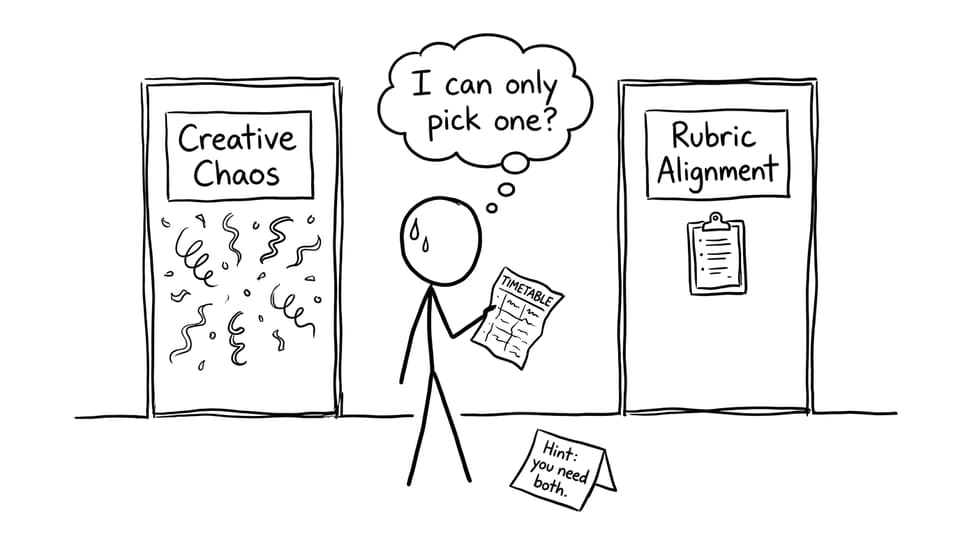
Mistake: treating “process” like admin work
In IB Theatre, process is not filler. It is the story of your thinking.
A 7-level submission doesn’t just say: “We rehearsed and it went well.” It shows experiments, describes what failed, and explains why the final version is stronger.
If you struggle with documenting, steal frameworks from students who do it well. Start with How to Document Your Creative Process for the IB Theatre Solo Piece.
Mistake: research with no visible impact
Research must change what happens in the room.
For the Research Presentation, examiners want proof you can investigate a tradition and translate it into practice. If you’re still stuck in “history mode,” use How to Prepare for the IB Theatre Research Presentation and, when you’re ready to polish delivery, How to Deliver a Confident and Engaging IB Theatre Research Presentation.
Mistake: choosing a Solo Theatre Piece theorist that’s hard to apply
Some theorists are fascinating but difficult to show clearly in a solo performance.
A smarter move is choosing a practitioner with practical, observable conventions you can apply consistently. Start here: Best Theorists to Research for the IB Theatre Solo Piece and then go deeper with How to Aim for a Level 7 in the IB Theatre Solo Theatre Piece.
The Collaborative Project: where 7s are earned quietly
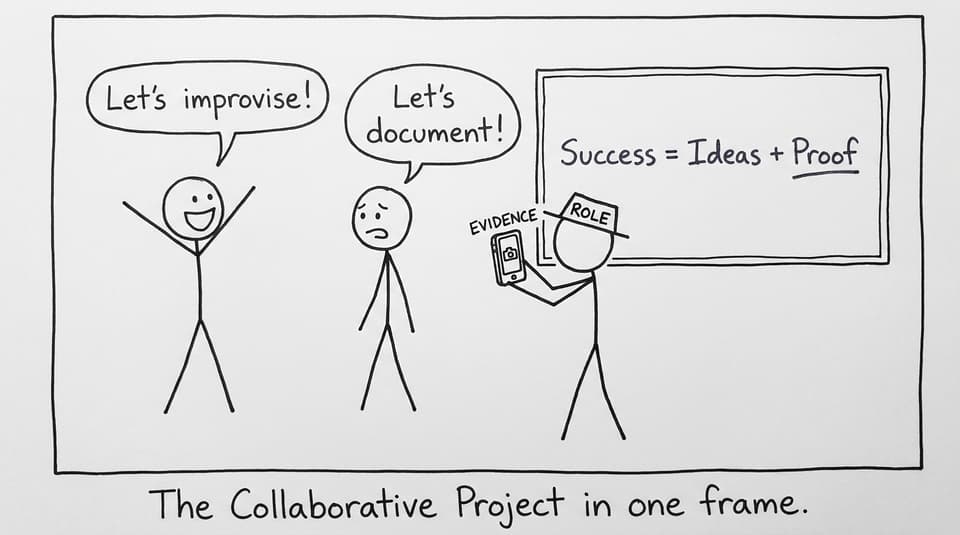
The Collaborative Project looks like group work, but the grade is individual. That’s the trap.
To score highly, you need two things at once: genuine ensemble contribution and clear personal evidence.
If your group is drifting, reset using How to Succeed in the IB Theatre Collaborative Project. If roles are messy, use How to Balance Roles and Responsibilities in the Collaborative Project. And if you’re unsure what “collaboration” even means for assessment, read Is Collaboration Mandatory in IB Theatre?.
Conclusion: the 7 is hard, but it’s built
Getting a 7 in IB Theatre is hard in the way that building a strong performance is hard: you don’t “find” it, you craft it.
And that’s the quiet advantage of IB Group 6 Arts when you approach it well. Your work improves in layersone rehearsal note, one better reflection, one clearer intention at a time.
If you want a calmer, more structured path to the top band, use RevisionDojo to keep everything in one place: Questionbank for recall, Study Notes for clarity, Flashcards for repetition, AI Chat for feedback, plus Grading tools, Predicted Papers, Mock Exams, the Coursework Library, and Tutors for targeted support. The 7 becomes less of a myth and more of a plan.