
The night before your first big deadline, the IB can feel less like a programme and more like weather: it arrives everywhere at once. A lab report tab open. A TOK prompt you can’t stop arguing with. A CAS reflection you swear you did, but cannot find. If you’re preparing for exams, you’re probably asking the honest question underneath the stress: is the IB actually worth it?
It can be. But only if you treat it like a system, not a test of character. The students who thrive in IB aren’t magically smarter. They just learn (often the hard way) to convert workload into routines.
A quick IB reality-check checklist
Use this to decide whether the IB feels “worth it” for you right now:
-
You’re willing to study six subjects consistently, not in panic sprints.
-
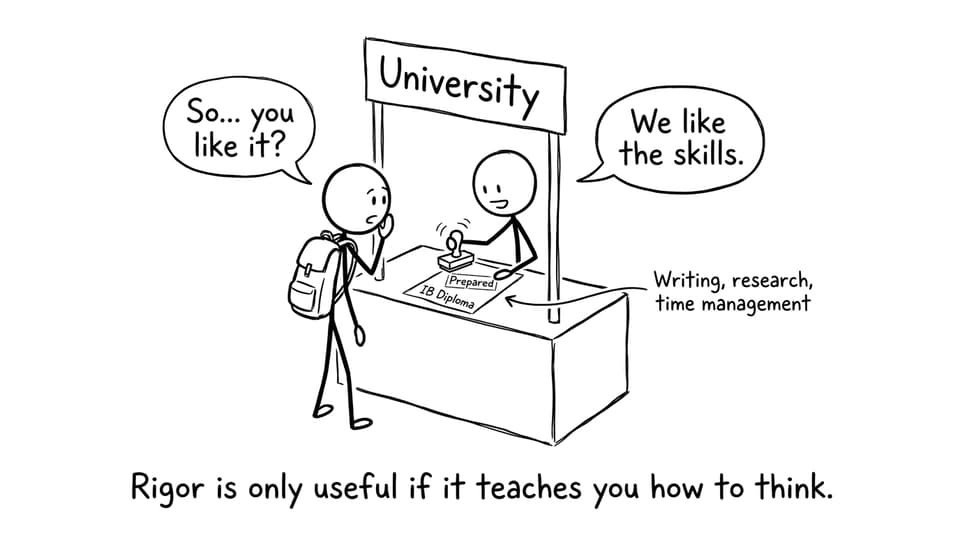
You want university-style skills (writing, research, time management), not just content.
-
You can handle ongoing deadlines (IAs, orals, EE, TOK) alongside exam prep.
-
You have (or can build) a support system: teachers, friends, and tools.
If you nodded at most of these, the IB is usually a good fit. If you didn’t, it doesn’t mean you can’t do it. It means you’ll need a clearer strategy.
Why the IB can be worth it
The IB builds breadth without making you shallow
The defining feature of IB is that it refuses to let you hide in your comfort zone. You take six subjects across groups, so your brain learns to switch gears: analysis to calculation, writing to experimentation, interpretation to evaluation.
That breadth becomes surprisingly useful during exams. When you’ve practiced thinking in multiple “languages,” you get better at adapting to unfamiliar questions, which is basically what IB exams are designed to reward.
If you want to tighten your revision across subjects, use the strategy framework in The Ultimate Guide to Revision for IB Students.
The IB Core makes university feel less like a cliff
TOK, the Extended Essay, and CAS can feel like distractions until you notice what they’re really doing: training you to manage ambiguous tasks.
-
TOK teaches you to argue clearly, not loudly.
-
The EE teaches you to research, structure, and edit.
-
CAS teaches you to keep living while you’re busy.
Those are the same skills you’ll rely on when university stops giving you step-by-step instructions.
For EE planning and pacing, browsing RevisionDojo’s wider Blog is a solid starting point because the advice tends to be exam-anchored, not motivational.
The IB is respected because it teaches repeatable habits
Universities value IB partly because the programme forces you to practice long-term performance: consistent effort, feedback cycles, and deadlines that don’t care about your mood.
That’s also why many IB graduates report a smoother first-year transition. It’s not that the content is identical. It’s that the habits transfer.
The real costs of the IB (and how to handle them)
The workload is heavy, and it stays heavy
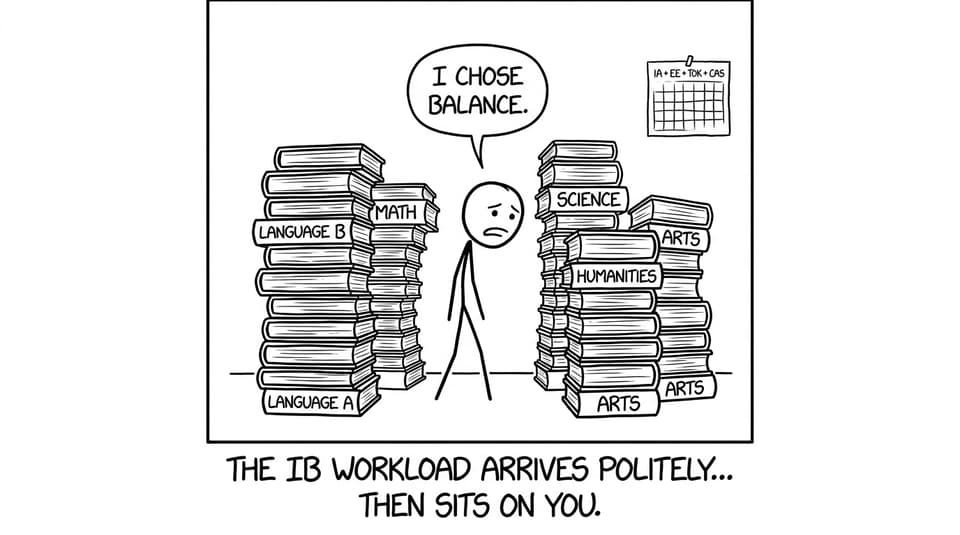
The IB isn’t hard because one week is intense. It’s hard because many weeks are intense. You’re balancing:
-
Six subjects
-
Internal Assessments
-
Orals and coursework
-
TOK assessments
-
The Extended Essay
-
Final exams
The fix is not “work harder.” It’s “make the work smaller.” If you’re stuck in procrastination, read You’re Not Lazy: Your IB Study Method Is Broken.
Stress and burnout are common in IB exam season
Most burnout comes from two patterns:
-
studying passively (hours of rereading), and
-
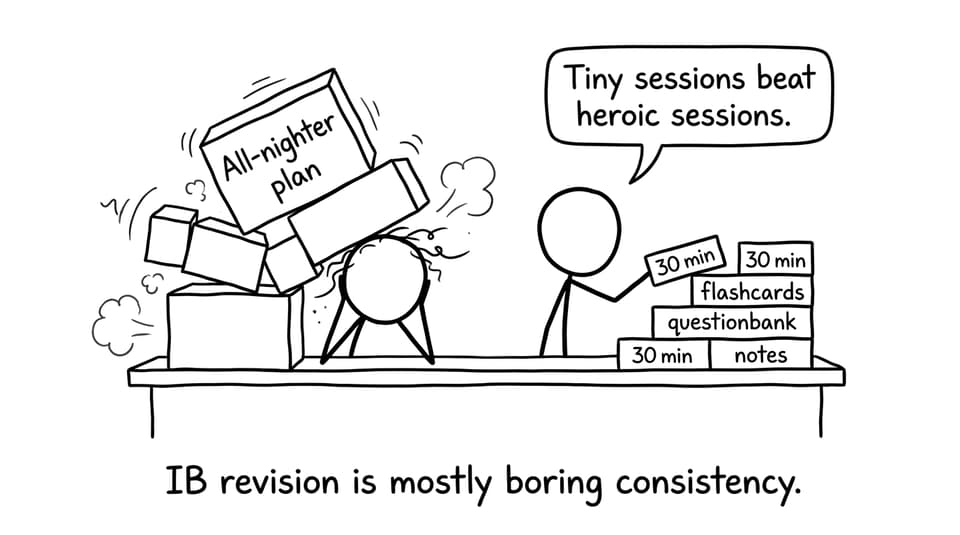
studying inconsistently (heroic weekends, empty weekdays).
A calmer approach is to build short loops: learn a concept, recall it, apply it, then review mistakes.
RevisionDojo is built around this loop with Study Notes, Flashcards, and the Questionbank, plus AI Chat for fast explanations when you’re stuck. You can see that workflow in RevisionDojo App: The Smarter Way to Prep for IB Exams.
Flexibility is limited, so strategy matters more
Some systems let you specialize early. IB doesn’t. That can feel restrictive, especially when one subject is draining your time.
The workaround is to get more efficient, not more intense:
-
Use topic-based revision instead of “revise the whole unit.”
-
Practice exam-style questions early, even if you feel unready.
-
Track the mistakes you repeat.
How to succeed in IB exams (a practical plan)
Use the “notes -> recall -> questions” routine
Here’s a simple IB session template:
-
10 minutes: clarify one small topic using Study Notes
-
35 minutes: drill that topic in the Questionbank
-
15 minutes: convert mistakes into Flashcards (or review an existing deck)
This is how revision becomes measurable.
For a deeper guide to using exam practice well, read IB Question Bank | How to Use It Effectively.
Train timing with realistic papers
Knowledge is only half of IB performance. The other half is timing, stamina, and making decisions under pressure.
That’s where RevisionDojo’s Mock Exams and Predicted Papers help you practice in exam conditions and then learn from the result.
Start here: IB Predicted Papers by IB Examiners (Free) and, when you want the nuance, IB Predicted vs Specimen Papers: What They Mean.
Get feedback faster than your stress cycle
A common IB trap is waiting too long to find out what’s wrong. If your answers are unclear, don’t just “try harder” next time.
Use RevisionDojo’s AI Chat for quick clarification, and Grading tools to understand how marks are actually awarded. If coursework pressure is stealing your focus, the Coursework Library can reduce the “I don’t know what good looks like” spiral. And when you need human diagnosis, Tutors can spot patterns you can’t see yet.
If your revision plan is squeezing out sleep and life, recalibrate with IB Exams Without Pausing Your Life.
Final thoughts: is IB worth it?
The IB is worth it when it turns you into someone who can handle complexity calmly. It’s not worth it when it becomes a daily referendum on your self-worth.
If you’re preparing for exams, your best next step is simple: build a repeatable loop using RevisionDojo’s Questionbank, Study Notes, Flashcards, AI Chat, Grading tools, Predicted Papers, Mock Exams, Coursework Library, and Tutors. The goal isn’t to “do more IB.” The goal is to make IB feel familiar enough that exam day is just another rehearsal.