
The quiet moment before the first IB exam
The night before an IB exam can feel strangely loud. Not because anyone is talking, but because every small thing carries meaning: the way your child rechecks their calculator, the half-finished flashcard pile, the look that says, “I’m fine,” while their shoulders say otherwise.
If you’re an IB student reading this, you already know the pressure is real. And if you’re a parent, your instinct is to help, sometimes by doing more, sometimes by asking more, sometimes by hovering in the doorway like a motivational poster with a pulse.
The best IB exam support is quieter than that. It’s steady, practical, and timed well.
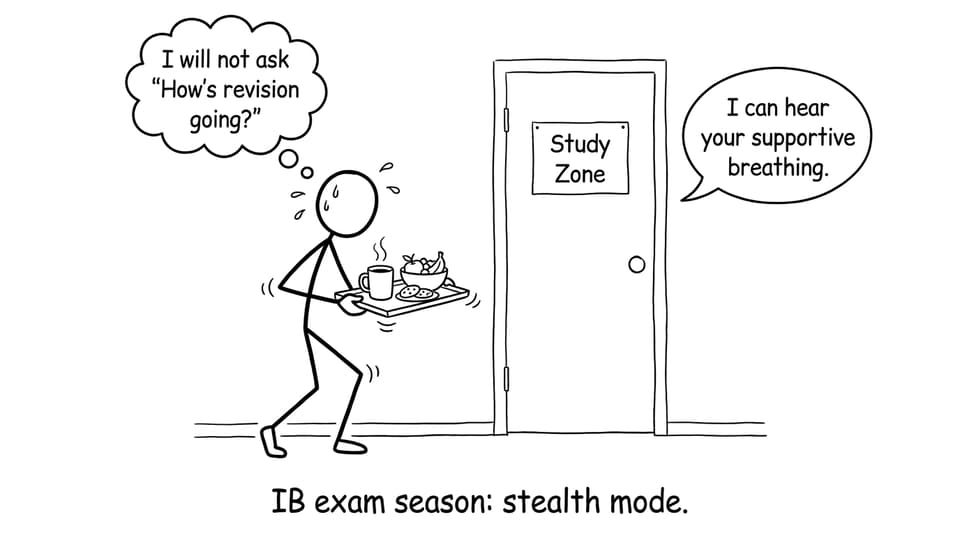
Quick checklist for IB exam support at home
Keep this simple. Pick 2-3 actions and do them consistently.
-
Know the IB exam timetable (and the “hard days”)
-
Protect sleep and meals like study tools
-
Agree on “study boundaries” (when to talk, when not to)
-
Help with logistics (printing, pens, transport, quiet space)
-
Celebrate effort after each paper; then move on
If you want a structured home base for IB revision, bookmark RevisionDojo for IB so your study system stays consistent when energy dips.
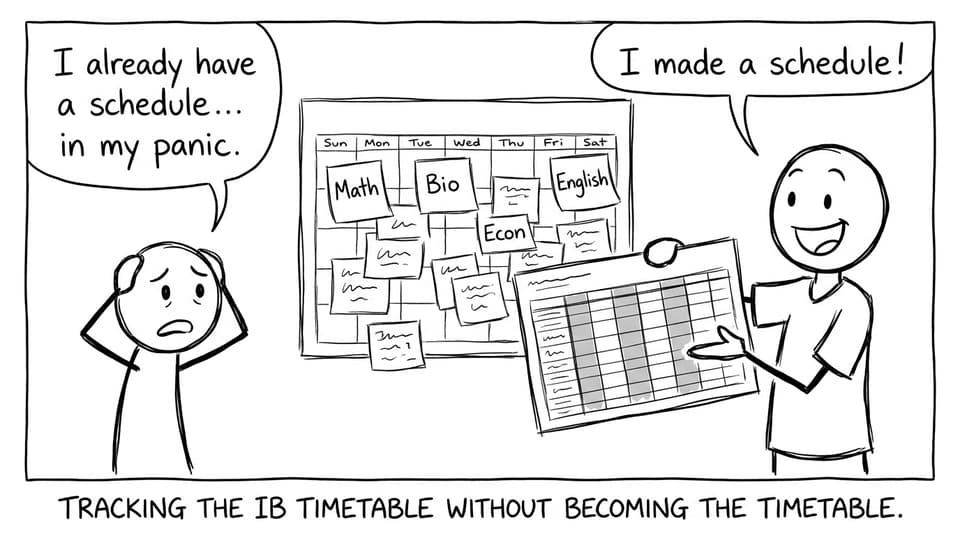
Keep track of the IB exam schedule (without becoming the schedule)
IB exams stretch across weeks, and the draining part isn’t only the difficulty; it’s the constant switching: subject to subject, paper to paper, morning to afternoon.
Parents can help most by tracking the basics:
-
Which days have exams
-
Which days have two exams or long papers
-
Which subjects your child finds most mentally expensive
If you’re the student: share the schedule early. If you’re the parent: write it down once and stop asking every day.
A useful rhythm is a short weekly check-in: “What are the big papers this week, and what do you need from me logistically?” That’s it. In the IB, fewer questions asked at the right time beats many questions asked at the wrong time.
Build welfare into IB revision (food, sleep, and small exits)
During IB exam season, students don’t burn out from one dramatic day. They burn out from 25 small days where stress quietly steals sleep, appetite, and patience.
Support that actually helps:
-
Stock easy snacks your child likes (not “healthy” snacks they won’t touch)
-
Anchor meals at predictable times so blood sugar doesn’t decide your mood
-
Protect sleep even when revision feels endless
-
Offer short exits: a 10-minute walk, a quick grocery run, a meal outside
If you’re studying, remember: a parent bringing you water is not a distraction. It’s a signal that the world still contains calm. In the IB, calm is a performance advantage.
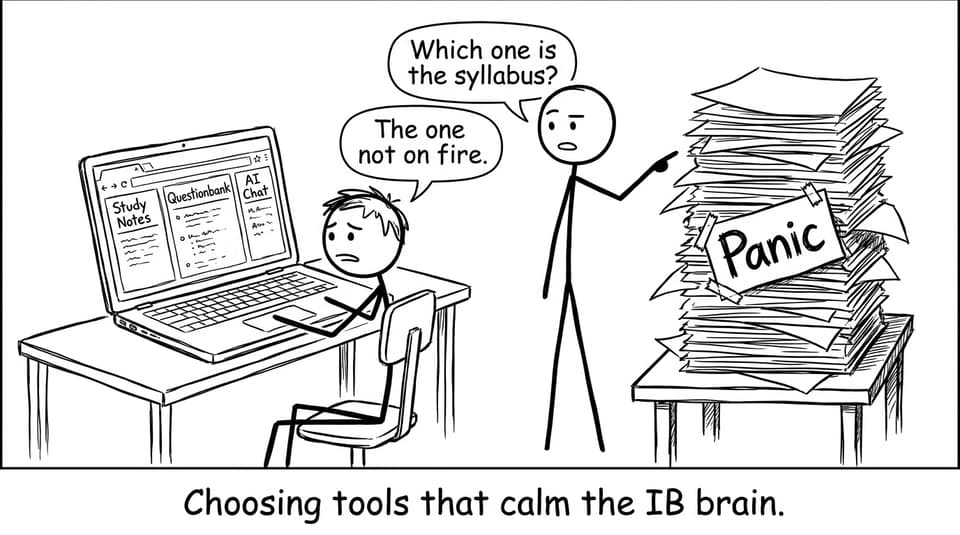
To reduce last-minute panic, use a system that keeps revision efficient: combine Study Notes with Flashcards for daily recall, then prove it with the Questionbank.
Give space (and agree on boundaries before emotions rise)
The fastest way to turn help into pressure is to monitor.
Parents: your child needs privacy to concentrate, but also privacy to struggle. The IB requires independent thinking, and independence looks messy in real time.
Try this boundary agreement:
-
“When are your no-disturbance hours?”
-
“What’s an okay way for me to check in?”
-
“If you look stressed, do you want comfort, food, or silence?”
Students: if your parent is over-involved, be specific rather than reactive. “8-10pm is my deep work block, can we talk after?” is clearer than frustration.
When you need quick clarification without spiraling into a 45-minute debate, use Jojo AI (RevisionDojo AI Chat) to get unstuck, then return to practice.
Make practice feel like the real IB (so the real paper feels familiar)
One reason exam season becomes tense at home is that uncertainty spreads. If a student doesn’t know what “ready” feels like, everyone tries to fix the feeling with more hours.
A better fix is evidence.
-
Use Mock Exams to train stamina and timing
-
Use Predicted Papers to rehearse realistic paper structure
-
Use Grading tools to learn how marks are actually awarded
RevisionDojo is built around that loop: RevisionDojo App: The Smarter Way to Prep for IB Exams explains how students can move from notes to practice to feedback without reinventing the plan daily.
If you’re choosing between resources, this comparison helps: IB Predicted vs Specimen Papers: What They Mean. And if you want to jump straight into realistic rehearsal, go to IB Predicted Papers by IB Examiners (Free).
Celebrate effort the IB way (small, immediate, and not performative)
After each IB exam, your child will replay mistakes whether you invite it or not. The best parental script is short:
-
“I’m proud of the work you put in.”
-
“Do you want to decompress, or talk?”
-
“Let’s eat. Then you decide what’s next.”
Students: let celebrations be small. A favourite dinner. A quiet evening. A short break. In the IB, recovery is part of your score.
When exam season ends, you can zoom out. Until then, keep the win condition modest: show up, finish the paper, reset.
FAQ: IB parents supporting students during exams
How can my parents support me during IB exams without adding pressure?
The most helpful support in the IB is predictable support. Agree on one check-in time each day or every few days, and keep it short, so you don’t feel interrogated. Ask for help with logistics instead of motivation: meals, transport, printing, or a quieter environment. Encourage your parents to focus on effort and routines rather than point predictions, because constant score talk makes everything feel like judgment. If you feel overwhelmed, give them a script like: “I need comfort first, planning later.” In IB exam season, emotional steadiness is genuinely a study tool.
What should parents do if an IB student is panicking or melting down?
First, reduce inputs. That means fewer questions, fewer suggestions, and fewer comparisons to other students. The fastest way to lower panic is to make the next step small: drink water, eat something, take a short walk, then choose one 25-minute task. Parents can help by naming reality calmly: “This is a hard week, and you’re not failing for feeling stressed.” After that, shift to evidence-based studying: one targeted set in the Questionbank, a short Flashcards review, then stop. In the IB, panic usually fades once momentum returns.
How do I use RevisionDojo during IB exams if I’m already exhausted?
When you’re tired, you need fewer decisions, not more resources. Start with a 60-minute loop: 10 minutes of Study Notes on one weak subtopic, 35 minutes of Questionbank practice on that exact area, then 15 minutes reviewing mistakes and turning them into Flashcards. If you get stuck mid-question, use AI Chat briefly to unblock, then return to practice so you don’t drift into passive reading. Once per week, add one timed session using Mock Exams or Predicted Papers to make exam conditions feel normal. If coursework stress is leaking into exam time, use the Coursework Library and Grading tools to tighten drafts efficiently, or get targeted help from Tutors. RevisionDojo works best in the IB when you keep the loop small and repeatable.
Bring it home: calm is an IB strategy
The IB doesn’t only test what you know. It tests what you can do when you’re tired, time-boxed, and slightly scared.
Parents can’t sit the exam, and students shouldn’t have to carry the season alone. The sweet spot is simple: track the schedule, protect energy, respect boundaries, and celebrate effort.
If you want a single place to run that whole IB system, notes, flashcards, exam-style practice, AI Chat, grading feedback, predicted papers, mock exams, coursework support, and tutors, start with RevisionDojo for IB and keep the routine steady until the last paper.