


The calm truth about IB Math grade boundaries
The week before exams, IB Math can start to feel like a moving target. One day you swear you’re “close to a 7,” the next day you’re not even sure you’re close to your calculator.
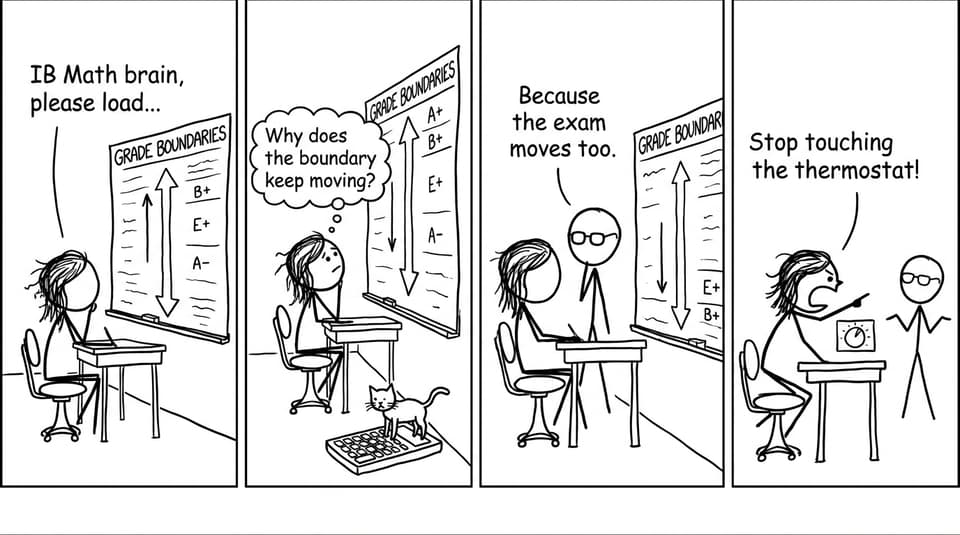
Grade boundaries don’t exist to scare you. They exist to translate raw marks into final grades fairly, even when one session is tougher than another. If you understand the boundaries for IB Math AA SL, you stop guessing. You start planning.
For the most up-to-date boundary tables and how they shift over time, keep this page bookmarked: IB Mathematics: Analysis And Approaches Grade Boundaries.
Quick checklist: how to use IB Math boundaries (without spiraling)
-
Translate your goal grade into component targets (IA, Paper 1, Paper 2).
-
Identify the 2 topics that leak the most marks, then fix those first.
-
Practice in short loops: learn, recall, questions, feedback, reattempt.
-
Save full timed papers for stamina and decision-making.
-
Use one home base to keep everything connected (notes, practice, feedback, tracking).
A reliable start is the course hub: IB Mathematics Analysis and Approaches Resources. It’s the cleanest way to map your revision across the syllabus.
IB Math AA SL 2025 grade boundaries (what to aim for)
Below are the boundary ranges you’ll see referenced for IB Math AA SL 2025. Use them to set targets, not to predict your fate.
Exploration (IA), out of 20
-
Grade 7: 18-20
-
Grade 6: 15-17
-
Grade 5: 12-14
-
Grade 4: 9-11
-
Grade 3: 6-8
-
Grade 2: 3-5
-
Grade 1: 0-2
Paper 1 (no calculator), out of 80
-
Grade 7: 64-80
-
Grade 6: 54-63
-
Grade 5: 42-53
-
Grade 4: 29-41
-
Grade 3: 21-28
-
Grade 2: 11-20
-
Grade 1: 0-10
If Paper 1 is your stress point, use this breakdown and prep plan: IB Math: Prepare for Math AA SL Paper 1.
Paper 2 (calculator allowed), out of 80
-
Grade 7: 62-80
-
Grade 6: 53-61
-
Grade 5: 42-52
-
Grade 4: 29-41
-
Grade 3: 21-28
-
Grade 2: 11-20
-
Grade 1: 0-10
Paper 2 is still about method and interpretation, not just button-pressing. This guide helps: IB Math AA Paper 2: What to Expect and Score Smart.
Final IB Math AA SL grade boundaries, out of 100
-
Grade 7: 80-100
-
Grade 6: 67-79
-
Grade 5: 53-66
-
Grade 4: 37-52
-
Grade 3: 26-36
-
Grade 2: 13-25
-
Grade 1: 0-12
How to target a 7 in IB Math (strategies that actually convert to marks)
Build your “marks engine” for IB Math
A Level 7 is rarely about learning one more fancy trick. It’s usually about losing fewer easy marks: sign errors, missing conclusions, unfinished parts, and vague working. That’s why your prep should be built around feedback and repetition.
On RevisionDojo, students usually get the fastest improvement when they combine:
-
Study Notes to rebuild clarity quickly
-
Flashcards to lock in definitions, conditions, and mini-procedures
-
Questionbank to drill the exact question styles that cost marks
-
AI Chat for stuck steps and alternative methods
-
Grading tools to see what the markscheme rewards
-
Predicted Papers and Mock Exams for timed performance
-
Coursework Library support for the Exploration
-
Tutors when you want human guidance and accountability
Start with the platform overview if you’re choosing resources: Best Online Platforms for IB Math Practice.
Use topic practice like a sniper, not a sprinkler
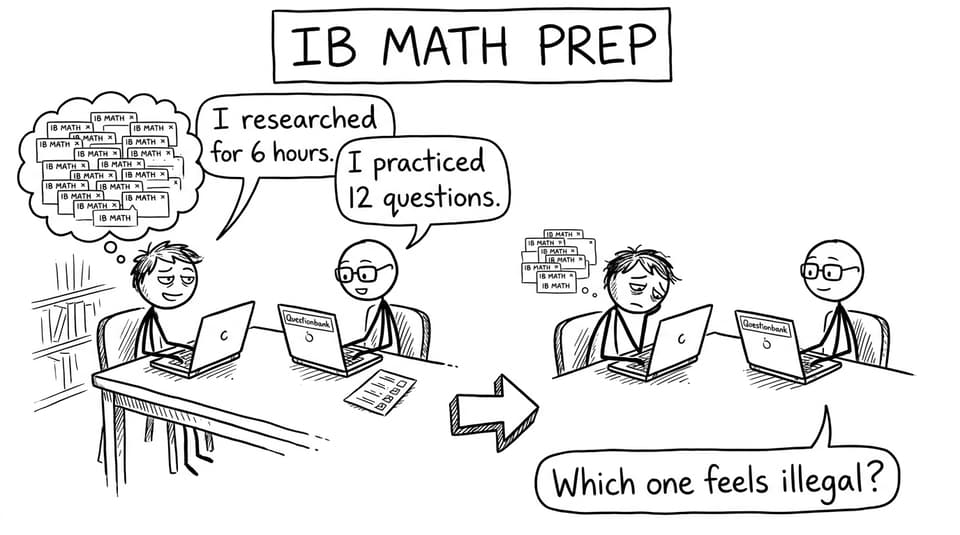
If your revision is “a bit of everything,” your marks will be “a bit of nothing.” Pick one topic and pressure-test it.
Examples of focused practice pages:
And if you want a clean method for drilling weaknesses, use: How to Use the Questionbank for Targeted Math Revision.
FAQ
Are these IB Math AA SL 2025 grade boundaries guaranteed?
No. In IB Math, boundaries can shift by session because they reflect overall paper difficulty and global performance. That’s exactly why it’s smarter to treat boundaries as targets and planning tools, not promises. Use them to decide what “good enough” looks like in each component (IA, Paper 1, Paper 2). Then build your revision around reducing predictable mark loss. If you want to track changes across sessions, keep checking the live table: IB Mathematics: Analysis And Approaches Grade Boundaries.
How should I split my effort across IA, Paper 1, and Paper 2 in IB Math?
In IB Math, the safest approach is to protect the marks you can control earliest: your Exploration. A strong IA doesn’t just add points; it buys you breathing room on exam day. After that, split your practice by the skill demands of each paper: non-calculator fluency for Paper 1 and technology-plus-interpretation for Paper 2. Most students improve fastest when they rotate: one day concept clarity (Study Notes), one day recall (Flashcards), one day exam-style practice (Questionbank). RevisionDojo makes this loop easy because notes, questions, and feedback live in the same place.
What’s the fastest way to raise my score in IB Math two weeks before exams?
Two weeks is enough time to make a real jump in IB Math, but only if you stop collecting content and start collecting mistakes. Do short timed sets, then review immediately and write down the pattern (not just the question). Common patterns include: incorrect algebraic manipulation, incomplete conclusions, calculator misuse, and lost method marks from missing steps. Then reattempt the same skills within 24-48 hours to confirm the fix. This is exactly where RevisionDojo’s Questionbank, AI Chat, and Grading tools work well together: you practice, get feedback, repair the method, and retest quickly.
Conclusion: use IB Math boundaries as a plan, not a prophecy
Grade boundaries won’t sit the exam for you, but they can stop you from revising blindly. When you translate IB Math AA SL 2025 grade boundaries into clear mark targets for your IA, Paper 1, and Paper 2, revision becomes quieter and more strategic.
If you want one place to run that strategy, build your loop on RevisionDojo: Study Notes for clarity, Flashcards for recall, Questionbank plus AI Chat for fast fixes, and Predicted Papers and Mock Exams for timed confidence. Your goal isn’t perfection. It’s dependable marks, the kind you can reproduce under pressure in IB Math.