



Digital flashcards don’t feel dramatic. They feel small. A few prompts on your phone. A quick swipe between classes. But weeks later, those tiny moments add up to something that actually matters in the IB: calm recall under pressure.
That’s why Studying Tips that focus on digital flashcards aren’t about “working harder.” They’re about lowering friction so you can do the one thing that moves marks: retrieving information when it’s slightly uncomfortable.
A quick checklist for effective digital flashcards (IB edition)
If you only remember one set of Studying Tips, make it this:
-
Keep cards small (one idea per card).
-
Write questions that force active recall, not recognition.
-
Review with spaced repetition (not random cramming).
-
Mix in exam-style phrasing and command terms.
-
Use analytics to spot weak areas, then feed them back into practice.
For a ready-made system, start with IB Flashcards with Spaced Repetition (SRS).
Why digital flashcards work better than “pretty notes”
Flashcards win because they’re honest. They ask, “Can you pull this out of your head right now?” That’s the same skill your exams demand.
Digital tools make this easier to sustain:
-
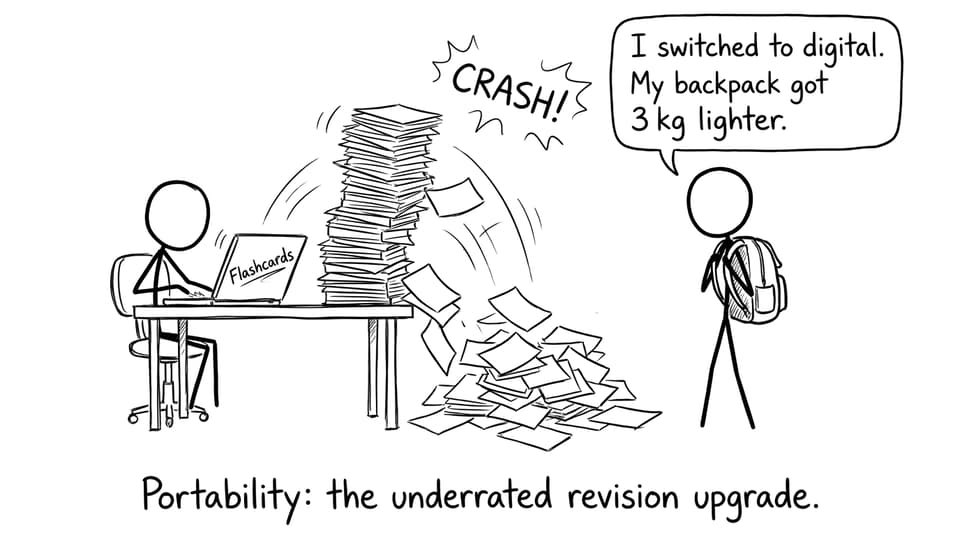
They travel with you, so revision happens in the cracks of the day.
-
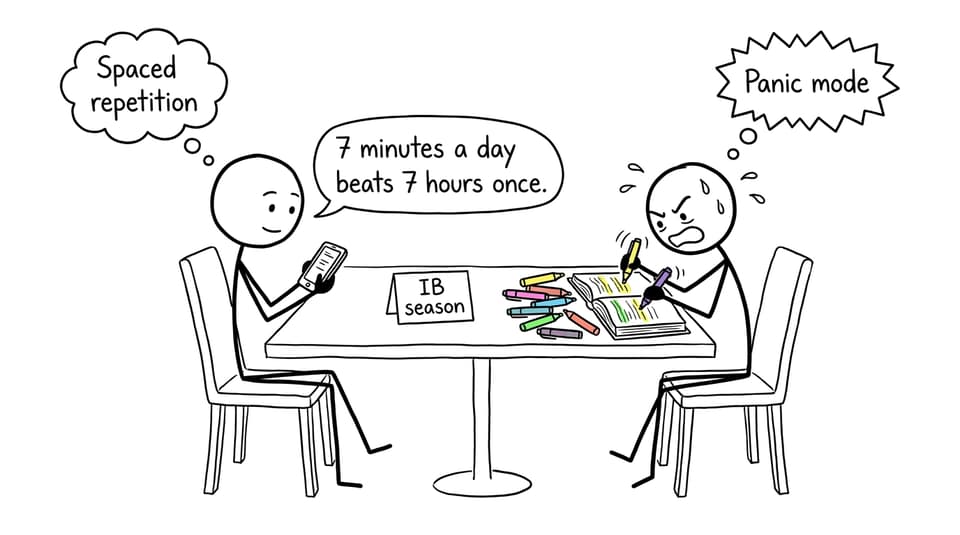
They can schedule reviews automatically (spaced repetition).
-
They can track what you’re forgetting, so your time stays targeted.
RevisionDojo builds this into its Flashcards feature, so the “what should I revise next?” question is answered by data, not guilt.
Studying Tips for building flashcards that actually improve IB marks
Good flashcards feel like mini-exams: clear prompt, specific target, quick feedback.
Make the front side a task, not a title
Bad: “Photosynthesis”
Better: “State the overall equation for photosynthesis, and name the gas reduced.”
That one shift turns passive recognition into active recall. It also mirrors how IB questions force precision.
Add one line of “why” on the back
IB rewards understanding, not just labels. So after the answer, add a short meaning line: “This matters because…”
If you’re unsure what the examiner is looking for, pair flashcards with targeted practice from the Questionbank.
Use spaced repetition like a calendar for forgetting
The point isn’t to review what you already know. The point is to show up right before you’d forget.
That’s why spaced repetition is one of the highest ROI Studying Tips in the digital age: it turns revision into a quiet routine instead of a last-minute event.
How RevisionDojo makes flashcards feel lighter (and smarter)
The hardest part of flashcards is not reviewing. It’s creating them when you’re already tired.
RevisionDojo reduces that friction in a few ways:
-
Flashcards + SRS inside the platform, so you always know what to review next (Flashcards hub).
-
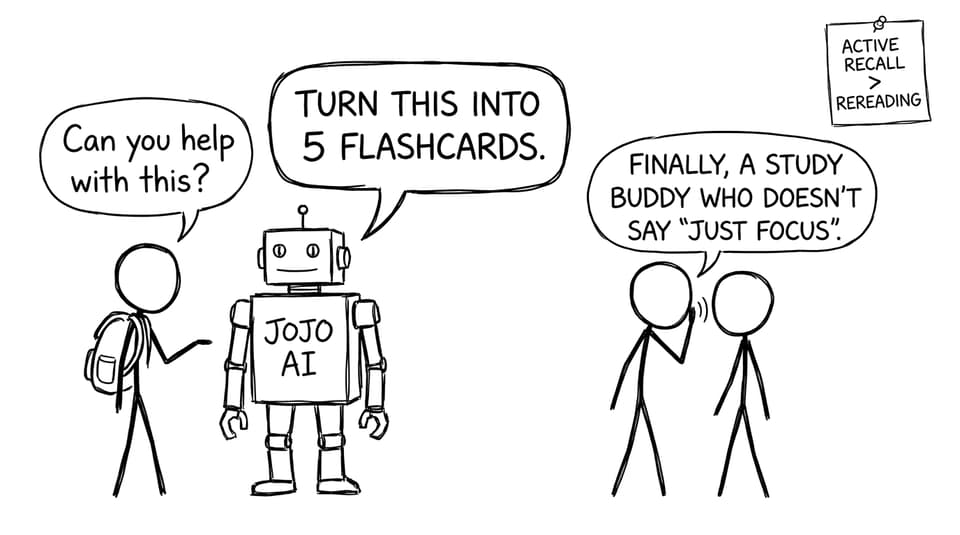
Jojo AI Chat to help generate clean prompts, fix vague wording, and turn notes into testable questions (Jojo AI).
-
Study Notes (syllabus-aligned) that can be converted into recall prompts quickly, so you’re not building from scratch (RevisionDojo home).
-
Grading tools and the Coursework Library for the parts of IB that aren’t pure memorization (so your flashcards don’t become your only plan).
-
Mock Exams and Predicted Papers to train timing and decision-making, while flashcards keep the knowledge base warm (IB Predicted Papers).
If you want the “all-in-one” workflow, this guide ties it together: RevisionDojo App: The Smarter Way to Prep for IB Exams.
Closing: the most underrated Studying Tips are the ones you repeat
Digital flashcards aren’t magic. They’re just repeatable. And for IB students preparing for exams, repeatable is powerful.
If you want a simple next step, open RevisionDojo Flashcards, build a small deck from one topic, and commit to daily reviews for a week. Then connect the loop: learn with Study Notes, test with the Questionbank, reinforce with Flashcards, and train timing with Mock Exams and Predicted Papers. Those are Studying Tips that compound quietly, right up until exam day.