


A funny thing happens the moment you hand in an IA draft: your brain starts bargaining.
You don’t want praise. You want certainty. A clean sentence from your teacher that says, “Yes, this will score well.” But teachers can’t give you that kind of guarantee. What they can give is something better: clear, criterion-aligned feedback that turns your next draft into a different student’s work.
This guide shows you how to get constructive IA feedback from your teacher (without wasting their time, or yours) and how to turn comments into marks. Along the way, you’ll see how RevisionDojo helps you stay calm: Coursework Library, AI Chat, Grading tools, and the exam toolkit that keeps your revision moving (Questionbank, Study Notes, Flashcards, Predicted Papers, Mock Exams, plus Tutors when you need a human eye).
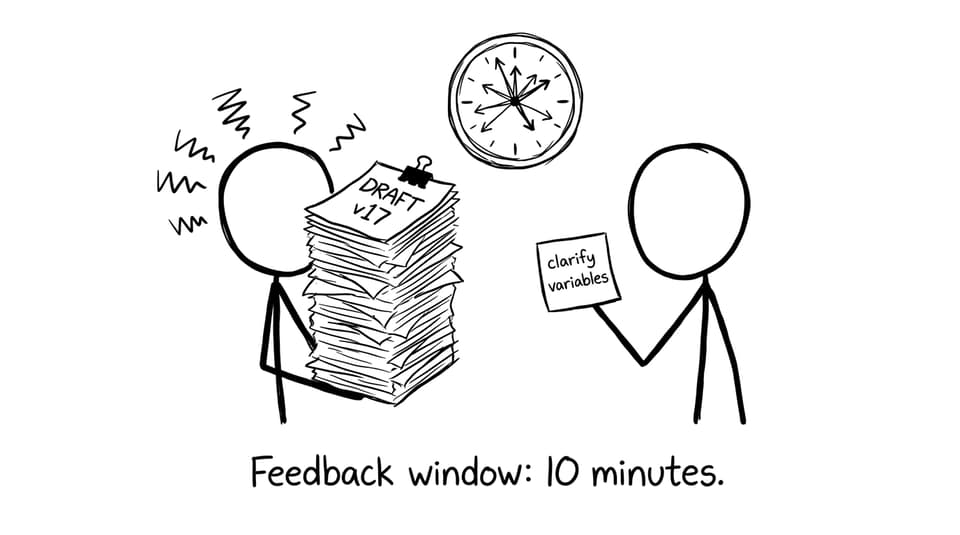
IA feedback checklist (use this before you meet)
-
Bring a draft that is “commentable” (not just bullet points).
-
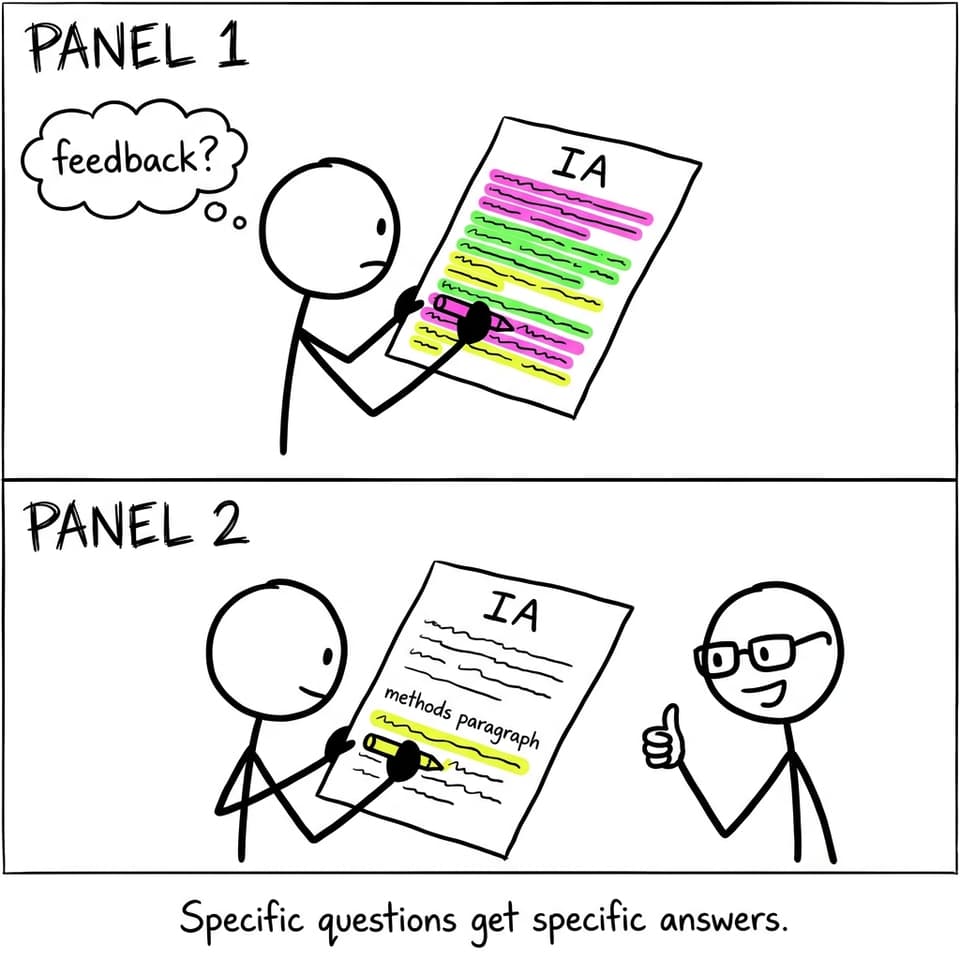
Highlight 2-3 sections you want feedback on (not the whole IA).
-
Write 5 specific questions tied to the rubric.
-
Add a 3-line summary: research question, method, what you found.
-
Decide what you’ll do after: revise, re-check criteria, then follow up.
If you want a quick calibration point before you speak to your teacher, read one related RevisionDojo guide like How to Integrate Feedback from Teachers into Your IA or sanity-check expectations with Who Marks the IA? The Truth Behind Your Final Score.
Why teacher feedback matters for an IA (and why timing matters more)
Teacher feedback is most powerful when it arrives early enough to change structure, reasoning, and evidence. Late feedback often collapses into line edits, which feel productive but rarely transform your IA score.
There’s also a practical reality: teachers have limited time and usually need to keep feedback within school and IB guidance. So the best strategy isn’t “ask for more feedback.” It’s “ask for better feedback.” That means framing your questions in the language of criteria, clarity, and decision-making.
If you’re feeling anxious about what teachers can and can’t change, keep it grounded with Can Teachers Change Your IA Mark? (IB Reality Check).
How to ask for IA feedback teachers can actually give
Plan like a collaborator, not a last-minute customer
Book your feedback early, and tell your teacher what you’ll bring. A short message works:
-
“I’ll share my IA draft + 5 questions.”
-
“I’m specifically stuck on evaluation and linking results to my research question.”
When you show up prepared, you get higher-quality feedback because your teacher can spend energy thinking, not searching.
Bring questions that force useful answers
Avoid: “Is my IA good?”
Ask instead:
-
“Does my research question become answerable with my method?”
-
“Which paragraph is descriptive instead of analytical?”
-
“Where do I make claims without evidence?”
-
“What’s the single fastest improvement for my weakest criterion?”
If you’re not sure what “good” looks like, browse models first in RevisionDojo’s Coursework Library (then your questions become sharper, because you have a comparison point). You can also build a rubric-first mindset by reading Do Teachers Know Your Final IA Mark? (IB Explained).
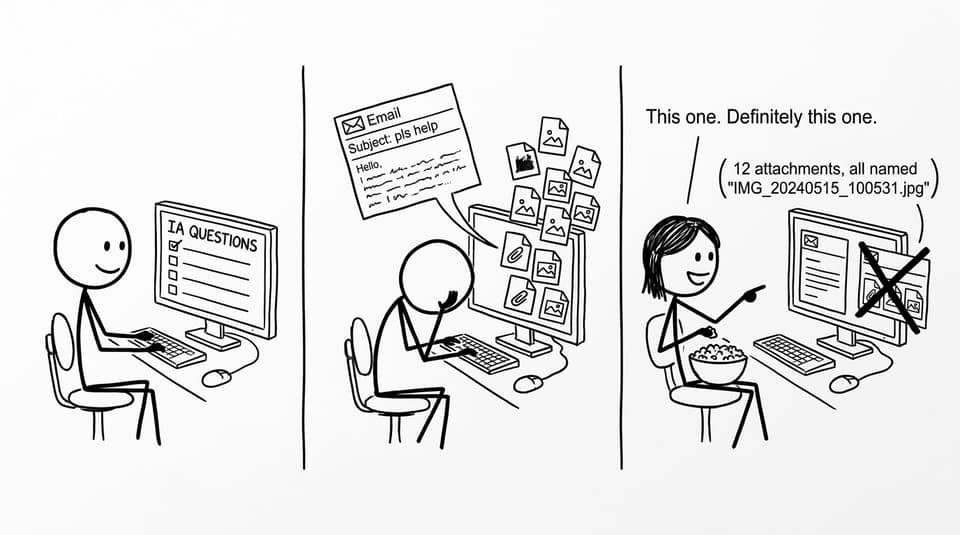
Use a “feedback map” so you don’t lose comments
Teachers often say smart things quickly. Capture them in a simple table:
-
Comment (exact words)
-
Where it applies (page/section)
-
What I’ll change (one sentence)
-
By when (date)
Then revise in rounds. First fix: structure and reasoning. Second fix: evidence and evaluation. Last fix: phrasing, citations, formatting.
To speed this up, run your draft through RevisionDojo’s AI Chat to locate unclear claims and ask for targeted rewrites, then use the Grading tools to check whether your revisions match the rubric language.
Getting constructive IA feedback without overstepping boundaries
Teacher feedback should guide your thinking, not replace it. You’re aiming for:
-
clarity (the reader never guesses what you mean)
-
replicability (your method makes sense)
-
justification (choices are explained)
-
evaluation (limitations are real, not decorative)
When feedback feels vague (“needs more depth”), ask a follow-up that respects your teacher’s role:
-
“Could you point to one place where I should add interpretation, not description?”
-
“What would top-band evidence look like in one paragraph?”
And if coursework stress is eating exam prep time, keep your revision moving in parallel: do short RevisionDojo Questionbank sets, maintain Flashcards, and schedule one weekly timed paper using Mock Exams or Predicted Papers. That way your IA doesn’t quietly steal your whole grade.
Closing: make IA feedback a loop, not a moment
The goal isn’t to collect comments. The goal is to build a feedback loop where each round makes your IA clearer, more defensible, and more aligned with criteria.
Show up with a draft that deserves attention. Ask specific questions. Record the answers. Revise in rounds. Then protect your exam momentum with RevisionDojo’s connected system: Study Notes, Flashcards, Questionbank, AI Chat, Grading tools, Predicted Papers, Mock Exams, the Coursework Library, and Tutors when you need one-on-one guidance.
Your teacher’s feedback is the signal. Your revision habits are the amplifier. And your next IA draft can be the proof.