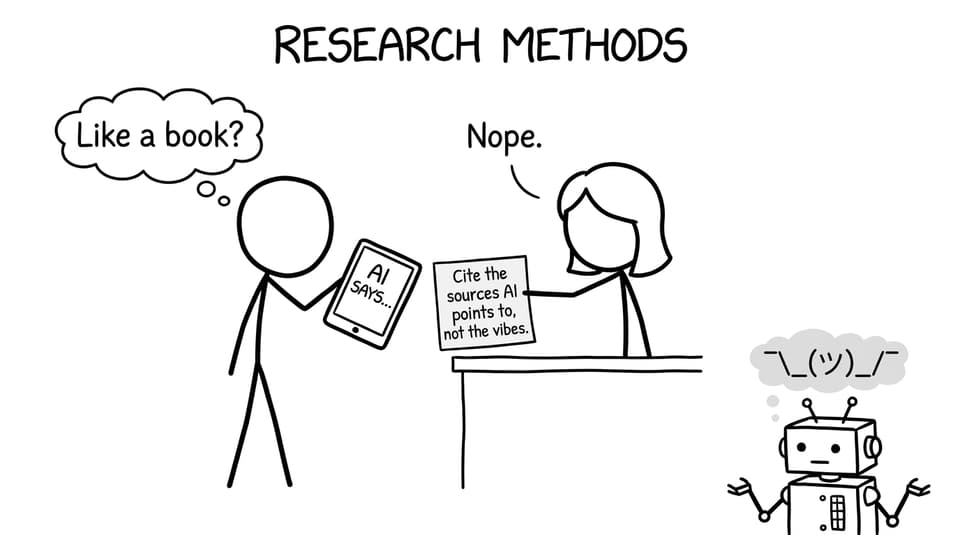
The moment AI feels like a shortcut (and why that matters in IB)
At some point in the IB, you will feel the temptation: you are tired, the deadline is loud, and a tool on your screen can produce something that looks like an answer in seconds. Not a draft. Not a hint. A full, polished page.
This is where most students misunderstand the real risk. The danger is not that AI is “bad.” The danger is that it can quietly swap your authorship for something that only looks like learning. In 2023, the IB updated its Academic Integrity Policy to address AI directly, and the message is calm but firm: AI can support learning, but it cannot replace the student’s own work. If AI meaningfully contributes, you need transparency.
Used well, AI becomes a mirror: it shows gaps, tests explanations, and sharpens clarity. Used badly, AI becomes a mask: it hides who did the thinking.
As you prepare for exams, you want the mirror.
Ethical AI in IB coursework: a quick checklist
If you want a simple rule set for IB academic integrity, use this before you touch any AI tool:
-
Check your school’s policy first (some schools add stricter rules on top of IB expectations).
-
Use AI as a coach, not an author: ask for explanations, questions, feedback, or structure ideas.
-
Never submit AI-generated writing as your own (even “edited” versions can still be misconduct if it isn’t your work).
-
Verify everything: AI can sound confident while being wrong.
-
Keep your voice and reasoning: the final choices, argument, and evaluation must be yours.
-
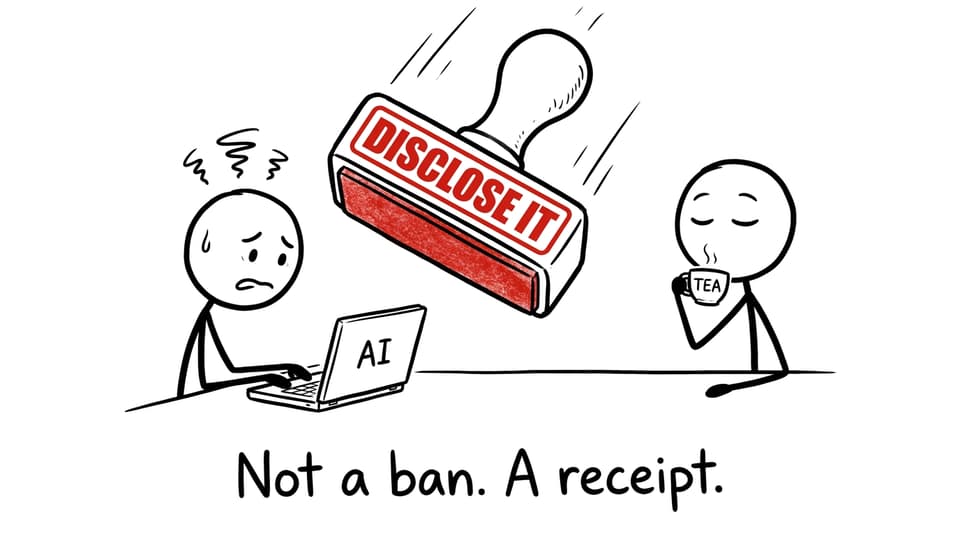
Disclose meaningful use: if AI influenced your ideas, structure, or phrasing in a meaningful way, acknowledge it.
-
Keep evidence of process: notes, drafts, and change logs protect you.
To build your integrity habits alongside exam performance, it helps to pair your AI use with structured study tools like RevisionDojo’s Study Notes, Flashcards, and Questionbank in one workflow. The loop keeps you learning rather than outsourcing.
What IB guidelines actually imply about AI (in plain language)
The IB position is often misquoted as “AI is allowed” or “AI is banned.” The truth is more precise.
Under IB academic integrity expectations, AI is treated like any external support: it can assist your learning process, but you must not misrepresent AI output as your own thinking, and you must be transparent when its contribution matters.
That means:
-
AI for learning support (clarifying concepts, planning, organizing, language checks) can be acceptable.
-
AI for producing assessable content (analysis, paragraphs, evaluation, reflections, or data that you present as yours) crosses the line.
-
Disclosure is your safety rail: if AI meaningfully shaped your work, say so.
If you want a broader integrity framework beyond AI, RevisionDojo’s guide on upholding academic integrity in IB assessments is a useful reference point for the IB mindset.
Acceptable vs unacceptable AI use in IB (with examples you can actually apply)
Acceptable AI use in IB coursework
Acceptable uses usually share one trait: they strengthen your thinking without replacing it.
-
Brainstorming: “Give me 8 possible research questions for an IB Biology IA on enzyme activity, then tell me what variables I should control.”
-
Clarifying concepts: “Explain opportunity cost with two contrasting examples, then quiz me on it.”
-
Structure feedback: “Here is my outline. Where is my evaluation weak, and what counterclaim should I address?”
-
Language support: grammar checks and clarity edits (especially if English is not your first language), as long as the ideas remain yours.
-
Study generation: creating practice questions or turning notes into flashcards.
This kind of study use pairs well with RevisionDojo features like the Questionbank (for exam-style practice) and the platform’s AI Chat (for targeted explanations that keep you in control of the work).
Unacceptable AI use in IB coursework
Unacceptable uses share a different trait: they replace authorship.
-
Submitting AI-written paragraphs for an IA, EE, TOK work, or any assessed response.
-
Using AI to “paraphrase” an entire source and submitting it (this can still be plagiarism and misrepresentation).
-
Fabricating data, results, citations, or quotes.
-
Copying AI phrasing or analysis because it “sounds academic.”
If you want a clear example of how serious the consequences can be when authenticity is questioned, see what happens if your IA is plagiarized and why fabricated results can collapse an investigation.
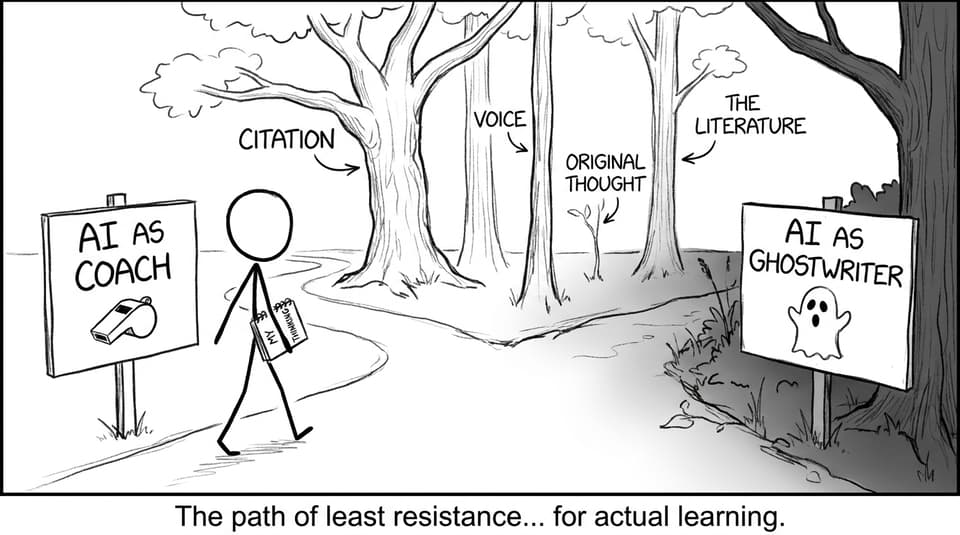
The difference between “AI as a coach” and “AI as a ghostwriter”
A helpful way to stay aligned with IB rules is to decide which role AI is playing.
AI as a coach (usually ethical in IB)
A coach asks questions, points out weaknesses, and helps you train.
-
“Where is my argument unclear?”
-
“What is a counterexample to my claim?”
-
“Create a marking-rubric checklist for this paragraph.”
A coach makes you better without taking the exam for you.
AI as a ghostwriter (usually unethical in IB)
A ghostwriter performs the intellectual labor while you take the credit.
-
“Write my introduction.”
-
“Draft my evaluation.”
-
“Write my reflection in TOK style.”
In the IB, the core assessment is not just the final PDF. It is the reasoning behind it.
How to keep AI use transparent (without overcomplicating it)
Transparency in IB is less about writing a novel-length confession and more about being honest and specific.
Here are practical ways to do it:
-
Process notes: keep a short log of when you used AI, what you asked, and what you changed afterward.
-
Acknowledgment statement (where appropriate): one or two sentences explaining the nature of AI help.
-
Cite real sources: if AI points you to ideas, find the original textbook, journal, or document and cite that instead.
-
Show drafts: your version history is often the strongest proof of authentic work.
If you are unsure where the line is for specific components, RevisionDojo’s post on whether you should mention AI use in CAS reflections or EE research can help you judge what “meaningful contribution” looks like in practice.
A safe, exam-focused workflow: use AI to study, not to submit
Most IB students don’t actually need AI to “write.” They need AI to reduce friction: to get unstuck fast, practise more, and learn from mistakes.
Try this ethical workflow:
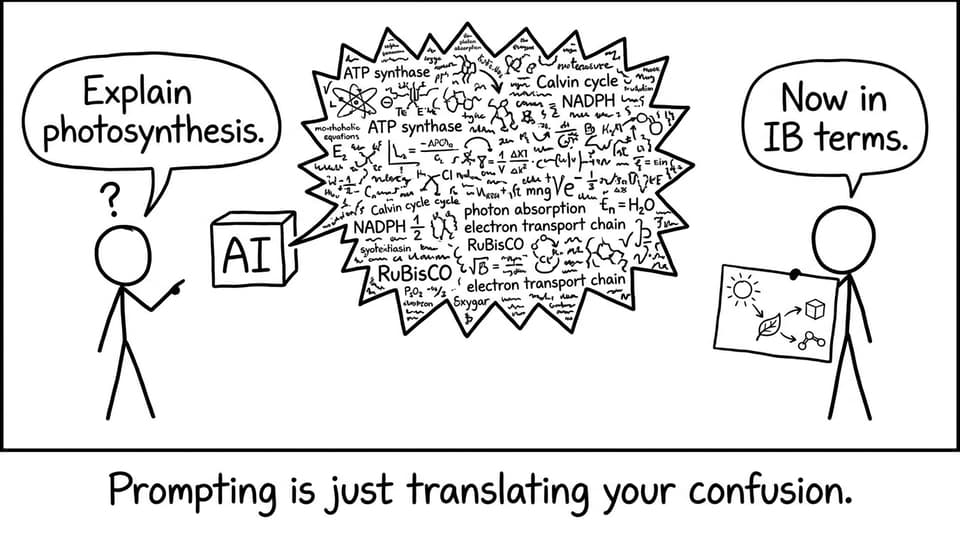
Turn confusion into clarity
Use AI to explain one concept you missed, then immediately test yourself.
-
Read the relevant point in Study Notes.
-
Ask one precise question in AI Chat.
-
Do 10 related questions.
This is the difference between feeling productive and becoming accurate under pressure.
For building that loop, the RevisionDojo app exam prep workflow is designed around exactly this sequence: understand, recall, apply, review, repeat.
Let feedback shape your next hour
Instead of asking AI to generate more content, ask it to diagnose your errors.
-
“Why is my evaluation not earning top marks?”
-
“What command term did I misread?”
-
“Give me three ways to strengthen my counterclaim.”
Then rewrite in your own words.
Protect your privacy while staying honest
Avoid uploading full drafts to random tools. Share small excerpts or outlines when you need feedback, and keep your full document in your own workspace.
For a deeper look at practical privacy steps, read Is it safe to share my IB assignments with online AI tools?
Common mistakes IB students make with AI (and how to avoid them)
-
Using AI when stressed: panic makes you treat AI like a rescue helicopter. Build your process earlier so you only need AI as a coach.
-
Trusting confident errors: always cross-check definitions, studies, and claims.
-
Accidental plagiarism through phrasing: even if you “didn’t mean to,” copying AI language can still be treated as misconduct.
-
Failing to disclose meaningful help: non-disclosure is often the real problem.
-
Over-reliance: if you can’t reproduce the idea without the tool, you don’t own it.
If you want a fuller warning label, RevisionDojo breaks it down in the risks of relying too heavily on AI in education.
Closing: make AI raise your standards, not replace them
The IB has always been about something bigger than grades: learning to think clearly, write honestly, and defend your ideas when it counts. AI doesn’t change that mission. It just makes the choice sharper.
Use AI to ask better questions, practise more deliberately, and refine your understanding. Keep your work human: your voice, your evidence, your reasoning, your responsibility. Disclose meaningful help, verify claims, and save your drafts.
If you want a study system built for IB integrity, RevisionDojo brings it together in one place: Study Notes for clarity, Flashcards for recall, Questionbank for exam practice, AI Chat for targeted help, Grading tools for rubric-aligned feedback, plus Mock Exams, Predicted Papers, a Coursework Library, and Tutors when you want a real person in your corner.
Because the goal is not to look smart on a screen. It’s to become the kind of IB student who can prove it under pressure.