



The IB Math IA starts with a small, honest question
The night you decide your IA topic is usually not dramatic. It’s quiet. You’re tired. You open a blank document and type “IB Math IA ideas,” hoping a perfect topic will appear and carry you to a high score.
But high-scoring IB Math IAs rarely begin with a flashy idea. They begin with a question that is finishable, measurable, and personal enough that you’ll still care about it when you’re editing your conclusion for the fourth time.
In other words, the best IB Math IA topics are not “hard.” They are well-shaped. They give you room to use mathematics, room to reflect, and room to evaluate limitations like a real analyst.
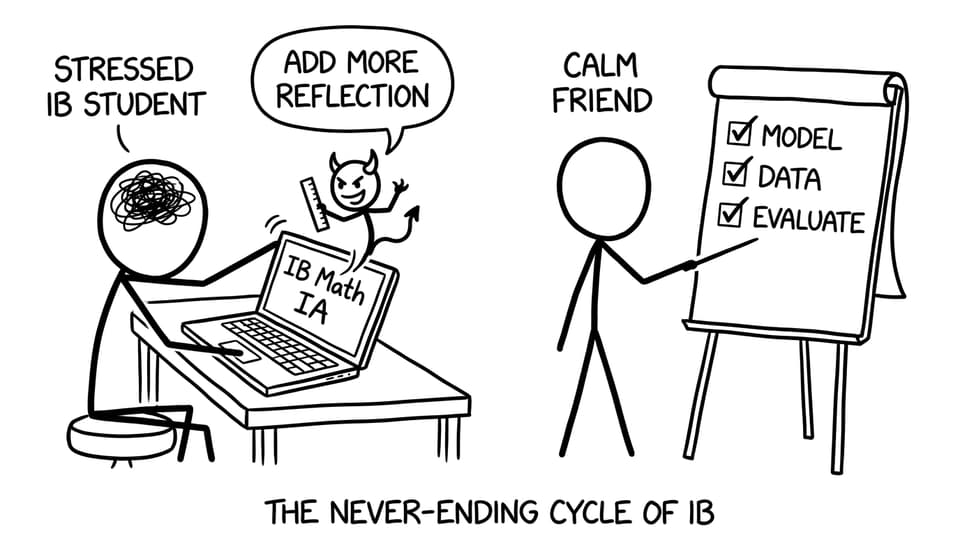
If you want structure while you choose, RevisionDojo’s IA resources are built for this exact moment: start with the rubric, borrow a clean framework, and then use tools (not panic) to fill in the math.
A quick checklist: what makes an IB Math IA topic “top-rated”
Before picking any IB Math IA topic, run it through this filter:
-
Data or variables exist (you can measure, scrape, or simulate something).
-
The math is visible (not just description; there’s modelling, calculus, statistics, probability, or optimization).
-
You can evaluate assumptions (and improve the model at least once).
-
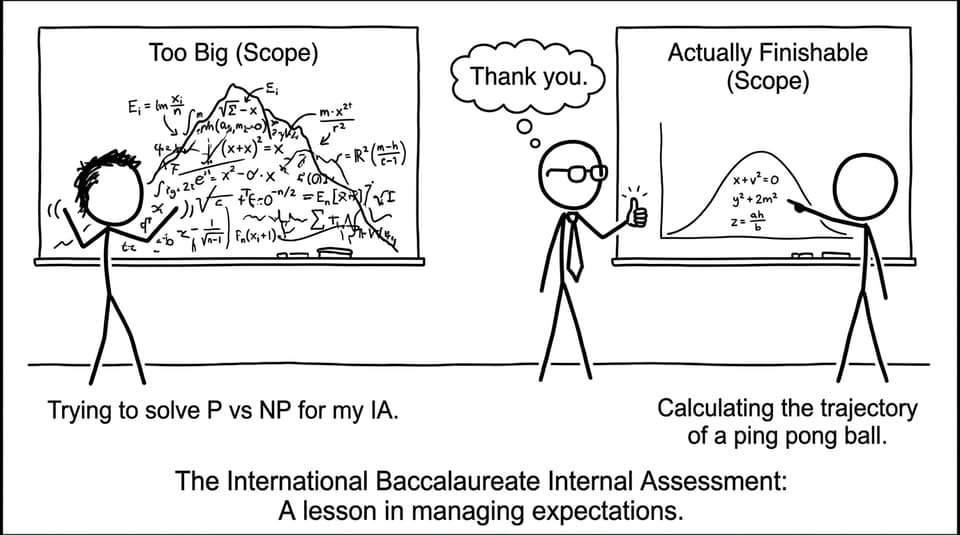
The scope is tight (one main question, not five).
-
You can explain it clearly (because communication matters in IB Math).
To align your writing with the criteria early, skim the assessment breakdown in Unpacking the IB Math IA Assessment Criteria and the foundational expectations in Essentials of the Internal Assessment.
Top-rated IB Math IA topics (and why they tend to score well)
Below are IB Math IA topics that consistently work because they naturally invite modelling, interpretation, and reflection. Each idea includes a “high-score angle” you can use to deepen the exploration without making it unmanageable.
Disease spread modelling (SIR or logistic growth)
This is classic for a reason: it’s a clean bridge between real life and IB Math.
What you can do
-
Use an SIR model (Susceptible, Infected, Recovered) or logistic growth.
-
Compare how changing parameters affects peaks and total infections.
-
Use a real dataset (public health sources) or a controlled simulation.
High-score angle
Don’t just run the model once. Show an iteration: fit parameters, test sensitivity, then reflect on how assumptions (homogeneous mixing, constant contact rate) distort reality. That evaluation is where IB Math marks often live.
If you want a clean structure for write-up, follow How to Structure an IB Math IA Effectively or the deeper framework in How to Structure Your IB Math IA Logically.
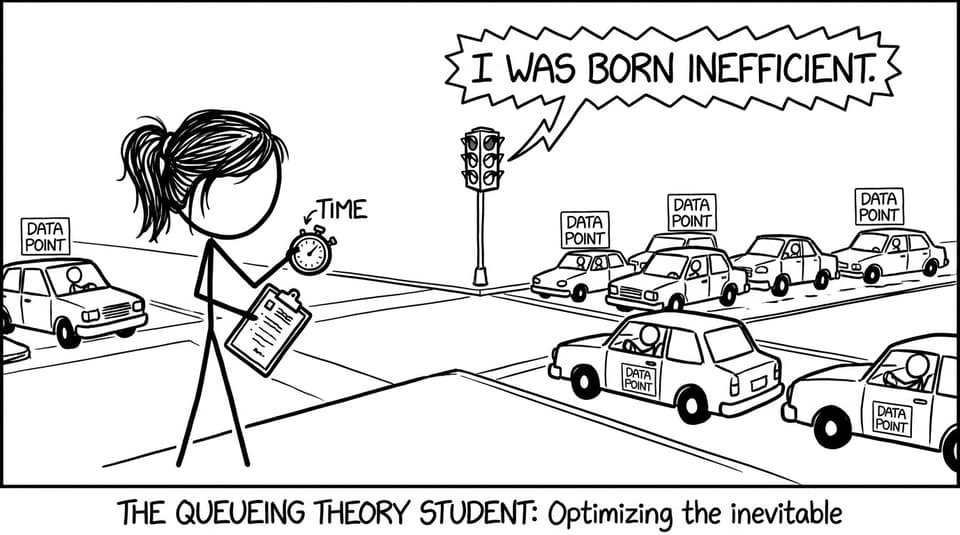
Traffic flow and queueing theory (intersection or cafeteria line)
This topic scores because it gives you real data, simple models, and obvious constraints.
What you can do
-
Collect data on arrivals (cars per minute) and service rates (green light throughput).
-
Model with queueing theory (even simplified assumptions can work).
-
Optimize signal timing or predict congestion.
High-score angle
Include a comparison: “current timing” vs “optimized timing,” then quantify improvement. The IB Math IA becomes a story about decisions, not just equations.
Voting systems and fairness (mathematics of elections)
This is a surprisingly strong IB Math IA topic because it’s rich in interpretation.
What you can do
-
Compare systems like First-Past-The-Post, ranked choice, Borda count.
-
Create simulated elections and test outcomes.
-
Use probability or statistics to discuss strategic voting and fairness.
High-score angle
Define what you mean by “fair.” Then test it. Your evaluation section becomes natural because no voting system is perfect.
Optimization in packaging (surface area vs volume)
If you like geometry or calculus, this is one of the most “IB Math-friendly” topics.
What you can do
-
Compare cylinder vs rectangular prism vs custom nets.
-
Use calculus for optimization (minimize surface area for fixed volume).
-
Add constraints: material thickness, folding tabs, shipping limits.
High-score angle
Build in reality: you’ll score better if you discuss why the mathematically optimal shape might be impractical in manufacturing.
Economics and consumer behaviour (demand curves, elasticity)
Economics topics can score well when you keep the question narrow.
What you can do
-
Model a demand curve using regression.
-
Explore price elasticity using calculus or percentage change models.
-
Use real product data (local store, online listings).
High-score angle
Avoid making it “business commentary.” Keep it IB Math: variables, modelling choice, error discussion, and limitations of your dataset.
Predictive text and Markov chains (probability in your pocket)
Modern, fun, and mathematically legitimate.
What you can do
-
Build a simple Markov chain from text data.
-
Compare prediction accuracy with different state sizes (1-gram vs 2-gram).
-
Discuss transition matrices and long-run behaviour.
High-score angle
Show one improvement step: smoothing, larger dataset, or comparing two writing styles. That reflective loop is pure IB Math IA gold.

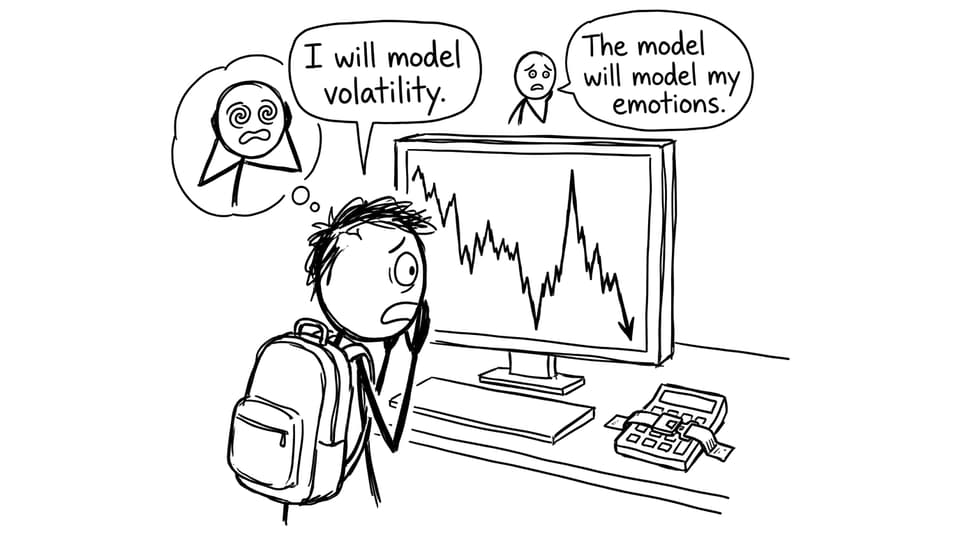
Financial mathematics (moving averages, regression, volatility)
Finance topics are common, but they still score when you treat them like modelling, not fortune-telling.
What you can do
-
Compare moving average windows.
-
Fit a regression model and test residuals.
-
Explore volatility measures and limitations.
High-score angle
The strongest IAs explicitly say: “This model is not a prediction machine.” Then you evaluate why. That maturity reads well in IB Math.
Algorithm analysis (time complexity, efficiency)
Great for students who like CS logic but still want a true IB Math IA.
What you can do
-
Compare sorting algorithms.
-
Collect runtime data and model growth.
-
Relate to logarithmic and polynomial behaviour.
High-score angle
Tie empirical data to theoretical expectations. The reflection section writes itself: machine differences, measurement noise, and big-O as an abstraction.
Climate data analysis (trends, smoothing, regression)
This works because the data is plentiful and the math is flexible.
What you can do
-
Use time-series smoothing (moving averages).
-
Fit regressions, test correlation, discuss causation limits.
-
Compare models and error.
High-score angle
Be careful with claims. A high-scoring IB Math IA shows what the model can say and what it cannot.
How to turn a good IB Math topic into a high-scoring IA
A topic is only half the job. The other half is how you execute it.
Use a proven structure early
High-scoring IB Math IAs feel easy to read because the logic is predictable: aim, method, results, evaluation, conclusion. If your draft feels messy, use How to Structure the IB Math IA for Maximum Clarity as a reset.
Build your model, then improve it once
Examiners like seeing learning happen. A simple way to show this:
-
Model v1 (basic assumptions)
-
Test v1 (error, fit, realism)
-
Model v2 (one improvement)
-
Reflect (what changed, what still fails)
For modelling help, follow How to Build Mathematical Models for the IB Math IA.
Use RevisionDojo like a workshop, not a library
RevisionDojo works best when you treat it like a feedback loop:
-
Use the Coursework Library to study strong examples in IB Maths AA IA Examples or IB Maths AI IA Examples.
-
Use the Grading tools to check your draft against rubric language with the IB Maths AI IA Grader.
-
Use AI Chat to pressure-test assumptions and generate alternative models you can evaluate.
-
Use Study Notes and Flashcards to keep core IB Math methods sharp while you write.
-
If you’re stuck, use Tutors for fast clarity rather than slow guessing.
And if your IA timeline overlaps with exams, the same platform covers the rest of your prep: Questionbank, Mock Exams, and Predicted Papers (for example, Mathematics Analysis and Approaches Predicted Papers).
Bring your IB Math IA topic to RevisionDojo, and build it into a score
A top-rated IB Math IA topic is not a secret list. It’s a decision-making process: choose a finishable question, do real IB Math, iterate once, and reflect like you mean it.
If you want that process to feel calmer, use RevisionDojo as your home base: pick a topic, study Coursework Library exemplars, draft with the IA guides, check yourself with grading tools, and keep your skills sharp with Questionbank, Study Notes, and Flashcards. Then, when exams arrive, lean on Mock Exams and Predicted Papers to convert knowledge into performance.
Your IB Math IA doesn’t need to be perfect on day one. It needs to be shaped well enough that you can improve it on purpose.