

Independent study is a strange rite of passage in IB.
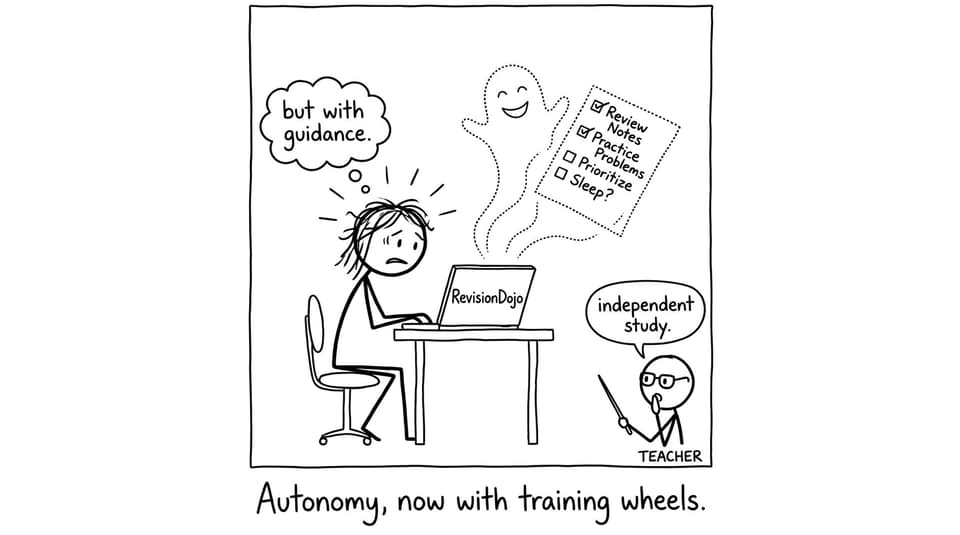
One day, a teacher is reminding you what to annotate. The next, you are expected to plan your own revision, diagnose your own gaps, and improve your exam technique on purpose, not by accident. It sounds empowering. It also feels like someone quietly removed the rails.
The good news is that IB independence is not a personality trait. It is a system. And systems can be built.
That is where RevisionDojo shines: it gives you enough structure to start, enough feedback to correct course, and enough flexibility to make the work truly yours. If you are an IB student preparing for exams, this guide will show you how to move from “I should study” to “I know exactly what to do next” using RevisionDojo’s Questionbank, Study Notes, Flashcards, AI Chat, Grading tools, Predicted Papers, Mock Exams, Coursework Library, and Tutors.
A simple IB independence checklist (steal this)
If you want independent study that actually works for IB, keep it boring and repeatable:
-
Pick one IB subject and one topic to focus on today.
-
Learn it fast with Study Notes.
-
Lock it in with Flashcards (short session).
-
Prove it with the Questionbank (targeted questions).
-
Review mistakes using feedback and a tiny mistake log.
-
Once a week, rehearse under pressure with Mock Exams or Predicted Papers.
You are not trying to feel productive. You are trying to become harder to surprise in an IB exam.
Why independent study matters in IB (and why it feels hard)
The IB asks you to do more than remember content. It asks you to interpret command terms, manage time, and write in ways that earn marks. That is why independent study matters: not because teachers disappear, but because exams reward self-regulation.
Still, independence can fail for three predictable reasons:
-
You do not know what to do first, so you do nothing.
-
You do a lot, but you cannot tell if it is working.
-
You revise randomly, so your confidence rises and falls with your mood.
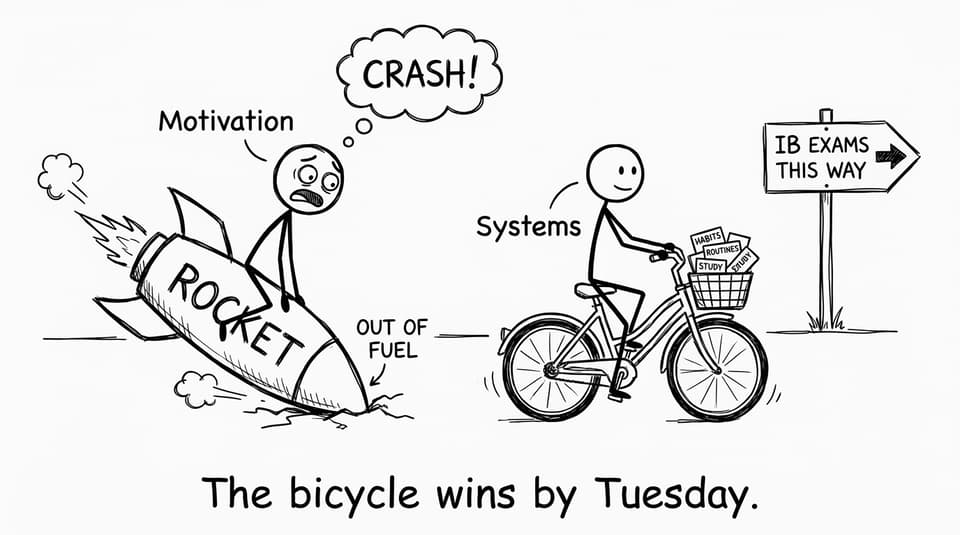
RevisionDojo fixes those failure points by making your next step obvious. Notes lead to practice. Practice leads to feedback. Feedback leads to a plan. That loop is what IB independence looks like in real life.
If you want the platform overview first, start here: RevisionDojo for IB.
How RevisionDojo builds IB independent study (tool by tool)
Study Notes: clarity before grind
Independent IB study breaks down when you attempt questions without understanding, then call the topic “impossible.” A calmer approach is to get clarity quickly, then test.
Use RevisionDojo’s notes to:
-
Learn a topic the way it is examined, not the way a textbook tells stories.
-
Find the definitions and key steps you will actually need to reproduce.
-
Spot command-term language that turns knowledge into marks.
Two good starting points:
Flashcards: daily recall that makes IB feel lighter
A secret about strong IB students: they do not “revise everything” the week before. They keep small pieces alive all year.
RevisionDojo Flashcards are built for that kind of low-friction repetition. Do 7–15 minutes a day and you are no longer relearning from scratch.
Start here:
Questionbank: independent study needs proof
If notes are your map, the Questionbank is your terrain.
The RevisionDojo Questionbank helps IB students become independent because it turns “I think I understand” into measurable evidence. You attempt questions, get feedback, and tag what to revisit. That creates a self-correcting system, which is the real goal of independent IB study.
Use it like this:
-
Pick one topic and do a tight set of questions.
-
Mark what you missed and why.
-
Return 48 hours later and reattempt similar items.
Explore:
AI Chat + Grading tools: feedback without the wait
Independent IB studying gets stuck at two moments: when you do not understand a concept, and when you do not understand why your answer did not earn marks.
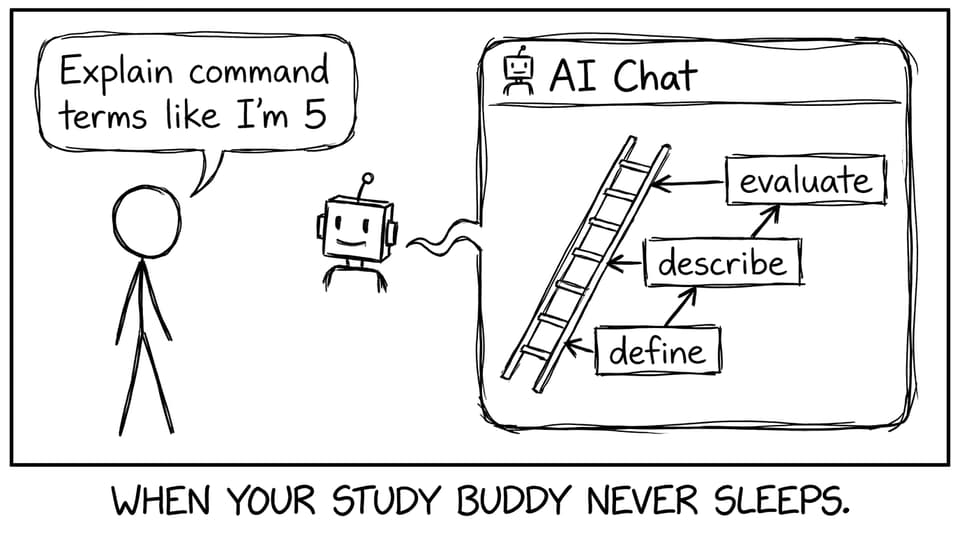
RevisionDojo’s AI Chat is perfect for the first moment. Ask one focused question, get unstuck, then return to practice. The discipline is important: you are not chatting to feel busy, you are chatting to resume learning.
The Grading tools are for the second moment. They help you see how marks are awarded so your writing improves in the specific ways IB examiners reward.
If you want to see the full “one platform” workflow in action, read: RevisionDojo App: The Smarter Way to Prep for IB Exams.
Predicted Papers + Mock Exams: independence under pressure
Most IB students can study in calm conditions. The exam is different: time pressure, switching topics, and the emotional weight of knowing it counts.
That is why timed practice matters. Predicted Papers and Mock Exams give you rehearsal, not just revision. You learn pacing, stamina, and strategy. Then you return to the Questionbank to drill the exact weaknesses your timed attempt revealed.
Learn how to use them wisely here: IB Predicted vs Specimen Papers: What They Mean.
A weekly IB independent study routine (that does not collapse)
Here is a structure you can sustain even when the IB calendar gets crowded.
The daily minimum (15 minutes)
-
Flashcards only.
-
No guilt if you miss a day, just restart tomorrow.
This is how you keep memory alive while life happens.
The “real” study blocks (3–5 times/week, 45–75 minutes)
Each block:
-
10 minutes: Study Notes for one subtopic.
-
25–40 minutes: Questionbank on that same subtopic.
-
10 minutes: review mistakes and write one micro-goal.
If you want a full step-by-step framework, use: How to Study for IB Exams: Step-by-Step Guide.
The weekly pressure test (1 time/week)
-
A timed section, then review.
-
Finish by assigning yourself the next week’s targets based on what actually happened.
This is how independent IB study stays honest.
Common IB independent study problems (and the RevisionDojo fixes)
“I have resources, but I still feel lost.”
That is usually a sequencing problem. RevisionDojo fixes it by connecting the chain: Study Notes to learn, Flashcards to retain, Questionbank to apply, then analytics and feedback to decide what is next. Independence in IB is not “study harder,” it is “study in the right order.”
“I study a lot, but my marks do not move.”
This is often a feedback problem. If you do not know why you lost marks, you cannot improve efficiently. RevisionDojo’s feedback loops (AI Chat for clarity, Grading tools for mark-based improvements, and analytics for pattern spotting) help you focus on the changes that actually raise IB scores.
“I keep switching between random websites.”
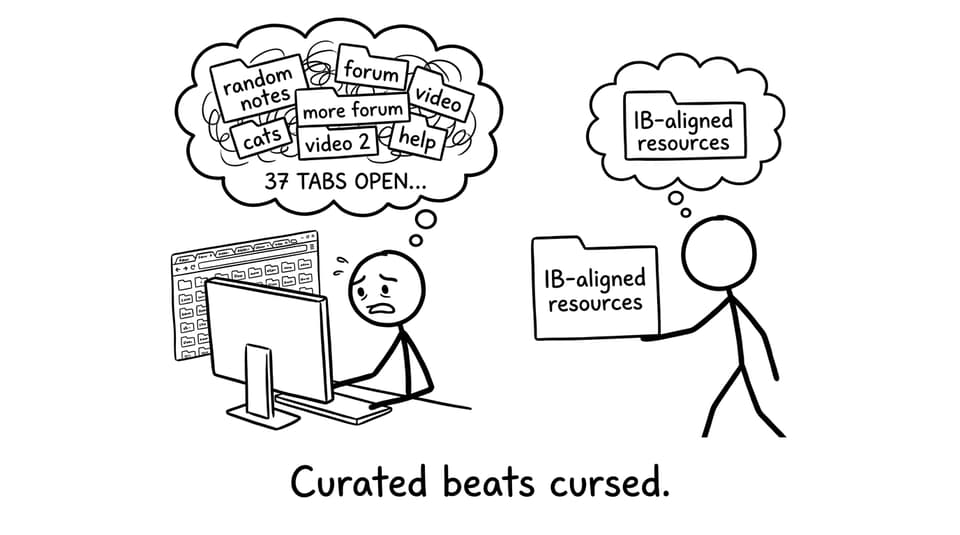
It feels productive, but it is usually anxiety dressed as research. RevisionDojo’s IB-aligned ecosystem reduces that noise so you can spend your limited energy on practice and review. The Coursework Library can reduce stress too by showing you what strong work looks like, so you are not guessing in the dark.
Closing: IB independence is built, not discovered
The IB rewards students who can steer their own learning, not because they are naturally disciplined, but because they have a method they trust.
RevisionDojo is built for that method: Study Notes for fast clarity, Flashcards for daily retention, a Questionbank for proof, AI Chat and Grading tools for feedback, Predicted Papers and Mock Exams for exam pressure, and extra support through the Coursework Library and Tutors when you need it.
If you want your next step to be obvious, start today with one IB topic, one Questionbank set, and a 10-minute Flashcards session. Then repeat tomorrow.
Explore everything in one place: RevisionDojo for IB.