


Discover the Creative Spectrum of IB Group 6 Arts
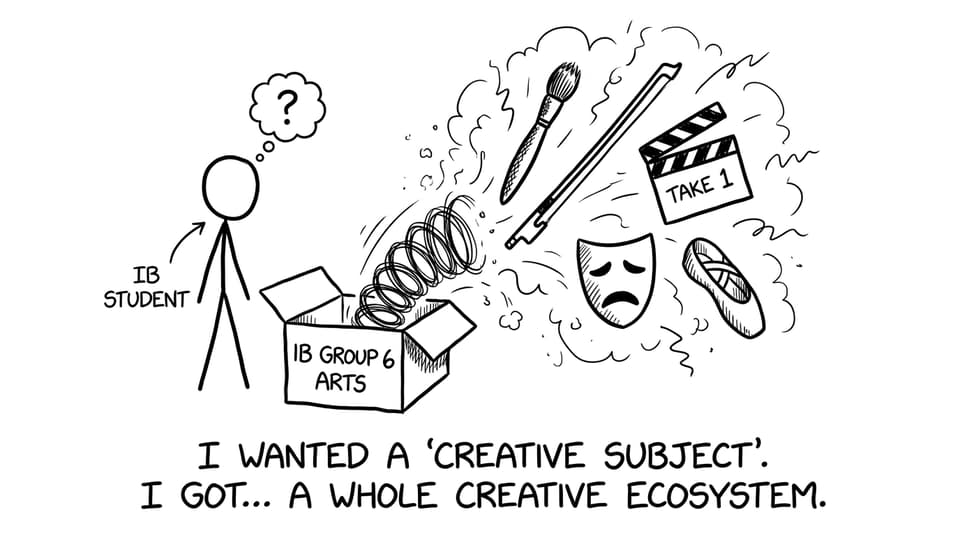
The first time most students meet IB Group 6 Arts, it feels like walking into a studio where every door is open at once. A violin warms up in one corner. Someone tests lighting cues in another. A half-finished sketch dries beside a laptop timeline full of film cuts. It looks free. It sounds fun. And then you notice the quiet truth: in IB, creativity still has deadlines.
That’s the real promise of IB Group 6 Arts. You get the space to make something personal, but you’re also asked to explain it, justify it, refine it, and show growth. If you’re preparing for exams (and the long trail of submissions that lead there), a clear syllabus overview makes everything feel lighter.
Quick checklist: what to know about IB Group 6 Arts
Before you dive into subject-specific details, anchor yourself with a simple map:
-
Subjects available: Visual Arts, Music, Theatre, Dance, Film (and options vary by school)
-
Core pattern: practical creation + research/context + reflection
-
Assessment style: usually fewer traditional timed exams, more coursework and externally assessed written/recorded components
-
Best strategy: consistent weekly progress beats last-minute “creative sprints”
If you need the simplest definition first, start here: What Is a Group 6 Class in IB?
The IB Group 6 Arts subjects at a glance
Each course under IB Group 6 Arts is different in medium, but similar in expectations: you create original work, study artistic contexts, and communicate your process.
IB Visual Arts
Visual Arts is built around making art and showing your thinking.
-
Visual arts in context: you explore cultural and historical context, studying artists, movements, and influences.
-
Visual arts methods: you develop practical skills and document experimentation and decision-making (often through process work).
-
Communicating visual arts: you curate and present a selection of artworks and explain the “why” behind the final choices.
If you want a broader decision guide before committing, read Choosing Your Group 6 Subject: A Comprehensive Guide.
IB Music
Music blends analysis with creation and performance.
-
Exploring music in context: you listen analytically across cultures and time periods.
-
Experimenting with music: you compose, improvise, and test musical ideas.
-
Presenting music: you plan and present performances or curated programs.
-
The contemporary music maker (HL): HL typically expands the scope with more extended project work and research.
IB Dance
Dance rewards students who treat practice like research.
-
Composition and analysis: choreography plus critical analysis of dance works.
-
Dance performance: solo and ensemble performance with technique development.
-
World dance studies: dance as culture, history, and identity.
-
Dance investigation: a focused research project on a chosen dance area.
IB Theatre
Theatre is collaborative, reflective, and intensely process-driven.
-
Theatre in context: theatre traditions shaped by culture and time.
-
Theatre processes: acting, directing, devising, design, and production choices.
-
Presenting theatre: creating and performing original work, then evaluating it with clarity.
If you’re torn between two storytelling-heavy options, compare them here: IB Film vs IB Theatre: Which Group 6 Subject Is Right for You?
IB Film
Film asks you to think like a critic and work like a producer.
-
Textual analysis: close analysis of film texts and written critical responses.
-
Film theory and history: how film language developed and why it matters.
-
Creative process: planning and producing original film work, often collaboratively.
-
Comparative study: a deeper comparison across culture, genre, or style.
How assessment works in IB Group 6 Arts
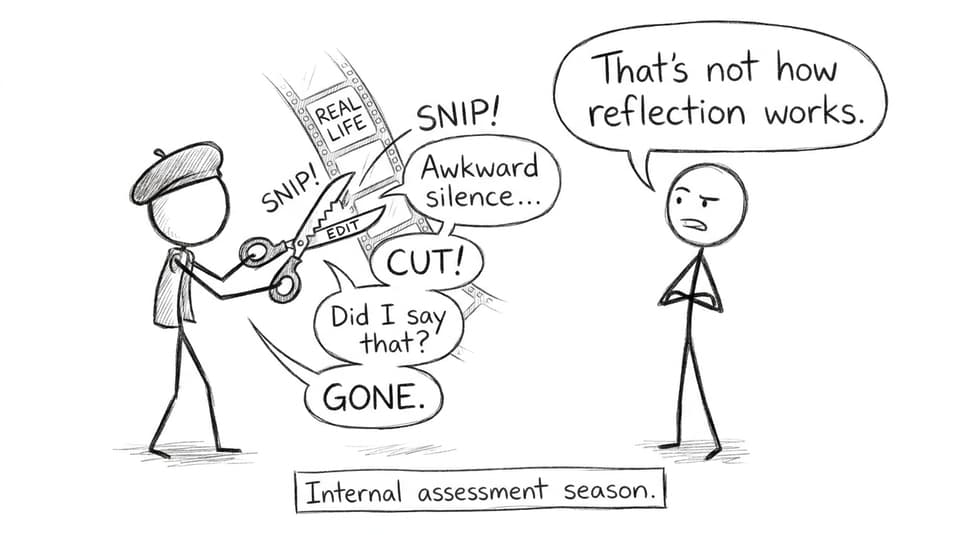
Students sometimes assume IB Group 6 Arts will be “less exam-focused.” The better framing is: it’s assessed differently.
Most Group 6 courses combine:
-
Internal assessment (IA): teacher-assessed work that is moderated by the IB, often practical and process-based.
-
External assessment: components sent for external marking, often analytical, comparative, or research-focused.
For a clean breakdown of what that means in practice, use: Understanding Assessment in IB Group 6 Subjects
Exam prep that actually fits arts subjects
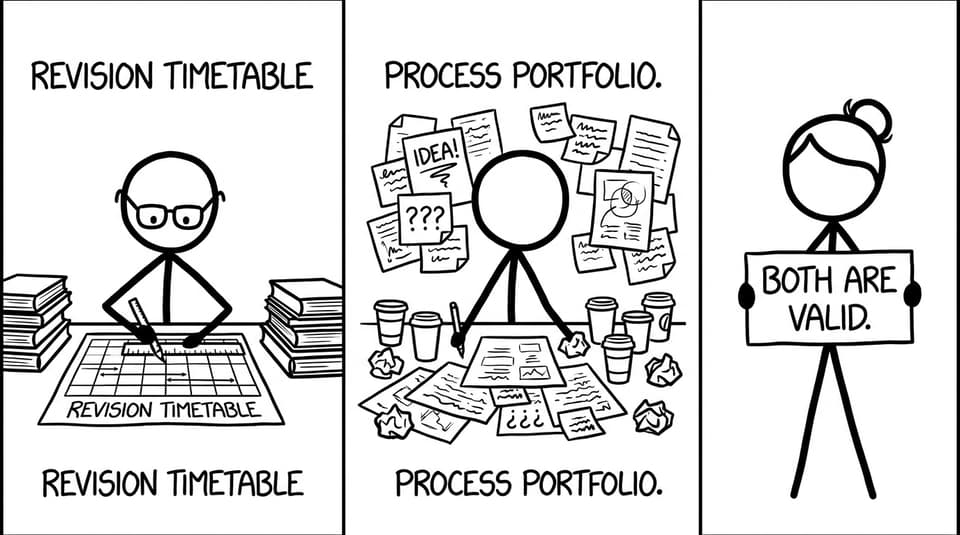
Here’s the quiet advantage of IB Group 6 Arts: if you build your portfolio and reflections steadily, “exam season” becomes more like final editing than emergency construction.
A simple weekly structure:
-
One session for making (drafting, rehearsing, composing, filming)
-
One shorter session for reflection (annotate decisions, evaluate trials, note next steps)
-
One session for context (artists, theorists, genres, practitioners)
If you’re unsure how much time to budget, use: How Many Hours a Week Should You Study for IB Group 6?
How RevisionDojo supports IB Group 6 Arts (without killing the creativity)
RevisionDojo works best when you treat it like a calm studio assistant, not a loud coach.
-
Use the Study Notes to clarify terminology for analysis and artist context.
-
Build Flashcards for key vocabulary (style, technique, genre, practitioner intent).
-
Practice with the Questionbank to sharpen how you explain choices under rubric language.
-
Use AI Chat to test whether your rationale is actually clear to a reader.
-
Run Grading tools to sanity-check reflections and written components against criteria.
-
Plan with Predicted Papers and Mock Exams where relevant for analytical components.
-
Lean on the Coursework Library for exemplars and structure.
-
If you’re stuck, Tutors can help you unblock creative decisions without rewriting your voice.
You can also zoom out strategically: How Do Universities View IB Group 6 Subjects Compared to Others?
Closing: make the syllabus your creative advantage
The students who thrive in IB Group 6 Arts aren’t the ones with endless inspiration. They’re the ones who build a repeatable routine: create, reflect, contextualize, refine. That rhythm turns the syllabus from a set of requirements into a record of growth.
If you want your creative work to score as well as it expresses, use RevisionDojo to stay organized and criterion-smart: Questionbank, Study Notes, Flashcards, AI Chat, Grading tools, Mock Exams, Predicted Papers, Coursework Library, and Tutors, all built to support your IB journey.