
If the IB Diploma feels like a mountain, it’s because it is. Not because you’re incapable, but because the path is long, the weather changes, and the summit is hidden until the final stretch.
Most students don’t fail because they “didn’t know enough.” They fail because they misunderstood IB Grading, what counts, what disqualifies you, and where the points quietly leak away.
This guide is your map. We’ll break down the criteria to pass, the common traps, and a calm strategy to reach the finish line with your diploma.
IB Grading, in one page
The IB Diploma Programme (DP) is built from two pillars:
-
Six subjects (a mix of SL and HL), each graded 1 to 7
-
The core: Theory of Knowledge (TOK), the Extended Essay (EE), and CAS
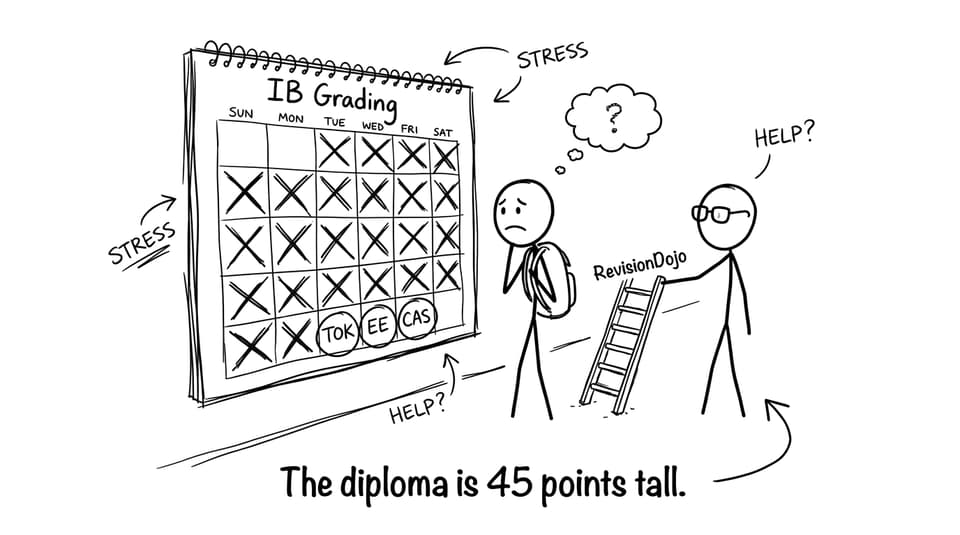
Under IB Grading, your maximum score is 45:
-
6 subjects x 7 points = 42
-
TOK + EE core points = up to 3
-
CAS is compulsory (no points, but failing it can block the diploma)
If you want a deeper breakdown of how marks become grades, keep this open: Understanding the IB Grading System.
The criteria to pass the IB Diploma (what you must hit)
There’s one headline requirement, and then a set of conditions that can override it.
Minimum total points: 24
To pass the diploma, you need at least 24 points out of 45 under IB Grading.
That number is deceptively simple. It’s not “easy” or “hard” on its own; it depends on whether your points are spread safely, and whether your core requirements are clean.
Minimum subject performance (SL and HL)
To receive the diploma, you must:
-
Take 3 Higher Level (HL) subjects and 3 Standard Level (SL) subjects
-
Earn at least 12 points total across your HL subjects
-
Earn at least 9 points total across your SL subjects
-
Avoid critical low grades (more on that below)
In other words, the diploma isn’t only about your total. It’s also about whether your points come from a stable base.
Core requirements: TOK, EE, and CAS
This is where many “I scored 24+” stories fall apart.
-
TOK and EE are graded from A to E
-
Together they contribute up to 3 core points to your total under IB Grading
-
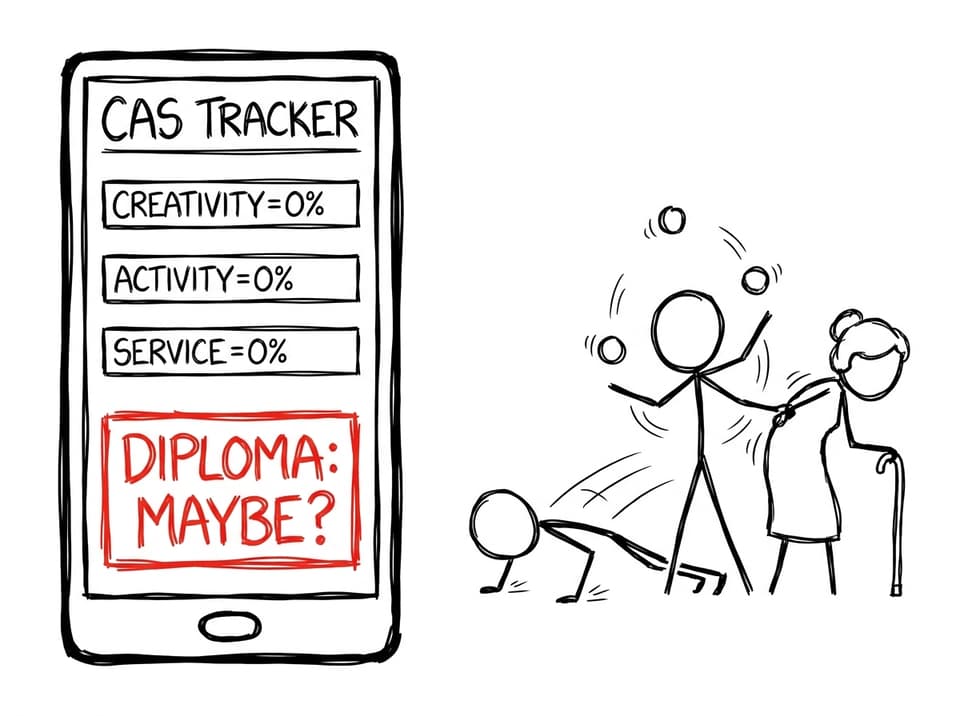
CAS must be completed to receive the diploma (even though it gives 0 points)
If you’re rusty on how the core points work, RevisionDojo’s IB Grade Calculator makes the whole system feel less abstract.
The failing conditions (how students lose the diploma with enough points)
Here’s the uncomfortable truth about IB Grading: it includes “automatic no” outcomes.
Even if your total is 24 or higher, you can be blocked from the diploma if any of these happen:
-
You score an E in both TOK and EE
-
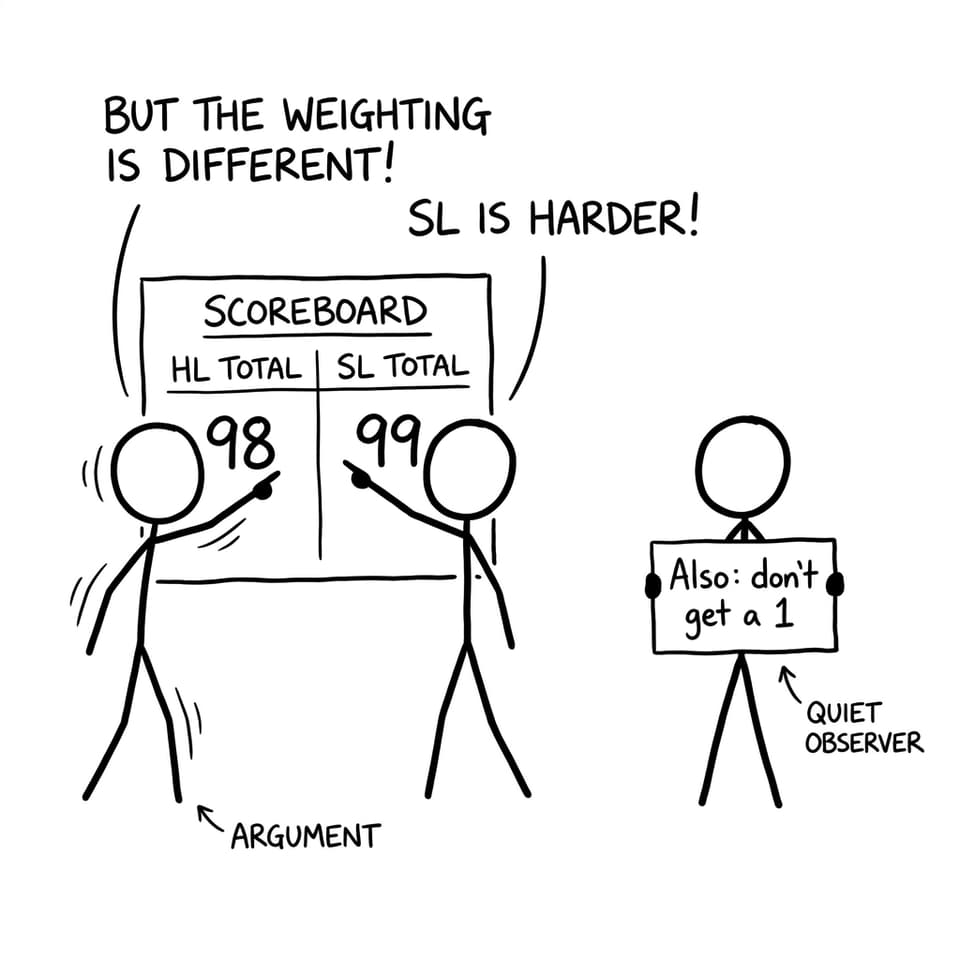
You score a 1 in any subject
-
You do not reach the minimum HL (12) or SL (9) point totals
-
You do not complete CAS
These rules matter because they change how you should revise. You’re not only chasing points. You’re also building a “no-disaster” safety net.
To stay aware of the boundaries that turn raw marks into final 1-7 grades, keep an eye on: IB Grade Boundaries and this explainer: IB Grade Boundaries: How They’re Actually Calculated.
A practical checklist to pass (without burning out)
Think of this as your “minimum viable diploma” checklist under IB Grading:
-
I can reliably earn 4+ in my three strongest subjects
-
My weakest subject is protected from slipping to a 1 or 2
-
My HL total projects safely above 12
-
My SL total projects safely above 9
-
TOK and EE are not both trending toward E
-
CAS evidence is not a last-minute scramble
-
I am practicing timed responses, not just reading notes
If you want a full routine for the last stretch, use: How to Study for IB Exams: Step-by-Step Guide and Is 1 Month Enough to Study for IB Exams?.
How to build points fast (the smart way IB Grading rewards)
IB Grading is criterion-based. That means your improvement often comes from learning the examiner’s expectations, not just learning more content.
Train with questions, not vibes
A quiet superpower in the IB is realizing that “understanding” is not the same as “scoring.” You score when you can produce the right structure under time pressure.
RevisionDojo’s Questionbank is designed for that exact shift: practice questions aligned to what IB-style marking rewards, with fast feedback.
If you want a method for using question practice strategically, read: IB Question Bank: How to Use It Effectively.
Use feedback loops like an athlete
Most students repeat the same mistakes because they never name them.
A high-scoring loop looks like:
-
Do a timed set in the Questionbank
-
Review mistakes with AI Chat (ask “what did the markscheme want here?”)
-
Retake similar questions 48 hours later
-
Turn recurring gaps into Flashcards
That’s also where RevisionDojo’s Grading tools help: you stop arguing with yourself about whether an answer is “good,” and start calibrating to markscheme logic.
Add stamina with Mock Exams and Predicted Papers
At some point, the issue isn’t knowledge. It’s performance under pressure.
Building stamina is simple:
-
Once per week, do a timed block using Mock Exams
-
In the final stretch, rotate in Predicted Papers to rehearse full-paper decision-making
If you need the mental model behind this, it’s captured well here: What No One Tells You Until After IB Exams.
The core components: how to stop them from sabotaging your IB Grading
TOK, EE, and CAS can feel like background noise until they suddenly aren’t.
TOK + EE: treat them like point multipliers
Under IB Grading, TOK and EE can add up to 3 points. But more importantly, they can also create a failing condition if both go to E.
Practical approach:
-
Choose an EE topic you can sustain when motivation drops
-
Build a small weekly routine (even 60 minutes) instead of heroic weekend marathons
-
Use RevisionDojo’s Study Notes to clarify concepts quickly, then ask AI Chat to stress-test your argument and structure
CAS: boring consistency beats panic
CAS is pass/fail, and it has ended more diploma dreams than it should.
Make it dull:
-
Log a little each month
-
Keep evidence organized
-
Pick activities you can realistically repeat
Closing: make IB Grading work for you
The diploma isn’t awarded to the student who panics the most красиво in April. It goes to the student who understands IB Grading, avoids the disqualifying traps, and practices the exact skills the exams reward.
Aim for safety first: protect against a 1, secure your HL and SL totals, keep TOK/EE away from the E-zone, and make CAS boringly complete. Then build upward with question practice, feedback loops, and timed sessions.
When you’re ready to turn effort into marks, open RevisionDojo and build your system: Questionbank for practice, Study Notes for clarity, Flashcards for recall, AI Chat and Grading tools for feedback, plus Mock Exams, Predicted Papers, Coursework Library, and Tutors when you need the next level. IB Grading becomes much less scary when you’re no longer guessing what matters.