
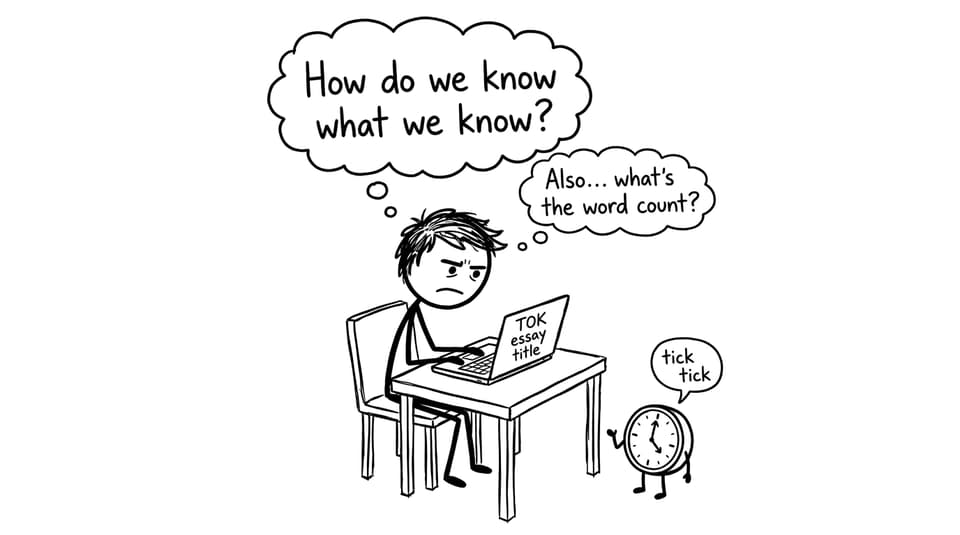
If you have ever stared at a TOK prescribed title and felt your brain quietly open 17 tabs of panic, you are not alone.
The TOK essay is weird in a very specific way. It looks like an essay, it has a word count, and you submit it like everything else in the IB. But it is not asking you to memorise. It is asking you to notice. To slow down and ask why one person calls something “evidence” and another calls it “opinion.”
That is why the TOK essay topics 2024 matter: they are less like questions and more like doors. Each one opens onto a room full of assumptions you did not realise you were carrying.
TOK Essay Topics 2024 at a Glance
Before you draft anything, you want a simple way to keep your TOK essay from becoming a philosophy diary.
Use this checklist to stay sharp:
-
Choose a TOK title you can genuinely argue from at least two Areas of Knowledge (AOKs)
-
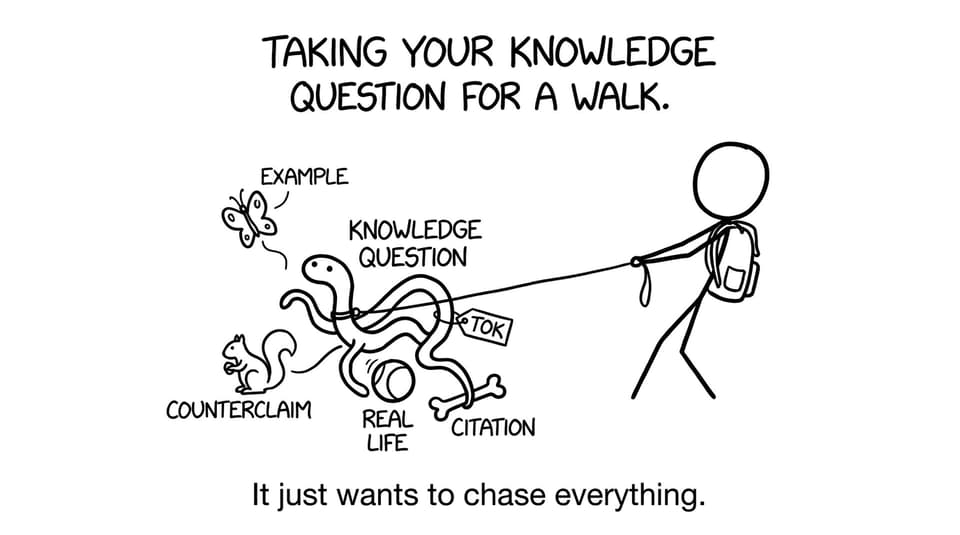
Turn the title into a focused knowledge question (KQ)
-
Plan 2-3 claims and 2-3 counterclaims (depth beats breadth)
-
Collect specific real-world examples (not generic “technology today” statements)
-
Define key terms early and keep definitions consistent
-
Write each body paragraph as: claim, followed by example, analysis, counterclaim, and implication
-
End with a conclusion that answers the KQ and reflects on what your answer changes
If you want a solid anchor while you plan, start with RevisionDojo’s core hub for IB Theory of Knowledge (TOK).
What the TOK Essay Is Actually Testing
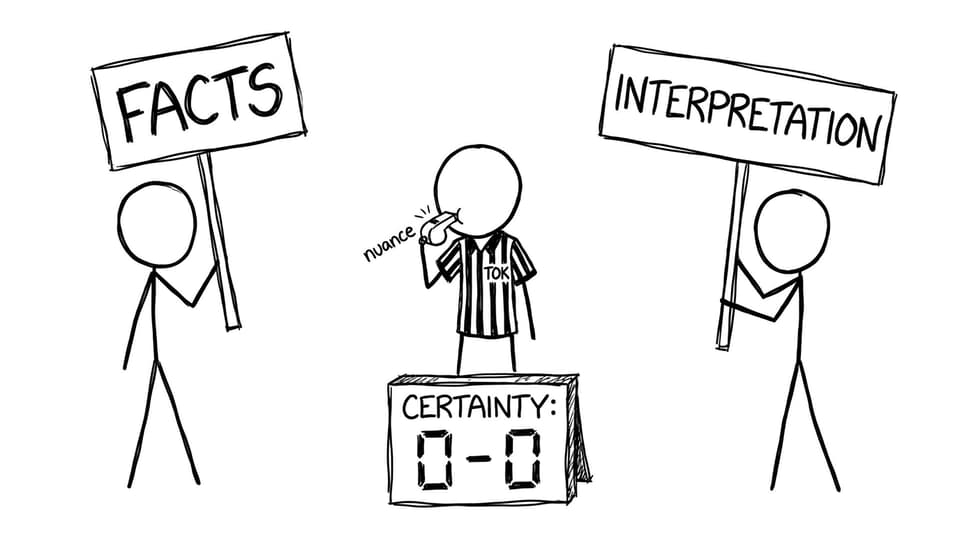
A high-scoring TOK essay does not prove you know the most facts. It proves you can handle uncertainty without getting vague.
At its best, TOK is an organised conversation about how knowledge is produced, checked, shared, and sometimes distorted. Examiners reward essays that:
-
Stay close to the prescribed title
-
Use TOK concepts (evidence, justification, interpretation, perspectives, methods)
-
Compare knowledge across AOKs rather than describing them separately
-
Use examples as tools for analysis, not decoration
If you are still fuzzy on what the title is really asking, the most useful first step is learning how to convert it into a KQ. This guide is built for that: Breaking Down TOK Essay Titles: What Are Knowledge Questions?.
How to Choose the Right TOK Essay Topic (Without Regretting It)
Most students choose a TOK title the way people choose a film on a plane: quickly, under pressure, and with mild dread.
A better approach is to pick the title that gives you the most leverage. Leverage means you can generate clear arguments and real examples without forcing them.
Choose a title that matches your “example inventory”
The best TOK essays often come from students who can quickly list 6-10 potential examples. Not because they will use all of them, but because abundance lets you choose the most precise.
Examples can come from:
-
Something you studied (a scientific controversy, a historical dispute, a literary interpretation)
-
A public event (policy decisions, court cases, media debates)
-
A personal experience (only if it genuinely reveals a knowledge issue)
If your title connects to politics or public decision-making, RevisionDojo’s IB Global Politics page can help you find rich, debatable real-world situations.
Choose AOKs that create contrast
A common TOK mistake is choosing two AOKs that behave similarly in terms of methods and validation.
Good pairings create tension:
-
Natural sciences vs history
-
Mathematics vs human sciences
-
The arts vs ethics
That tension is where your TOK analysis lives.
The Best Structure for a TOK Essay (That Still Sounds Human)
A TOK essay is easiest to write when it behaves like a guided inquiry. You are not writing to sound complicated. You are writing to sound precise.
For a full breakdown, keep this open while you draft: Comprehensive Guide to IB TOK Essay Structure.
Introduction: your promise to the reader
Your introduction should do four things:
-
Show you understand the TOK title by defining key terms
-
State a focused knowledge question
-
Give your tentative position (not a final verdict, but a direction)
-
Preview your AOKs and the type of examples you will use
If introductions always feel awkward, you will like this: TOK Essay Introduction Examples: How to Start Strong.
Body paragraphs: build in claims and counterclaims by default
A reliable TOK paragraph rhythm looks like this:
-
Claim connected directly to the KQ
-
Real-world example that tests the claim
-
Analysis: what the example reveals about knowledge production or validation
-
Counterclaim: a serious alternative perspective
-
Implication: what changes if the counterclaim is true
This is also the fastest way to avoid the “I described two AOKs” trap.
If you want a more detailed writing system, RevisionDojo has a helpful guide on staying clear: Tips for Writing a Clear and Coherent TOK Essay.
Conclusion: not a summary, a judgement with humility
A strong TOK conclusion answers the knowledge question and shows you understand what your answer costs.
In other words: what are the limits of your conclusion? Where could it fail? What does it suggest we should be careful about?
Use this when you write your final paragraph: How to Write Effective TOK Essay Conclusions.
Theme Ideas You Can Use for TOK Essay Topics 2024
Even without listing every official prompt, you can still prepare intelligently. TOK essay topics 2024 tend to orbit recurring modern pressure points: technology, culture, ethics, trust, and evidence.
Here are five high-yield directions students often use to build strong arguments.
AI and decision-making
AI is perfect for TOK because it raises immediate knowledge questions: what counts as justification, what is hidden by black-box models, and how authority gets transferred from humans to systems.
A good TOK angle is not “AI is good or bad.” It is “what changes in our standards of knowledge when we outsource judgement?”
Climate change and public knowledge
Climate change is not just a science topic. It is also a topic about how scientific knowledge is communicated, politicised, simplified, and sometimes rejected.
If your examples touch environmental systems or policy debates, the IB Environmental Systems and Societies (ESS) page can help you ground claims in accurate context.
Culture and truth
Culture-based TOK essays work well when you avoid stereotypes and instead analyse methods of knowledge transmission: oral histories, sacred texts, academic publishing norms, peer review, or community knowledge.
The key is to ask: whose standards of evidence are being used, and why do those standards feel “natural” to insiders?
Ethics and technology
Ethics is a strong AOK partner because it forces you to address consequences. Technology supplies the real-world situations; ethics supplies the evaluative lens.
A good TOK move here is to show how different ethical frameworks generate different “knowledge claims” about what should be done.
Social issues and contested evidence
Social issues are messy, which is exactly why they work. But your TOK essay has to stay analytical.
Instead of debating the issue itself, debate the knowledge around it: measurement problems, bias in data collection, incentives in media, and the role of language.
How to Craft a TOK Thesis That Does Not Collapse Later
A TOK thesis is not a slogan. It is a controlled answer to your KQ that can survive counterclaims.
A practical formula:
-
To what extent + your central judgement
-
the conditions under which it holds
-
the limits where it weakens
Example shape (do not copy, just mimic the logic):
In TOK, claims about truth are strongest when standards of evidence are shared and transparent, but they weaken when methods and values differ across contexts, especially between history and the natural sciences.
If you want to connect your thesis to the core theme cleanly, use: How to Use the Core Theme in Your TOK Essay.
Research and Evidence for TOK: How to Look Serious Without Overloading
TOK research is not a literature review. It is an example hunt.
You want sources that help you do three things:
-
Describe the real-world situation accurately
-
Show multiple perspectives
-
Reveal what is being assumed when someone claims knowledge
A simple evidence system that works
Create a table with four columns:
-
Example
-
What claim it supports
-
What counterclaim it could support
-
TOK concept it illustrates (bias, reliability, interpretation, authority, etc.)
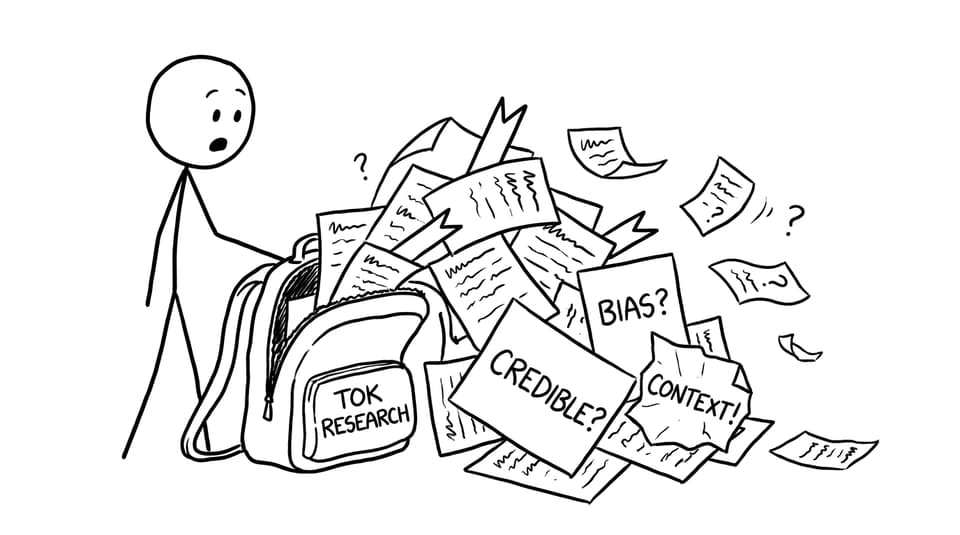
This prevents the most common TOK disaster: collecting facts that never become analysis.
When you want feedback on whether your reasoning is actually TOK-focused, RevisionDojo’s AI Chat can help you pressure-test your KQ and paragraph logic, and its Grading tools can provide rubric-aligned checkpoints for drafts.
How RevisionDojo Helps You Finish the TOK Essay (and Not Just Start It)
Most TOK essays do not fail because students cannot think. They fail because students cannot convert thinking into examinable structure.
RevisionDojo is designed around that conversion:
-
Study Notes to clarify TOK terms quickly when your definitions get slippery
-
Flashcards to keep AOK distinctions and TOK vocabulary retrievable under pressure
-
Questionbank practice for the rest of your IB subjects so TOK writing time does not cannibalise exam prep
-
AI Chat to brainstorm counterclaims and tighten knowledge questions
-
Grading tools to get rubric-aligned feedback before submission
-
Mock Exams and Predicted Papers to protect your schedule and keep the whole IB machine running
-
Coursework Library to see what strong academic writing looks like across the DP
-
Tutors when you need a human to challenge your argument, not just correct grammar
For more TOK-specific reading paths, browse All TOK Posts on RevisionDojo.
Closing: Make TOK Feel Like a Skill, Not a Mystery
The TOK essay topics 2024 are not designed to trick you. They are designed to reveal your thinking habits: what you trust, what you dismiss, and how you decide something counts as knowledge.
If you treat TOK like a performance, you will write something impressive-sounding and fragile. If you treat TOK like a skill, you will write something simple, structured, and hard to knock over.
When you are ready to turn your TOK plan into a draft you can actually submit, use RevisionDojo to keep the whole workflow steady: clarify concepts with Study Notes, lock in language with Flashcards, pressure-test ideas with AI Chat, and polish with Grading tools. Then protect your exam momentum with Mock Exams, Predicted Papers, and the rest of the platform that keeps IB students consistent.
Your TOK essay does not need to be perfect. It needs to be honest, balanced, and relentlessly connected to the question. And you can build that.