


Studying Tips for IB Coursework: A Complete Guide
The IB has a strange way of making time feel slippery.
You start the week thinking, “I’ll just draft my IA introduction and tidy up TOK notes.” Then a lab runs long, a reading takes twice as long as it should, and suddenly it’s 11:47 p.m. and your laptop is whispering, we could panic-scroll citations together.
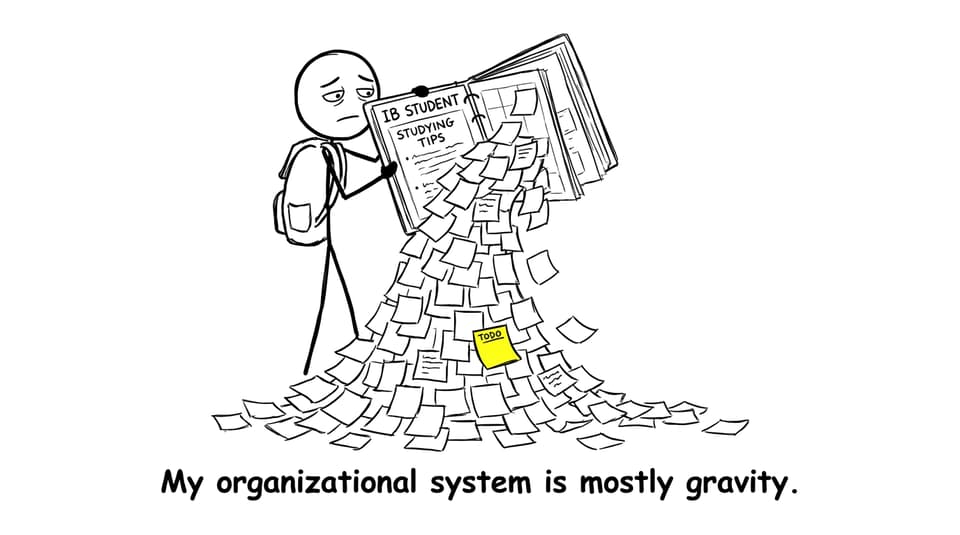
If you’ve been there, you don’t need motivation. You need Studying Tips that behave like a system: something that still works when you’re tired, busy, and slightly convinced everyone else has it together.
This guide is that system. It’s built for IB students juggling coursework (IAs, EE, TOK) while also preparing for exams. And it’s designed to feel doable, not heroic.
The 10-minute checklist (save this)
When you don’t know what to do next, run this quick loop. It’s the backbone of high-impact Studying Tips:
-
Pick one deliverable (IA draft section, EE outline, TOK paragraph, or one exam skill).
-
Read the minimum you need from Study Notes to move forward.
-
Do one small round of active recall (Flashcards or self-quiz).
-
Practice application with Questionbank questions by topic.
-
Review feedback and write 3 error rules (what you’ll do differently next time).
-
Schedule the next touchpoint in 48 hours (spaced repetition, re-draft, or retest).
If you want a bigger exam-prep structure to plug this into, keep How to Study for IB Exams: Step-by-Step Guide open as your “north star.”
Why IB coursework feels harder than it looks
IB coursework isn’t just “extra work.” It’s a different kind of work.
Exams reward speed, pattern recognition, and clean execution under time pressure. Coursework rewards planning, clarity, and evidence. The trap is treating coursework like exams (cramming) or treating exams like coursework (over-editing).
The most useful Studying Tips separate your brain into two modes:
-
Builder mode (coursework): create, refine, cite, structure.
-
Athlete mode (exams): retrieve, apply, time, adapt.
RevisionDojo is built to support both. You can use Coursework Library and Grading tools to improve drafts, then switch to Questionbank, Flashcards, Mock Exams, and Predicted Papers for performance training.
For a broader revision framework, The Ultimate Guide to Revision for IB Students pairs well with everything below.
Studying Tips for building a schedule that actually survives the IB
Most schedules fail for one reason: they assume you’ll feel consistent.
Instead, build a schedule that survives inconsistent days. Here are Studying Tips that hold up when life happens.
Use a “two-track” week: Coursework Track + Exam Track
Coursework Track (3 sessions/week):
-
One IA block (data, analysis, draft section)
-
One EE block (research, outline, write 300-500 words)
-
One TOK block (claims, counterclaims, examples)
Exam Track (most days, small):
-
10-15 minutes Flashcards
-
20-40 minutes Questionbank practice
This prevents the classic IB mistake: finishing coursework “eventually” but arriving at exam season with fragile memory.
If you want a realistic week-by-week rhythm, borrow ideas from What’s a Realistic IB Study Plan for a 6 in Each Subject?.
Plan in “deliverables,” not hours
Hours are slippery. Deliverables are concrete.
Try planning like this:
-
“Write the IA method section draft”
-
“Create 20 Flashcards for Topic 2 definitions”
-
“Do 25 Questionbank questions on one subtopic and log the top 5 mistakes”
This is one of the most reliable Studying Tips because it reduces guilt. You either shipped the deliverable or you didn’t. No debate.
Internal Assessment (IA) Studying Tips: the structure that earns marks
A high-scoring IA usually feels boring in a good way. Clear question, aligned method, tidy analysis, honest evaluation.
Use these Studying Tips to keep your IA moving:
Start with the criteria, not the topic
Before you write, skim the rubric and ask: “What would a top-band response look like in this subject?”
Then build backwards.
If you need models, the IB History Exemplars page is a good example of what “criteria-first” work feels like: structured, annotated, and easy to learn from.
Draft in the order your teacher can actually comment on
Teachers give better feedback when they can see the logic early. A strong sequence is:
-
Research question + rationale
-
Method / approach
-
A sample analysis paragraph
-
Only then: the full body
This is a practical Studying Tips rule because it turns feedback into a multiplier instead of a late-stage demolition.
Use evidence like you’re writing for a skeptical reader
In sciences, show why your method measures what you claim. In humanities, show why your evidence supports your interpretation rather than merely sitting beside it.
When you’re stuck, open RevisionDojo’s AI Chat and ask one precise question, like: “What are three ways this evaluation could address limitations without sounding generic?” Precision is the difference between help and noise.
Extended Essay (EE) Studying Tips: win by making it smaller
The EE gets scary when it stays abstract.
The most effective Studying Tips for EE work are mostly about shrinking the task until it can’t intimidate you.
The “300 words a session” rule
If you write 300 decent words per session, three times a week, you’ll build momentum without draining yourself.
Also, your drafts will improve because you’ll return with fresh eyes, which is basically free editing.
Build an outline that forces decisions
A useful EE outline is not “Introduction, Body, Conclusion.” It’s:
-
Claim 1 (with evidence)
-
Claim 2 (with evidence)
-
Counterargument (with evidence)
-
Method choice explanation
-
Limitation / scope statement
If you’re doing Biology, a subject-specific reference like IB Biology Resources can help you sanity-check the science while keeping your argument exam-aligned.
TOK Studying Tips: stop searching for the perfect example
TOK eats time because it invites infinite thinking. The antidote is constraint.
Use these Studying Tips:
-
Pick one claim you genuinely believe.
-
Find one real-life example you can explain in 60 seconds.
-
Write one counterclaim that makes you uncomfortable.
-
Then do the TOK thing: compare what each side assumes about knowledge.
TOK improves fast when you rewrite for clarity, not when you add more ideas.
Exam-linked Studying Tips (so coursework doesn’t steal your grade)
Coursework is important, but exams are still the main scoreboard for most points.
These Studying Tips keep exam prep alive during coursework season.
Use active recall as your daily minimum
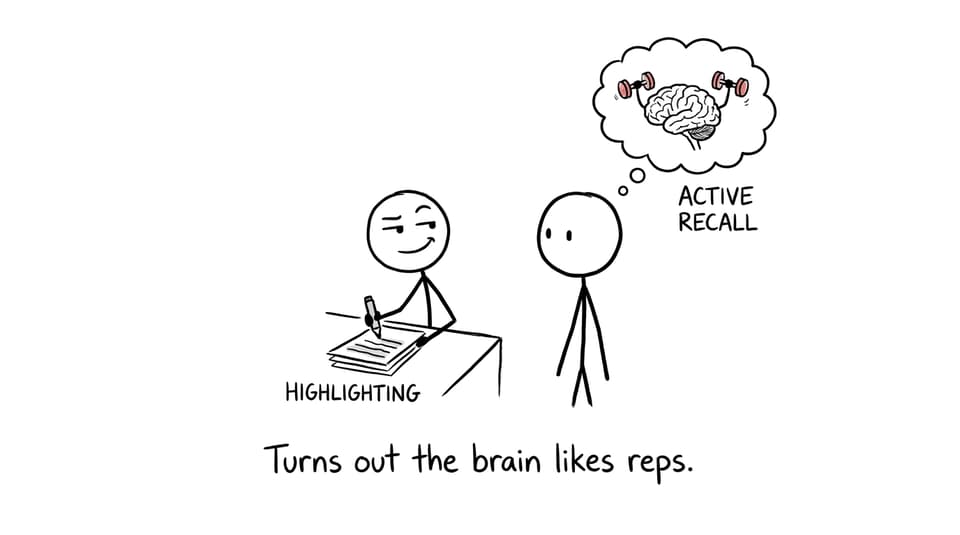
Rereading feels safe because it’s quiet. Active recall feels harder because it’s honest.
Do 10-15 minutes daily using RevisionDojo Flashcards. Keep the habit small enough that you’ll do it even on bad days.
For more science-backed methods, see 10 Proven Study Techniques for IB Students.
Practice questions are the real teacher
One of the most underrated Studying Tips is treating questions as your textbook.
Use RevisionDojo’s Questionbank to filter by topic and difficulty. Do short sets, mark them, then write “error rules” like:
-
“If the question says evaluate, I must weigh two sides and reach a justified conclusion.”
-
“If a graph is involved, I will state trend, then explain mechanism.”
That small list becomes your personal markscheme.
Add timed practice earlier than you want to
Timing problems don’t fix themselves.
Schedule one timed session per week using Mock Exams or Predicted Papers, then use Grading tools to see where marks disappear: structure, command terms, definitions, or rushed conclusions.
If you need a mindset reset, You’re Not Lazy: Your IB Study Method Is Broken is a strong anchor.
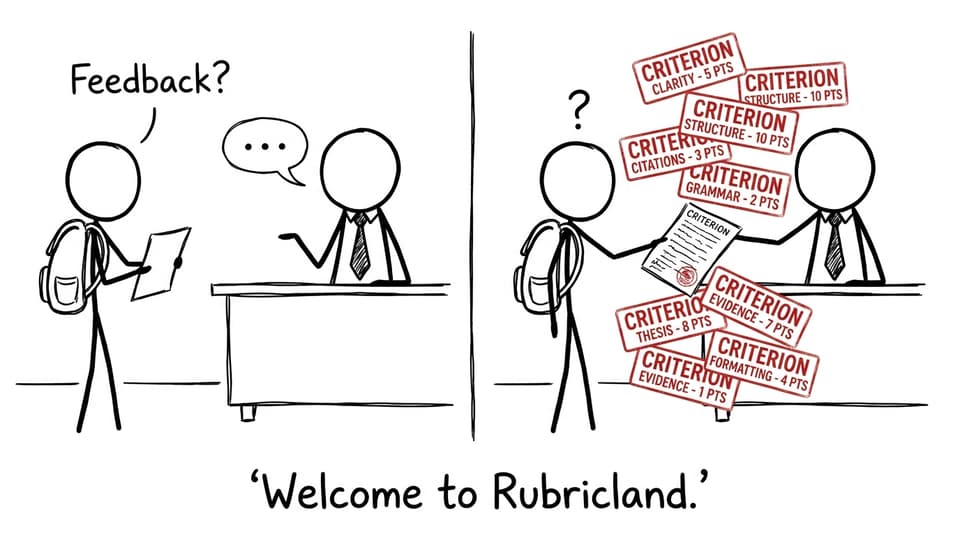
Studying Tips for getting useful feedback from teachers (and not wasting it)
Teacher feedback is expensive in a hidden way: it costs time, attention, and emotional energy.
So you want feedback you can use.
Here are Studying Tips that make feedback sharper:
-
Ask for feedback on one criterion at a time.
-
Include a short note: “I’m aiming for X in Criterion Y. Does this paragraph meet it?”
-
Bring two options: “Which research question is tighter, A or B?”
Then, when feedback comes back, don’t “fix everything.” Fix the pattern.
RevisionDojo’s Tutors can help when you need deeper strategy, but even with tutors, the same rule applies: ask one focused question, get one focused improvement.
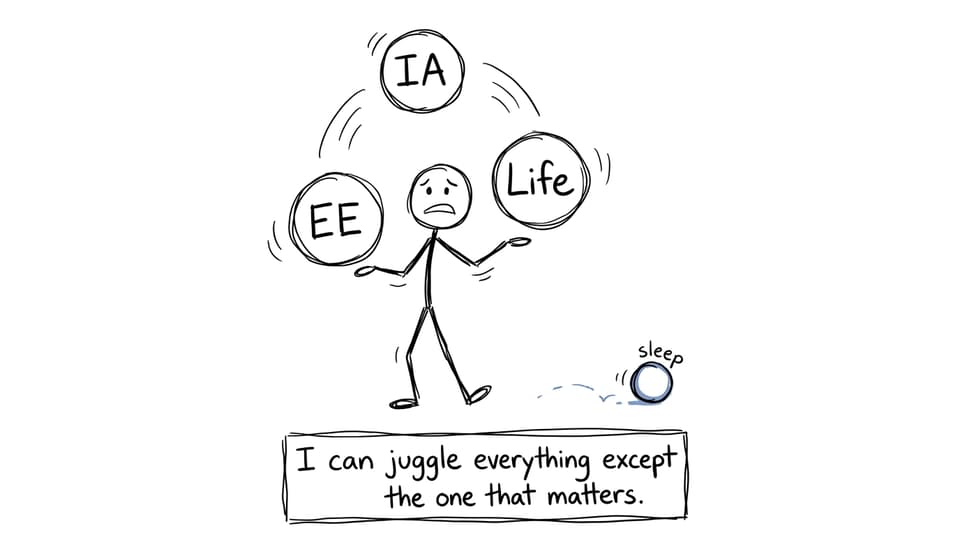
Balancing coursework, extracurriculars, and sleep (without pretending you’re a robot)
Some weeks you will not be balanced. That’s normal.
The goal is not perfect harmony. It’s avoiding the two extremes:
-
“I’ll sacrifice sleep forever.”
-
“I’ll restart my life next Monday.”
Use these Studying Tips for sustainable balance:
Protect a tiny daily baseline
Even on packed days:
-
10 minutes Flashcards
-
5 minutes planning tomorrow’s first task
That’s enough to keep your memory warm and your anxiety quieter.
Use weekends for deep work, not catch-up panic
Pick one weekend block for coursework (IA/EE) and one for exam training (Questionbank + timed set). Then stop. Stopping is part of the plan.
A simple RevisionDojo workflow for coursework + exams
If you want a single system, run this loop inside RevisionDojo:
-
Study Notes for quick clarity
-
Flashcards for daily recall
-
Questionbank for exam-style application
-
AI Chat for fast, precise explanations
-
Grading tools to learn how marks are awarded
-
Coursework Library for models and structure
-
Mock Exams and Predicted Papers for realistic timed practice
-
Tutors when you need human feedback and planning
For an overview of how the platform fits together, see RevisionDojo App: The Smarter Way to Prep for IB Exams.
Closing: make your Studying Tips boring enough to work
The IB rewards students who build boring routines and repeat them.
Not because they’re more disciplined, but because their system does the heavy lifting. Use Studying Tips that reduce decisions: small daily recall, deliverable-based planning, targeted question practice, and feedback loops that focus on patterns.
If you want one place to run the whole routine, make RevisionDojo your default study home: Questionbank, Study Notes, Flashcards, AI Chat, Grading tools, Predicted Papers, Mock Exams, Coursework Library, and Tutors working together.
Pick one deliverable for today. Do it. Then schedule the next touchpoint in 48 hours. That’s how momentum is built in the IB.