
If you have ever looked at the IB subject guide and thought, “What if I just take both and cover my bases?” you are not alone. Language choices can feel high-stakes because they touch everything at once: your timetable, your confidence, your grades, and your identity as “the student who’s good at languages”… or not.
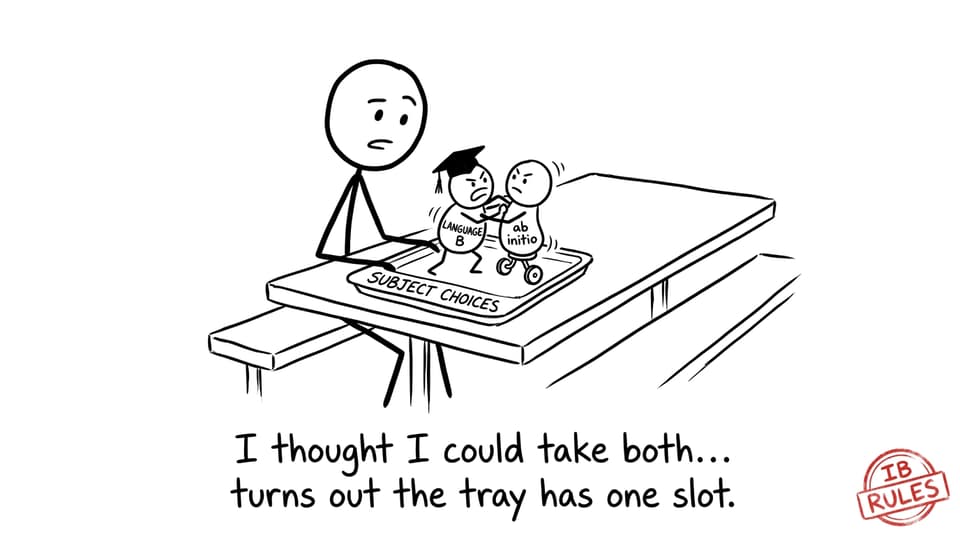
Here is the reality most students discover quickly: IB Language B and Language ab initio are built for different starting points, and schools usually do not allow you to take both at the same time. The good news is that once you understand the logic, choosing becomes calmer and much more strategic.
IB Language B vs ab initio: the simple checklist
Before you pick, run this quick check:
-
Do you have 2-5 years of prior study? That is typically the profile for IB Language B.
-
Are you a true beginner (or close to it)? That is what ab initio is designed for.
-
Do you want SL or HL? IB Language B can be SL or HL; ab initio is SL only.
-
Are you choosing for exams and grades? Match the course to your real level, not your wishful level.
For a deeper side-by-side comparison, use IB Language B vs Language ab initio: Key Differences and How to Choose.
What IB Language B is actually designed to do
IB Language B is not “learning from zero.” It is a course for students who can already do the basics and now need structure, accuracy, and fluency under exam pressure.
You will spend time on theme-based communication, reading authentic texts, writing specific text types, and preparing for speaking assessments. If you want a full breakdown of what gets assessed and how to study, see What You Need to Know About the Language B IB Syllabus.
What ab initio is designed to do
Ab initio exists for a different student: someone starting from the beginning, building a foundation without pretending they already have one. It is paced differently, expects less prior grammar knowledge, and focuses on practical communication.
If you are still unsure what “from the beginning” really means in IB terms, read What is Ab Initio in the IB Program? and Ab Initio Coursework: What You Need to Know.
Can you take IB Language B and ab initio together?
In most schools, no. The courses cover the same “Group 2” purpose at different levels, so taking both is usually treated as redundant. Even when a timetable could technically fit, coordinators typically avoid combinations that look like repeating the same subject area for an easier advantage.
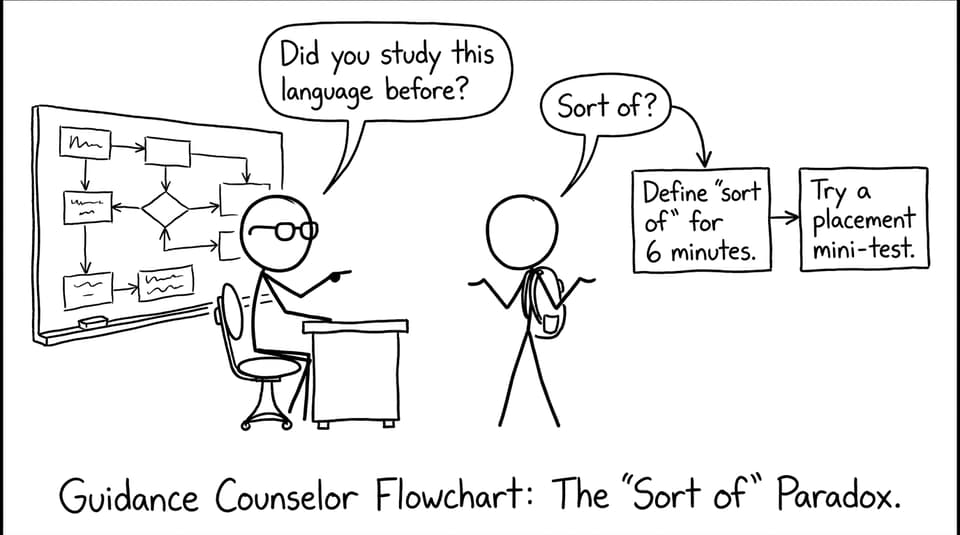
If your situation is complicated (moved schools, bilingual background, inconsistent prior learning), start by clarifying the intended level with your coordinator and by using course guidance like IB Language B Explained: Is It Worth It for Students Without Prior Knowledge.
Choosing the right one for exams (and your sanity)
A useful rule: pick the course where you can improve fast without constantly translating in your head.
-
Choose IB Language B if you have a real base and want the stronger long-term skill payoff.
-
Choose ab initio if you need a true beginner track and want to build reliably.
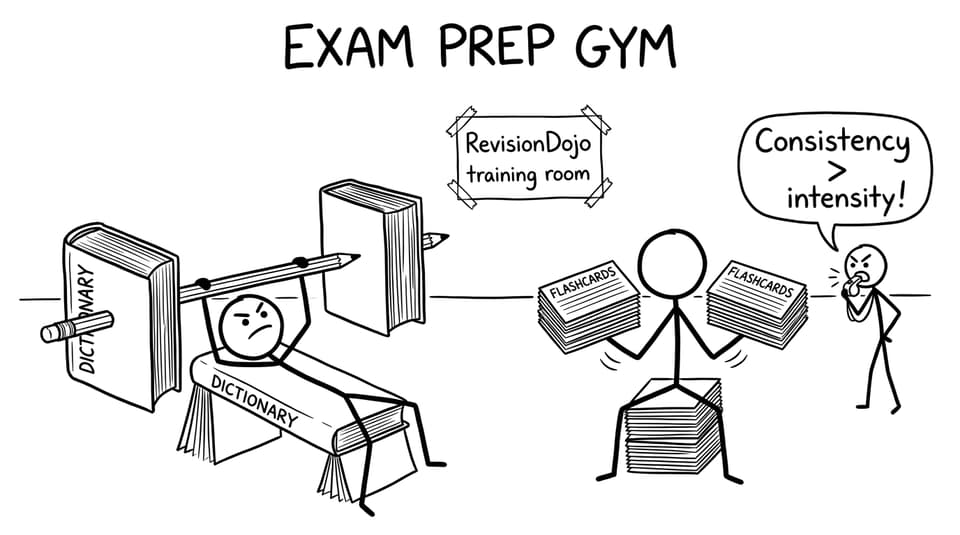
Once you choose, RevisionDojo helps you execute: drill with the Questionbank, lock in theme vocabulary with Flashcards, review grammar and text types using Study Notes, and rehearse speaking with AI Chat. When you want feedback, the Grading tools and Tutors can help you turn practice into points.
For exam-focused study routines, use How to Effectively Revise for Language B Exams and How to Avoid Common Mistakes in Language B Writing.
Final takeaway: pick one track, then train it properly
You generally cannot double up on IB Language B and ab initio, and you do not need to. Choose the course that matches your real starting point, then commit to the habits that win marks.
If your goal is exam-ready language skill, RevisionDojo can be your daily system: Study Notes for clarity, Flashcards for retention, Questionbank for targeted practice, Mock Exams and Predicted Papers for realistic pressure, and supportive feedback through AI Chat, Grading tools, and Tutors. And if you want more targeted reading, browse all IB Language B posts.