

The IB moment nobody posts about
There’s a specific kind of quiet panic that shows up mid-year in the IB.
It’s not the dramatic, last-minute kind. It’s the slow realization that you’ve been “studying” for hours, yet your confidence hasn’t moved. Your notes are longer, your tabs are multiplying, and your results feel random.
Top scorers don’t avoid that moment. They respond to it with a system: short loops, fast feedback, and practice that looks like the exam. That’s why so many IB students build their routine around RevisionDojo: it turns effort into measurable progress using the Questionbank, Study Notes, Flashcards, AI Chat, Grading tools, Predicted Papers, Mock Exams, Coursework Library, and Tutors.
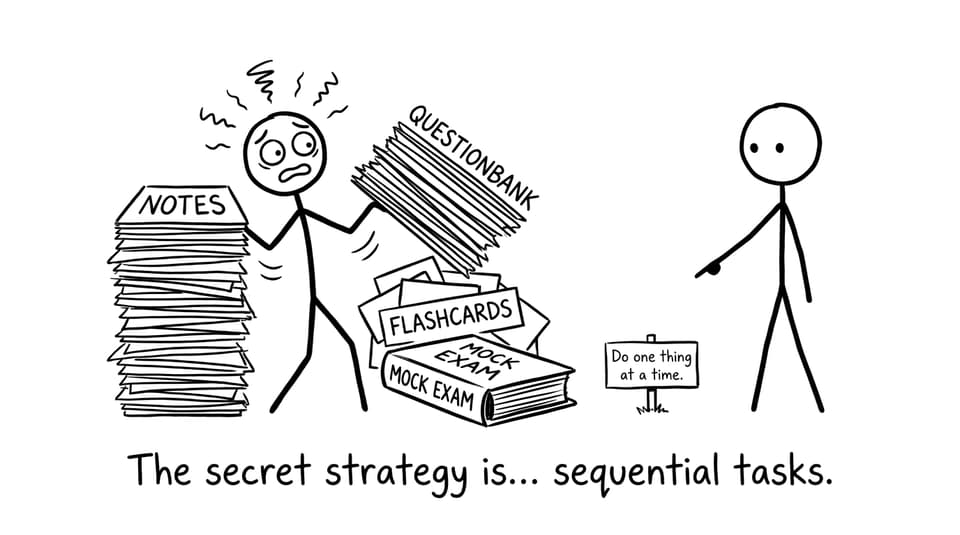
IB top-scorer checklist (steal this)
If you want a simple IB plan that actually holds under pressure, keep this weekly checklist:
-
Do daily IB recall (10-20 minutes) with Flashcards
-
Do targeted IB practice (30-60 minutes) in the Questionbank
-
Do one timed IB session weekly using Mock Exams or Predicted Papers
-
Review mistakes longer than you practiced
-
Use AI Chat to unblock confusion quickly, then re-test
-
Use Grading tools + Coursework Library so coursework stress doesn’t leak into exam prep
If you want a deeper step-by-step structure, borrow the workflow in How to Study for IB Exams: Step-by-Step Guide.
Start early, but more importantly: start small
Top scorers aren’t always “early” in a calendar sense. They’re early in a psychological sense: they begin before they feel ready.
In IB, waiting to feel ready is expensive. Instead, start with the smallest possible unit: one topic, one skill, one question type.
A good pattern is:
-
Read one short section in Study Notes
-
Close it and explain it from memory
-
Prove it with a short Questionbank set
That same loop shows up across high performers, especially when they’re balancing multiple subjects. If motivation is the issue, the strategy in How to Stay Motivated During IB Revision pairs well with this “small start” approach.
Use the Questionbank like a mirror, not a scoreboard
The fastest IB improvement often comes from changing what you measure.
Top scorers treat the RevisionDojo Questionbank as a mirror: it reflects what they misunderstand, what they rush, and which command terms they ignore. They don’t just chase more questions. They chase better diagnosis.
Do this after every set:
-
Write one “error rule” (a sentence that would have prevented the mistake)
-
Re-attempt the same skill within 48 hours
-
Turn repeat mistakes into Flashcards
If you want a dedicated home base for this practice, start with Questionbank.
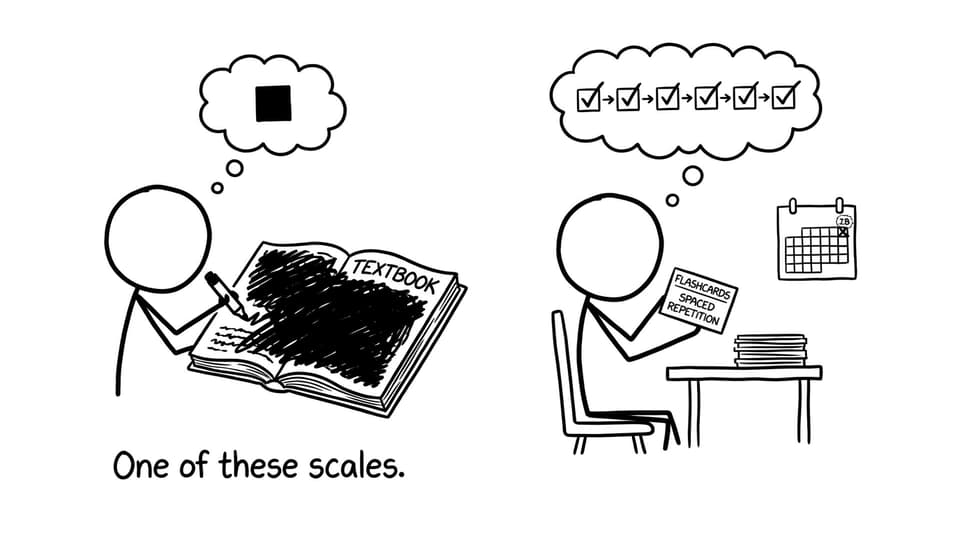
Flashcards that top scorers actually use (and most students don’t)
Many IB students “use flashcards” the way people “use a gym membership.” Technically true, practically irrelevant.
Top scorers keep Flashcards ruthless:
-
One idea per card
-
Short answers (aim for 10-20 seconds)
-
Cards built from real mistakes and command terms
Flashcards are not for collecting facts. They are for reducing hesitation. When your brain stops pausing on definitions, processes, quotes, and formulas, your exam writing becomes smoother.
This pairs nicely with the evidence-based ideas in 5 Proven IB Revision Hacks Backed by Science.
Timed practice: where IB confidence is made
IB exams are not only knowledge tests. They’re timing tests wearing academic clothing.
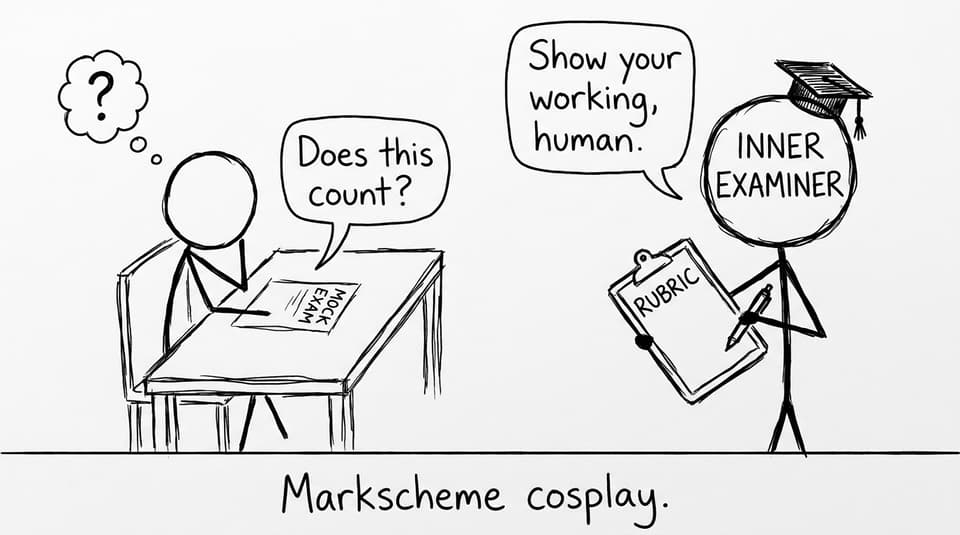
Top scorers simulate pressure early, then review like an examiner. That’s where RevisionDojo’s Mock Exams and Predicted Papers fit naturally: they let you build pacing, stamina, and decision-making before exam week.
A simple ladder:
-
Timed sets (15-25 minutes)
-
Timed sections (30-60 minutes)
-
Full Mock Exams when you can sustain quality
For a realistic “final stretch” plan, see IB: The Last 2 Weeks Before Exams (What Matters).
Don’t ignore the boring advantage: sleep and routines
Top IB students are rarely the most intense people in the room. They’re the most consistent.
That consistency comes from protecting the boring inputs: sleep, meals, breaks, and a repeatable schedule. When routines are stable, your brain has more bandwidth for the hard parts.
Two practical anchors:
-
Use an exam-week routine like IB Exam Day Checklist: The Ultimate Guide
-
Keep a calm night-before plan like IB Exam Night Routine: What Actually Works
A final note: make your IB effort compounding
In the IB, grades rarely jump because you “studied harder” once. They rise because you built a loop you can repeat: understand, recall, apply, review.
RevisionDojo is designed to keep that loop simple and complete: Questionbank for exam-style practice, Study Notes for fast clarity, Flashcards for daily recall, AI Chat for quick unblock moments, Mock Exams and Predicted Papers for timed realism, and Grading tools, Coursework Library, and Tutors when you need feedback that changes outcomes.
If you want your next IB study session to feel different, do one thing: open a small Questionbank set, time it, review it honestly, and convert the mistake into one Flashcard. Then repeat tomorrow. That’s how top scorers quietly pull away.