
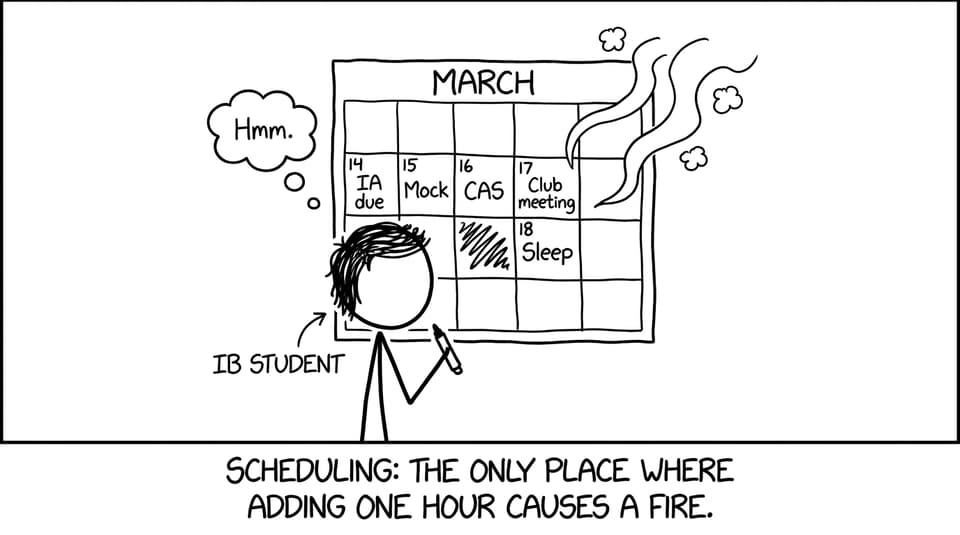
If you have ever stared at your IB calendar and thought, I could either become an interesting person or get enough sleep to remember glycolysis, you are not alone.
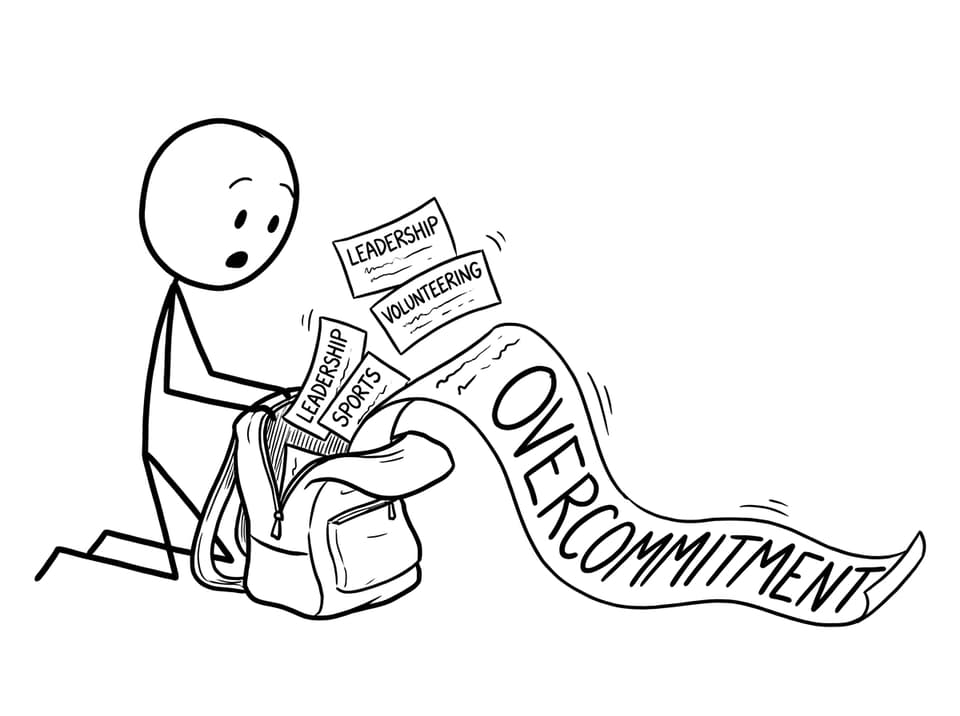
The strange part is that extracurricular activities often start as a good idea. A club sounds fun. A volunteer shift sounds meaningful. A leadership role sounds like future-you will be grateful. Then exam season arrives, and the same commitments begin to feel like a backpack you cannot take off.
That is why this guide is really about Stress Management. Not in the motivational-poster sense, but in the practical sense: deciding whether an extracurricular will lower your stress (by giving you energy, identity, and balance) or raise your stress (by stealing your attention, sleep, and revision time).
The quick decision checklist (use this before you say yes)
Use this fast screen for Stress Management when a new activity appears:
-
Time cost: Can you protect 2-4 study evenings per week during exam season?
-
Energy cost: Does it give you energy back, or only take it?
-
Deadline collision: Will it collide with IAs, EE, TOK, or mock exam blocks?
-
Depth vs quantity: Is it one meaningful commitment, or a stack of half-done roles?
-
Exit plan: Can you scale down when deadlines spike, without drama?
If you cannot answer these calmly, pause. A rushed yes is usually paid for later with rushed revision.
Why extracurriculars matter (and why they are not magic)
Extracurriculars can absolutely help you grow. They can also give you stories that feel real when you write applications: the moment you led a team, built something, coached someone, performed, competed, or served a community.
But here is the quiet truth IB students discover late: extracurriculars do not impress anyone if they sabotage your performance or wellbeing. Stress Management is the invisible foundation. Without it, even great activities turn into a constant background hum of guilt.
If you want a deeper look at how stress shows up during the Diploma, read How Stressful Is IB? Managing Stress in the IB Program. It frames the core problem well: the workload is not just big, it is persistent.
Stress Management starts with knowing what you are buying
Every extracurricular has a price tag, but it is not always measured in hours. Sometimes the real cost is attention: the mental space you lose when you are thinking about practice, meetings, planning, transport, and follow-ups.
A useful question is:
“After I do this activity, do I come back sharper or foggier?”
That answer is your Stress Management compass.
If you are already near overload, start with the basics: Exam Stress Management Tips for IB Candidates. It reinforces a simple pattern: small, repeatable habits beat heroic sprints.
A better framework: the three types of extracurriculars
Not all activities affect Stress Management the same way. Sort them like this:
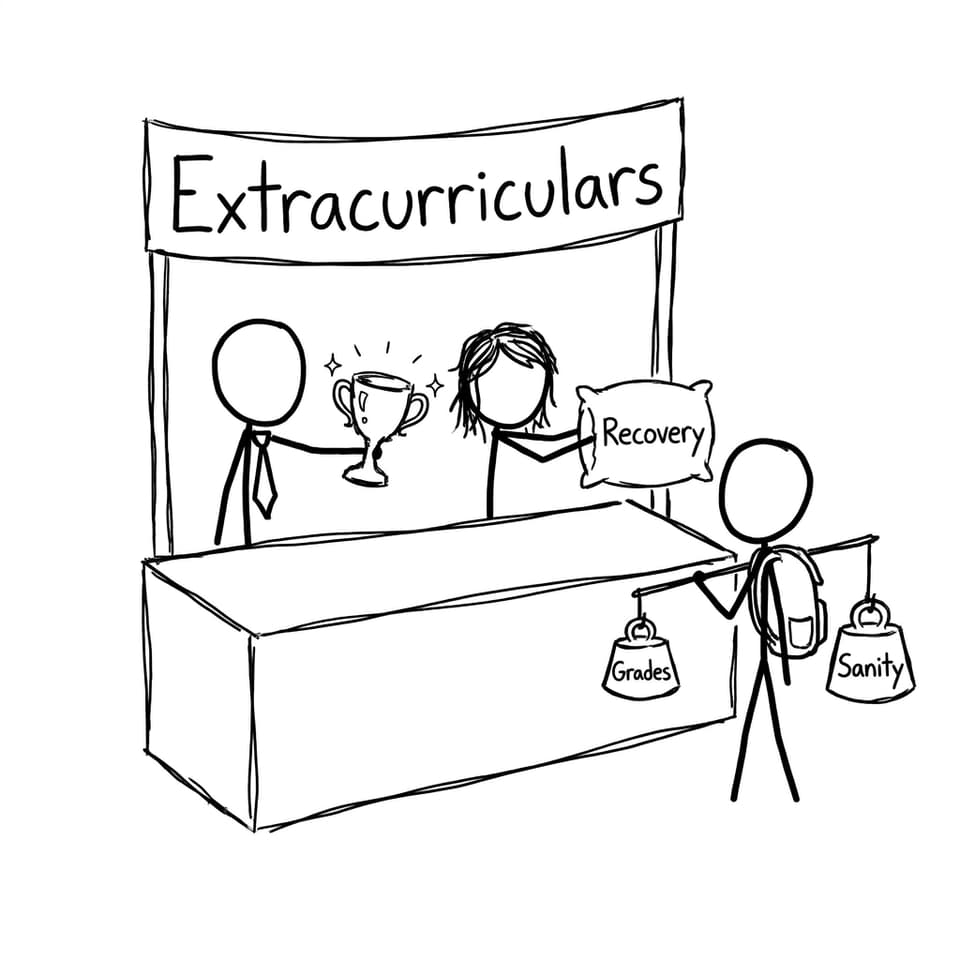
Recovery activities (they calm you)
These lower stress and improve your studying indirectly: sports you enjoy, music you love, a weekly social anchor, a walk, a creative outlet.
These are often the best extracurriculars to keep during exam season because they stabilize you.
Identity activities (they make you feel like yourself)
This could be debate, theatre, coding, art, activism, writing, mentoring. They are not always relaxing, but they give meaning. Meaning is fuel.
Status activities (they look impressive)
These are chosen mainly for optics: titles, committees, awards, anything you secretly do not like.
Status activities tend to be expensive for Stress Management because you have to push yourself without emotional return.
How to decide what to take on during IB exam prep
The decision becomes clearer when you make it measurable.
Do the “two-week realism test”
Before you commit long-term, simulate the commitment for two weeks.
-
Add the activity to your calendar.
-
Add transport time.
-
Add recovery time.
-
Then add one timed study block per week.
If your revision collapses in the simulation, the activity will not magically fit later. Your future self will not get extra hours.
For scheduling tactics that actually work in IB life, use Best Time Management Hacks for IB Students. Good Stress Management is often just good calendar honesty.
Protect your “minimum viable study week”
When things get busy, you need a default that keeps you progressing.
A strong minimum viable week looks like:
-
Flashcards daily (10-15 minutes)
-
Question practice 3x per week (30-45 minutes)
-
One timed session per week
RevisionDojo is designed to make this feel lighter: Flashcards for daily recall, Study Notes for quick clarity, and the Questionbank for exam-style practice with feedback. If you want the full system, bookmark How to Study for IB Exams: Step-by-Step Guide.
Decide your cap: 2-3 commitments max
For most IB students, the sustainable ceiling during exam prep is:
-
1 major commitment (high time and responsibility)
-
1 minor commitment (low time)
-
1 flexible wellness anchor (movement, creativity, or social)
More than that usually becomes a Stress Management problem disguised as ambition.
If you want examples and templates, see How to Balance IB and Extracurriculars Without Burning Out.
If you must do extracurriculars (CAS included), make them strategically easier
IB students do not just choose extracurriculars; they also navigate CAS requirements. The trick is to design CAS so it supports your life rather than hijacking it.
Start here:
A simple Stress Management move is to pick CAS experiences that overlap with something you already do (sport, music, volunteering with friends) and then keep reflections consistent instead of last-minute.
And if coursework anxiety is what is driving you to overcommit (because you feel behind and want to compensate), build a feedback loop instead. RevisionDojo’s Grading tools and Coursework Library are built for that, and the IB Coursework Grader can reduce the stress of not knowing what “good” looks like.
The hidden skill: how to quit or scale down without guilt
Most students do not burn out from starting activities. They burn out from never renegotiating them.
Use this script:
-
“I can stay involved, but my hours need to change during mock and exam blocks.”
-
“I can lead one project this term, not weekly initiatives.”
-
“I will return to full involvement after exams.”
This is not failure. It is Stress Management with boundaries.
If perfectionism is pushing you to keep everything running at 100%, read Why It's Okay to Not be a Perfectionist in the IB. A sustainable student beats a heroic student, almost every time.
A calmer conclusion: choose fewer things, then do them well
The best extracurricular decision is rarely “yes” or “no.” It is usually “yes, but smaller,” or “yes, but only if my revision system stays intact.” That is Stress Management in the real world: learning to protect the few inputs that produce good outputs.
If you want a simple way to keep your academics steady while you stay involved, build your week around a repeatable RevisionDojo loop: Study Notes when you are stuck, Flashcards to keep recall warm, the Questionbank to turn knowledge into marks, AI Chat when confusion threatens momentum, and Mock Exams plus Predicted Papers to make timed pressure familiar. Add Grading tools, the Coursework Library, and Tutors when coursework uncertainty starts leaking into your stress.
Pick the activities that make you more you. Drop the ones that only make you more tired. And let Stress Management be the standard you use to decide.